Showing posts with label EvilElitest. Show all posts

Saturday, November 5, 2011

31 new house rules

So the main question is "Where the hell have I been". Well actually....I've been at college, so yeah. But in terms of writing, I've actually been doing alot. Just instead of writing here, I've been working on my Obsidian Portal account (Imperial Dreams) playing around with alternate rules and systems. The reason why I haven't posted any of that stuff here is because I haven't finished playtesting or working out the glitches, so all of the stuff up their are prototypes, (though feel free to look around if you wish). So I don't want to post anything until I understand the system myself. However, these are some houserules my D&D group came up with in order to improve combat, so I wanted to know what you guys think. I am currently using all of them (and they are all stolen thank you very much) but I am still open to changes

I am trying to make combat in D&D more intensive. By intensive I mean
A) Takes other factions into account, like bleeding, fatigue, wounds, exhaustion, armor, weapon styles, shields ect
B) Making Combat far more scary, so that casual combat more interesting and everybody has to be careful
C) Greater variety

So just a collection of rules before I move on

1) Hit points still exist, I don’t want to get ride of that. However the way they work I might tinker with
2) Combat challenges from Iron Heroes, Ie additional benefits you can apply to an attack in return for a decrease in your defensive abilities. For example, an attack that will knock a weapon out of their hand, or force them into a certain area are both examples of this style, however in return you take a penalty on defense. The range of the benefits and the penalties depend upon what class you are, martial usually have far better benefits.
3) Stunts are ways of incorporating skill bonuses into combat, normally as a way to make up for being mechanically outmatched. I haven’t figured it out yet, but something like pushing over a barrel in order to jump off of it to make an attack. They add bonuses to your actions depending on you skill points
4) Defense class is how well you can deflect or parry blows, which is determined by your class, your level, your Strength bonus, as well as your weapon and shield. Armor does not give you a defense bonus. If somebody attacks you but you succeed your defense check, then you simply can avoid any damage, but your actions next turn will be limited, depending on the weapon used and what you blocked with. For example, if the fighter armed with a short sword is attacked by an orc great axe, he is able to block the axe, but in the process is knocked backwards and losses his sword. however if he had a shield, he would keep his weapon, stand his ground and take no damage, but he would still have his movement next turn limited. Defense bonus isn’t applied if you are taken by suprise or without your equipment
5) Dodge bonus is a way of avoiding attacks all together, and is depended upon your dexterity. This does not scale with level, with the exception of a few classes, and if you succeed a dodge check, the attack simply doesn’t hit you. However it is very hard for characters get very high dodge bonuses, with the exception of classes like Rogue or Ninja who are hard to hit. You loose this bonus. Again, this is taken away if you are under attack.
6) Wounds- Certain weapons, certain class abilities, or certain attacks that inflict over a certain hit point limit can inflict injuries upon a foe. These are minor negative status effects that linger after combat, much like the injuries in Dragon Age/Dragon Age II. The wound is randomly chosen, so they can vary from midly annoying (a 2 to spell caster for a fighter is worthless), to inconvenient (a -1/4 speed for a caster) to frustrating (a -2 to all attack bonuses for a Ranger). Special healing spells can deal with these after battle. You can get multiple injuries during combat, but rarely on a single attack (unless you are up against a Warrior), and certain martial classes can either increase their chances of scoring the attack, or decrease their chances of being effected by an injury. A dodge is decreased by how heavy your armor is, or if you are using a shield ect.
7) Pain
Certain weapons or attacks can inflict pain damage, which is a seperate stat. Each class has a certain “pain tolerance” which is determined by their race, class, constitution, and level. A martial class can choose to reduce the damage of their attack (IE how many hit points are taken away) in return for inflicting more pain. Pain inhibits all physical stats, as well as all stats involving concentration, making casting hard. However pain doesn’t normally get inflicted easily without special class abilities/luck/feats/weapons. If a character suffers too much pain, they can go down fairly easily.
8) Armor class- An attack has to be successful in order to even do damage. Otherwise it bounces off as useless. A shield will also help with this
9) Armor as damage reduction. To make this clear, depending upon the armor, armor can provide Defense class, Armor Class, AND damage reduction. A leather jacked will only provide some basic damage reduction, while a set of full plate will provide not only a high armor class, a moderate defense bonus, and moderate damage reduction, it will also provide resistance to injuries, pain deduction, and might even break the enemies blade. Of course, armor is heavy, provides a penalty to stealth/dexterity, and drains far more fatigue.
10) Armor effects- Certain armors will have special effects (discounting magic obviously), for example, helmets will reduce the chance of a critical hit, while full plate might catch a weapon inside the armor, leaving it stuck.
11) Wound points- Getting wounded fucking hurts, and it often does some really nasty as fuck things to your body. Thus in addition to everything else, characters have what are called “Wound points”. this doesn’t measure weather you are alive or not, but instead how long you can last before your body starts falling apart on you. You have as many wound points as your Consitution x 2 +Level. Every attack that inflicts actual hit point damage will also reduce a single wound point. As long as you have wound points, you are able to keep on fighting without taking any penalties to combat (unless it is a status effect, like bleeding or injuries). After your wounds run out however, you start bleeding and taking a minus on your defense, attack, and dodge bonuses. These penalties keep building until you have your wound points restored, or you can get some healing, or you die.
12) Vigor points- Vigor represents how health you are, and how well you can avoid being effected by various effects. Vigor (normally) is not determined by equipment, but instead by your class, your Constitution, and your level. If you are hit by an effect, you can give up a certain amount of vigor points to negate that effect. For example, you can give up 5 vigor points instead of losing 5 hit points, or you can give up 5 vigor points to avoid an injury, or you can give up a 10 Vigor points to avoid losing a wound point. Certain weapons however rely upon inflicting vigor points in addition to hit points, such as serrated or barbed weapons. vigor also determines how well you heal naturally. Spells can restore vigor points of course
13) Called shots, you can take a penalties to an attack in order to try to inflict an attack on a specific region, which inflicts wounds on a target, these are very specific attacks that undermine your ability to use that particular body part, for example a wound on your arm might make that arm unusable, or extremely weak, or even cut it off
14) After you are reduced to 0 hit points, you are conscious but have to roll a constitution save if you take any physically strenuous action. After that you go into negative hit points, of which you have -10 + constitution (total), + Level. Essentially you are dying. For the first 10 hit points, you get a chance to roll a very difficult Constitution check in order to stabilize, where you simply stop losing hit points. -10, you only have a 1 in 20 chance of stabilizing, and will bleed out until you pass over your negative hit point limit, where you will die. If you are healed from negative to positive hit points, you are considered crippled, until you can get a powerful healing spell, which is a permanent wound randomly decided, (for example a broken arm). all of these wounds will go way over time, or with the right magic. Certain truly vile weapons or attacks can make it so that you gain extra wounds when you go into negatives, others are even rumored to make it so you only get -10 hit points at best.
15) All raise dead spells have been split into many different spells. The weakest spells will restore the body if the person died within the last ten mins, even then he will be at 1 hit point and extremely fatigued. More powerful spells will work within 1 hour, 1 day, 3 days, a week, or a ten day, or a year. All of these spells have sub specifications, like for example weather he will lose a level, weather he will lose Consitution, weather he needs to be healed first, if the bodies needs to be in good condition, or if he will be restored at 1 hit point. The most powerful spells can bring a guy back from life almost right away, while they are in the middle of combat. True Resurrection is the only spell which will restore them to life after any point in time (provided they didn’t die of old age and the soul can be found), with no level loss, at full hit points, without requiring the body and without any chance of a Resurrection failure. A Resurrection failure is chance that the soul has somehow come back wrong. Regardless, all raise dead effects will change the character’s soulname, for better or for worst.
16) A fatigue system, which is drained when you take certain actions, i have no idea how to implement this, except i want the armor you wear to determine how much you lose
17) Save or die spells for the most part are changed into variable effects, depending on the level of the caster, the target and the spell. True save or die effects are extremely risking and high level, and often allow multiple saves.
18) Certain high level spells, instead of costing XP, instead add an XP debt, which is a certain amount of extra Xp the caster must gain to level up.
19) All healing spells are broken up into a wide variety of healing spells, some of which deal with hit points, vigor points, Wound points, Fatigue, injuries, wounds, or served limbs. Only the most powerful heal all of these effects at once. All healing spells also have chances of failing, or only partially healing the target.
20) A crippling wound happens if a single attack is higher than twice a character’s total con score, which normally results in a servered limb, a missing eye, a cut off ear ect.
21) Magical healing will leave scars if the wound isn’t treated within a day, though specific spells can remove these
22) Certain martial classes can inflict aggravated damage, which are wound over time in a very specific manner. However these are high level abilities, and only open to martial classes. Certain healing spells can get ride of these effects (a wounding effect from the magical item is much easier to fix than these effects)
23) Magic items require a mix between a crafter and a spell caster, both of home have to take time and money to make the item.
24) Armor counts as a proficency skill, which means certain characters can put combat points itno armor to increase its benefits, IE a novice wearing full plate might have lower defense than an expert wearing chainmail.
25) Certain weapons have penetration bonuses which allow them to ignore armor/defense/damage reduction effects. these only apply (normally) against certain kinds of armor, for example a mace vs. a breastplate wouldn’t work as well against chainmail.
26) certain masters have what is called a carapace, which is like DR, except that once the damage needed to over come the Carapace is inflicted, it not longer provides protection, as the defense is essentially broken
27) Weapons speeds are more important and weapon damages is increased, for example a dagger does a 1D6. In addition weapon maneuverability is a far bigger factor
28) Spell casting (mostly) has high casting times, and more chances to screw up
29) Critical strikes are separate from critical hits, in that the former are class specific and inflict injuries, while the latter just inflict massive damage
30) Weapons now have a wide variety of qualities, which have different performances. Masterwork are just the most powerful of the lot
31) Magic items are divided into three types, Trinkets which are other wise normal item with a few magical effects, so a trinket bow which shoots fire is just as likely to break as a normal bow, mage touched items which are like “improved” normal weapons, so they do more damage and have special effects but they break easily and cannot gain special effects. Full fledged enchanted items are unique and powerful, and are almost always extremely difficult to destroy.


From,
EE

Sunday, June 12, 2011

Class Balance 2nd Edition

I've been getting more and more interesting in Game Design and my pet project of designing D&d 5th edition, and i've been trying to figure out what class balance actually is. I get 3rd edition balance issues, and I've been looking into 3rd party systems alot to see how they work. I got into D&D in 3rd edition and while I hate 4th edition, I understand how it works, but more and more I find myself looking back at AD&D and marveling on how much I really like it, in particular the writing, which is far better than most 3rd edition has to offer. So, does anybody know how they can explain class balance to me in 2nd edition and how it worked, or link me to some article that does? I have played D&d since I was 7 however I am not a mathematical or mechanical person, so understanding the details of the Balance has been very hard for me, as I'd much rather focus on the fluff. So, what I am asking is
1) Class Tiers for 2nd Edition, what are they?
2) Did Marshal Classes have any advantages over non marshal classes due to some of the rules? For example, i know that concentration checks and movements were different in 2nd edition which is a big deal and Wizards had to learn each spell individually. And simultaneous actions were around did that make marshal classes much better?
3) Anything from 2nd edition that might help improve class balance or at least make things more interesting?
Thanks alot
from
EE

Monday, November 1, 2010

Fable 3

Ok, i've been away, because I'm at college and college life is really hectic and hard to manage. When i finally do get settled down i will start writing for the paper and then you can expect stuff, but until then...sorry.
But other people will write stuff, this is Soulbanish's review

This is my first time attempting a blog post so please don't eat my soul and devour my remains.


Sometimes, less is more. This is not the case for Fable 3. There will be spoilers in this review so if you care, turn back now.

In the fable series each game has its own options. However, the further along in the series you go, the less options you get. In fable 1 you had the choice between 12 different weapons, Now, we go to Fable 2 where they took out a couple of weapons and put in a few with a net loss of 1 weapon. Not horrible but they should have been more concerned about putting things in than taking them out. Now, lets cut ahead to fable 3. Now you have 4 options. Pistol, rifle, sword, and Hammer.

Now, even if we ignore that, there's still the matter of Will spells. In Fable 1, you had 18 with a fair amount of versatility in terms of character concept. In fable 2, you had 8. Not a lot but there were at least a few that worked for different concepts. Now you have six, all of which are blasting spells and until you get a specific upgrade you can only cast one at a time.

Now, this is forgivable. I can forgive plenty of mistakes if the game itself is good but Fable 3 has plenty of other problems.

One of my least favorite changes was to the inventory. Instead of an inventory, you get what is essentially a dressing room. You get to look through several different mannequins each wearing various items. To me, this seemed like an unnecessary change and they could have focused on something else.

Next, lets talk about the Health bar. It no longer exists. I have no way to tell if my character is dying short of an onscreen D-pad flashing red. Now, not all games need a health bar. For example, one of my favorite games, Super Mario brothers doesn't have one. However, this is because in that game all enemies deal the same damage and you either die in two hits or one. In fable 3 though, damage is variable. In a game where damage is variable such as the Megaman series, a way to measure health really helps.

A really odd thing is that they apparently expect you to play a guy in the game, because in order to get into a Mercenary camp you have to look like a Mercenary that's currently knocked out. The mercenary has a freaking beard. Yeah, you're a girl and you have to get a beard. What.

A new change is that your weapon evolves as you upgrade it. This just changes the look of your weapon. This is a gimmick and does not improve the game for me one Iota. I would prefer that they had focused on other elements than something that's only there for aesthetic appeal. Know what else appeals to some people's aesthetics? More than two types of weapons for each category. Now, I don't deny that looks are important in a game. However, I think they would have been better served by making different options for the various components than a gimmick that I have no clue how to control.

Now some weapons upgrade by you doing specific things. This wasn't a bad idea and there are items for both good and bad characters. However, there are at least two weapons that, if you want to upgrade them, you have to have a lot of sex. I just have to ask why they did this. Who is this supposed to appeal to? Honestly, I don't mind sex being in the game but when I get the swinging sword and see what I have to do to upgrade it? I have to ask what five year old thought that was funny.

Now, let's get onto the plot.

The plot has been done many times before and it wasn't done very well here. Your character is the brother of the evil overlord, finds out he's the “Chosen one” and is helped to reach his full potential by a mentor and a wisecracking sidekick to overthrow his brother and then save his homeland from an unknown force. Now, being cliche isn't bad but this just felt like the writers were being lazy. I didn't particularly care about any of the characters and I didn't particularly hate any of them, with the exception of Reaver. One other complaint I have is that you don't get any indication of when the eldritch abomination is going to attack. On my playthrough I planned on selling the properties I'd bought to finance the resistance. However, due to the fact that I didn't get any indication of when the attack was going to happen (Goes from 112 days to 1) around 650,000 people died. Not as bad as it could have been but if I'd had any indication, there would have been no civilian casualties.

Slight rant about Reaver here. Feel free to ignore it. Reaver to me seems like a complete monster. He has literally no redeeming features and yet, for some reason, you aren't allowed to kill him. I think my problem with Reaver is that there's absolutely no justification for what he does other than that it entertains him. The evil Overlord is attempting to protect his country from an eldritch abomination (Although that seemed to come out of nowhere.) and the Eldritch abomination is an Eldritch abomination. Reaver will kill you if you annoy him. So, you're allowed to kill the evil overlord and the eldritch abomination, but not Reaver? Why not? He's arguably worse than the evil overlord in

Okay, back to the game itself. There are some things I like about the game and I'm going to talk about them here. The Co-op mode in this game? It's actual Co-op. While the second character is somewhat ignored by the plot you get to actually customize that person, and you can take that person back to your own game and play through the plot on your own while keeping what you earned from your adventures with your friends. This alone gets points with me.

Another thing I like is the humor. Maybe it's just that some of the humor appeals to me personally, but I feel like they actually got people to write the jokes for this game.

Another thing they did that I felt was a good idea was getting rid of the experience system from previous games. Those were fairly easy to break and now you have to make some progress in the game to get better upgrades. The game is still pretty easy but it's definitely better.

Final verdict? A 5 out of 10 or average. Some of the stuff they changed didn't need changing, they took stuff out instead of putting it in, and due to the fact that almost nothing in the plot varies, the game feels like it was rushed out. In fact, considering there isn't even a two year difference between the release dates of fable 2 and 3 it probably was. It's still a fun game to play with your friends and the flaws aren't big enough to make the game unplayable. There are probably better Co-op swords and sorcery games out there but this one certainly doesn't seem bad. I just feel they could have done so much more if they decided to delay the release date.

If a decent amount of people like this review I'll review a few other video games I've got lying around.

Sunday, August 15, 2010

Inception

Its called Symbolism, look it up


Now, if your at all into movies, you must be aware that this summer, pretty much nothing out, and most of what has come out is utter trash, a seemingly endless list of generic cooperate made films. Yet, one film stood out above them all, this supposed masterpiece “Inception”, made by the director of “Dark Knight” and compared again and again to the Matrix, this film basically was hailed as a cinematic masterpiece, standing out among an endless line of drivel. So of course, I was very hesitant to go watch it, because as a rule when a 3-hour film is touted as the “a brilliantly clever mindscrew” its really nothing more than an overhyped mediocrity. So I was finally convinced to see it and the film instead proved to be a very good looking overhyped mediocrity. Inception is about some time in the future were people can enter other people’s dreams, their they can extract information, or in the case of the film, insert information. A Japanese company is hiring Dicapio to insert an idea into the mind of a cooperate heir, an idea that will ruin his company. The story then tracks the characters adventures into the realm of dreams. OF course there are all of these elaborate rules for dreams that are twisted and exploited by the characters over the course of the film and lots of special effects, but while the film isn’t bad, its just boring. While I didn’t hate it, while watching I just didn’t really feel anything, it just didn’t make a difference to me, I didn’t care, nothing in the film made me invest myself. Spoilers from this point out, because honestly, nothing here has enough emotional impact to really made one way of difference. Throughout Inception, there is always stuff happening, almost every single shot has people moving, people talking, people running, people fighting ect, and yet I’m never able to really make any emotional connections to any of the events, so its really just watching stuff happen. For example, this one college student is needed to be the “dream architect” who can alter the dream world they are in, and is used throughout the film to avoid obstacles they encounter in the dreams. However, for all intents and purposes, this college girl isn’t a character so much as a prop, she exists for the other characters to explain things to her and to help them get out of tricky situations, lacking anything beyond the skeleton of a personality. At no point does she seem really bothered by leaving her school life to go do this beyond some “oh dear” expressions ever so often, she doesn’t really explain how her school experience plays into her ability to shape dreams and we have no real understanding of her likes and dislikes. She basically does what the plot needs her to do, people explain to her how the dreams work and surprise, we know how the dreams work. She gets really into Leonardo DiCaprio’s personal demons, but it doesn’t really explain why, she claims its because she cares about the mission, but if that’s the case why hasn’t anybody else gotten fascinated with his mental problems, people who know him better or know the dangers of dream traveling better. A well written story might have her and DiCaprio have some sort of personal connection, maybe both of them are thrill seekers who can’t really functional properly socially in the “Normal world” and so strive to be in dreams out of some sort of ego trip, maybe they just have really good chemistry through a similar sense of humor, maybe she has a crush on him. Instead through, she just seems interested because the plot needs to her to be, she isn’t so much a character as much as a character prototype, something that might be made in a script room to be fleshed out later. For example, the ethnically mixed assistant’s personal dream token is a loaded dice. Why, what does that symbolize? Is he afraid of letting things get out of his personal control, is he an untrustworthy person, or is he just a gambler? Why a dice? The College girl made her own, a golden chess bishop…why a bishop? I mean, a pawn I could understand somewhat, or even a queen, but why a bishop? Why even a chess piece in the first place, what importance does that hold? DiCaprio’s token was his wedding ring, which is important because the character’s marriage is the most meaningful thing to him, ergo why the wedding ring only appears when he is in a dream. His new token, his wife’s top is important because of his emotional connection to his wife, and his inability to move on. And yet, none of the other characters have these sorts of characterizations. What is the deal with the Middle Eastern drug maker btw, he has a few comical lines, he does some important plot points, and spends the entire rest of the movie driving around in a slow motion scene. The shapeshifter…I don’t even remember his character, who was he? Also there is a scene when dice man and the college girl briefly kiss when guards are looking for them, the girl ask “Was that to suppose to hide us” and the other guy responses “no, I just thought it was worth a shot.” Looking aside the creepiness in age differences, that actually would be a pretty funny romance scene, but instead both characters look totally disinterested, and almost bored, so it doesn’t mean anything to me. Hell, most of the movie is in the dream of Fisher Jr, the rich businessman who’s mind they are screwing with, and yet we know very little about him apart from generic daddy issues. Its his bloody subconscious, it should reveal more about him, instead he is just another plot point to be dragged from location to location. The only character who is really interesting is Saito, the Japanese businessman who is hiring DiCapio andthats because he is morally ambiguous, he is a very good reason to be treacherous, we know he is a ruthless businessman and always seems to be one step ahead of the main characters. Will he keep his end of the deal or will he betray the characters, does he have an hidden motive for going into the dreams, what is his eventual plan? Oh wait, doesn’t matter cause he gets shot the moment we enter the dreams and he just hangs around dying for the rest of the scene. Even DiCapio, the only developed character, doesn’t really mean anything to me, because the character is defined by his relationship with his wife, and that doesn’t mean anything to me, its just another plot point to motivate the characters rather than a true relationship, we don’t really see them interact except when it is needed to move the plot along, the only time it was interesting was when his subconscious manifestation of his love interest was trying to kill him in Saito’s dream.

Now lets give Inception credit here, there is a lot of things it does right, things that I wish almost every other movie would do as well. The editing is great, pay attention to the details of the characters clothes, DiCaprio’s clothes are always the same when he is in a dream but different when he isn’t in one, his kid’s clothes are always the same in a flashback but suddenly different in the last scene, their isn’t a single transition scene in the entire film, IE we never actually see how characters get to new locations until the very end, thus presenting the possibility that the entire realty is a dream. It even plays with some of the Hollywood clichés, like how inept the dream guards are, because of the nature of the dream and various action movie clichés are shown to be possible only because they are in a dream. And yet, again I don’t care. I really just don’t care, because they have no emotional connection. A friend of mine commented of my habit of making sexual comparisons in my reviews, so here is my obligatory metaphor, its like making out with a really good looking girl who you get along with, but don’t know very well, it’s a nice sensation but lacks any feeling beyond that, its just that a sensation. Or to be more professional, this movie is more about the idea rather than any real emotional resonance.

Now I’ve been playing a lot of Silent Hill 2 lately, and I was noting the similarities between the two, both are about characters trapped in a world that is a physical manifestation of their own subconscious, both have dead wives with a deep dark terrible secret behind their death (I refuse to spoiler Silent Hill), both protagonists are emotionally scarred men who seem fairly normal at first glance, but seem to have an unconscious death wish, and both “dream worlds” contain a violent manifestation of self loathing who breaks into otherwise normal situations and terrifies the main characters. And yet Silent hill is far less about the spectacle and really more about the emotional turmoil of the characters, the town alters itself to reflect the protagonists torment, the monsters are very feminine and almost erotically dance as they try to kill him, large holes are always appearing in the ground that he jumps into, he is always in small dark claustrophobic environments where the only way out seems to involve hurting himself in some manner. In contrast, Inception’s world, despite its elaborate set up, seems strangely scientific, not drawing from Freud but instead Jungian, but its weirdly detached from emotions, the characters coldly explain how dreams work and so dreams aren’t subconscious so much as just a series of action locations. I mean, considering these are dreams, wouldn’t they be more you know…icky, more awkward, less clean. In Silent Hill, the main locations include a darkly haunted hospital, a hotel and a historical society, all of which have emotional significance to the protagonist, while in inception we have a hotel, and a winter fortress, what do those symbolize? What deeper meaning do those have, they are just locations for an action scene, their isn’t any emotional connection there. Inception is just too clean, not gritty enough, the dreams are strangely logical and orderly, like the character it doesn’t have any spirit, just acts as a set up for the plot, while Silent Hill is instead is focused more upon the feeling of being totally alone, in an world that seems both out to get you and yet strangely neglecting you. Even for people who haven’t suffered lost their wife, it strikes home because its really about something we all understand, isolation, being misunderstood, and trapped, without any comfort to turn to. Now maybe this is because I have a crippling fear of isolation and abandonment, but honestly Inception didn’t touch anything about me, it was just me sitting watching a film.

Even comparing this scene to the Matrix, the matrix actually has more emotional resonance, despite being a somewhat overrated film. Firstly, we see the real world before the film starts, we get to see Nero’s life as an office drone and therefore sympathize with him before the film really sets in. Secondly, we have something to attach ourselves too. While Reeves is somewhat dull, Lawrence Fishburne is a great actor, and so we care about him when he gets kidnapped. Hugo Weaving is a great actor, but he isn’t just a robot like the other agents, his has some personality, some personal hostility towards the characters. This makes his confrontation with Nero more important, it has more feeling too it. Even with the fight scenes, the fight scenes in the Matrix are about the characters, Nero running away from the agents from building to building is all about the hostile environment and a thoroughly fruitless attempt to escape from the world itself, the fight in the lobby shows Nero’s acceptance of his own powers. The fight scenes in Inceptions are just…guys with guns shooting at other guys with guns, there is a time tension, but because I don’t care if these characters live or die, its somewhat undermined. For that matter, why are dream security inept special agents? Wouldn’t it be much better to have something more supernatural, you know, the actual environment shifting to try to harm the characters opposed to something so mundane as secret agents? Really, can’t do anything better there?

Inception isn’t bad, it has a lot of thought into it, and if your use to watching nothing but mainstream films this must seem like the a Warner Herzog film in terms of quality, but that’s its only real strong point is that it stands out from mainstream films. If you are comparing this to “The Dark Knight” and “Avatar”, then yeah Inception looks really good, unlike Avatar it doesn’t feel like it was made by a soulless team of businessmen hoping to make as much money as possible, but it also feels very amateurish, lacking in real depth or complexity. I mean, as a RPG player, I noticed that PLanescape and White Wolf, even D&D handled dreaming with far more subtly and consistency than this, to the point where I feel like Inception might have ripped it off. Its really just a nifty idea without anything behind it, and while it deserves praise for trying something new, it lacks resonance or really anything to justify being three bloody hours long.

From

EE

Tuesday, August 3, 2010

Racism in last Airbender and Prince of Persia

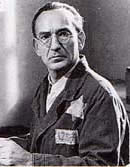
He is played by Ben Kingsley btw...who is of Indian Decent.

Right so I’m setting up like a custom at my Grandparents house, every time I come I watch a really crappy movie that has a race controversy, first Prince of Persia, now Last Airbender. Both films hired white actors to play the parts of non white characters (for the record, I don’t care enough about these films to look up the actor’s names). In Prince of Persia, the Prince is played by white actor Jake Gylenhaal, while in Last Airbender all the characters but the villains are played by white actors. This has cause a great deal of uproar, especially in the Asian and Asian American communities, an uproar slightly diminished because the films were so bad that nobody really cares about their messages, but honestly, is it racist to have a white actor play a nonwhite role? Now this is a long standing issue, the film industry’s long history of racism and racial profiling so the minorities in America have a very justified chip on their shoulder. I might be bias toward the Asian community, because I’m sympathetic towards their fully justified grievances, and the articles written by Asian Americans tend to be well written, and their argument boils down to A) Many ethnicities are horribly underrepresented in Hollywood, giving the impression that these ethnicities aren’t important, don’t exist or aren’t relatable. B) Hollywood has a long history of type casting and marginalizing ethnicities, and while this is changing for African Americans, its still a big issue for ethnicities with a small population like most Asian Americans C) Blackface and by extension Brown Face or Yellow Face, is racist and insulting to minority groups, and having white actors play non white roles is a form of that.D) We need to have more recognition for minority actors in mainstream media E) Thus, white people should not play non white roles Now since I’m lazy, I’m just going to break my response into bullets as well.

1)Ok, now Hollywood’s assumption is that white people are unable to to sympathize with non whites, for the record, with the exception of some Cherokee blood, I am almost the quintessential WASP, just to put my “ethnic bias” out in the open. Personally, I’ve never had any problem with watching movies with ethnic main characters, I sympathized with the pretty much all the characters in Seven Samurai, in Kun Fu Hustle I can feel for the main character even if I don’t identify with him. Maybe that’s because all of the characters are Asians so I identify with the protagonist because the entire cast is equally “different’, but that in a movie where white people are hanging out alongside Asians will I naturally sympathize with the whites? Well, in the film Se7en costarring Morgan Freeman and Brad Pitt, I am far more sympathetic to Morgan Freeman’s character than I am to Brad Pitt. Maybe its because Freeman is a better actor? Possible, but I think its something deeper than that, its personality, I sympathize with Morgan Freeman’s character because I can relate to him, his intelligence, his appreciation of classical books/music/poetry, and his intense cynicism, while Bad Pitt’s emotionally charged life style doesn’t appeal to me. Or in Men in Black, while I enjoy Tommy Lee Jone’s character, I sympathize with Will Smith’s character because he, like me, is a smart guy caught in a world he doesn’t understand. In the end, it isn’t race, or heritage necessarily, so much as just similarity, and while race plays a part in that, its more personality, and its the duty of an actor to make the character relatable and sympathetic

2) Last Airbender opens in an Inuit style village full of Inuit actors then we’re confronted with two absurdly white protagonists, its just so obvious the director is choosing whites over non whites. When I watched Prince of Persia, I didn’t mind, because Jake is a pretty good actor, but I didn’t fail to notice that the only actors with dark skin are extras. And the main actress’ skin was darkened to make her look Indian and she was horrible. Ok, Iranian actors are hard to come by, but there is a huge industry with absurdly hot Indian actresses, and almost all know English. Choosing such a bad actress and actually changing her skin is just insulting. I think the issue isn’t so much the color of the character’s skin, so much as it is the fact that the films are so obvious about their racially driven casting choices, is just insulting.

3) But compared to the source material is it really that racist? For example, in the game Prince of Persia the main character is basically British, he is white, and has a British accent, and the Princess is somewhat dark but she doesn’t really seem Indian beyond a skin color and dress. Would the game have been better if the story tapped more into Persian Culture and Society rather than just the aesthetic. If the it was equally well written, I think I’d enjoy it even more, because its about clashing societies and two ancient cultures that are almost totally unrepresented in video games today. So yes, it if was handled equally well, I think it would have been much more interesting, in fact I could have used less platforming if their was more story and cultural stuff, but I don’t think the game was obligated to be true to the roots of an obvious fantastical Persian world. Similarly, the Avatar TV Show has to deal with race issues, two of the main characters have dark skin, but in a world that draws heavily from Asian folklore and with an Asian atheistic, most of the characters look white. Aang is supposedly from a Tibetan styled culture (people keep calling him Chinese, don’t know why), and yet he looks like a bald white guy wearing vaguely Tibetan clothes. Now I’ve met like half a dozen Tibetans in my life, so clearly I’m not an expert on a society that I’m sure is very ethnically diverse, but every Tibetan I’ve met, even those born in the states, are very dark skinned, brown eyed and with much more “Asian” faces. Similarly, I’ve seen many movies about the Inuit, they all seem very Asian looking, while Katara and Sokka look like well, white people with a really dark tan, or maybe Latinos, but certainly not Inuit. Troph basically is white, and the Fire Nation despite seemingly drawing upon Fascist Japan/Communist China design, are almost entirely made up of white people with “Asian Styled” haircuts, and are certainly not Indians. Ok yes, not all Asian people share a universal look, but they certainly don’t all look like slightly different white people, the characters of the cartoon could pass for Americans in most cartoons. Also the jungle tribes they stumble across look and act like Louisiana hicks, which as a partial southern I’d find offensive if my family wasn’t from North Carolina (hypocrisy ahoy), while you’d think that a Vietnamese, Thai or Cambodian culture would be more appropriate if they were fleshed out in the process. So can we really blame the Movie too much if the show itself is not ethnically diverse in the least? I mean, why not have the Fire Nation look Japanese. Now maybe I’m a little bias because I personally find the “Asian traits” that were omitted very attractive, but I’d still rather have Troph look Chinese. However, lets bear in mind, the animators are drawing from Asian philosophy and culture, but it’s a fantasy world, with a very western world view emerging from the series, so it isn’t like “Fantasy Asia” exactly. I mean, if a bunch people with dark skin settled in the South Pole, I’d expect them to live like the Inuit just because of how useful that method is for survival. I could see a group of White people with a vaguely Japanese styled culture. Its fishy that out of all of the cultures drawn upon, Inuit, Chinese, Japanese, Tibetan, and Pacific Islander, none of these people are white and yet white people seem to be everywhere in the world of Avatar. Now I enjoy the show, but I think this is subtler racism. Honestly, quality is an issue, Avatar is a good show so nobody wants to bring up the race issue, because it colors (no pun intended) our view on an otherwise good show, while the Avatar Movie (Both of them actually but I mean the Airbender one) are trash, so people mock its racism

4) So is a film better if it casts people of proper ethnicity? I feel a little nervous making that claim, I mean, because I’m a WASP does that mean that somebody of Irish descent is automatically better at playing an Irish character? I mean, is a random black guy automatically going to be better at playing Martin Luther King Jr. than say, Robert Duvall, who is one of the best American actors at all time? I mean, Robert Duvall who isn’t Irish played Tom Hagen in Godfather very well. However speaking of Godfather, most of the cast for that movie were Italians, and that added a certain something to the film. The way they spoke, their mannerism, the interactions, the film (directed by Italian American director Copula) and so has a certain charm, a feeling of familiarity that is brought out by people who really understand their own culture, enhanced because the characters look Italian. Or watching movies made in their own culture, there is a certain charm that is hard to bring across, like say, Rules of the Game or Yojimbo, those movies are so clearly the product of their respective cultures. Can you imitate that without native actors? I’d say yes, but its much harder.

5) However, even after agreeing with most of the racism, I can’t bring myself to agree with the idea of racial casting, because its not always bad. For example, I love Lawrence of Arabia, I think its an amazing film, and yet despite being filmed in Saudi Arabia, being a movie about Arab culture/history/society, and being about the issue of race, most of the main Arab actors are not played by Arabs, I think only one of them is an Arab. Some are South American, some are Middle Eastern but not Arab, and Sheriff Ali is played by an Egyptian. And yet it’s an amazing film, and the movie’s theme about Arabic culture still ring true, despite the fact almost all of the Arab actors are extras. Lawrence of Arabia is rather ironic, because one of the major themes of the story is that Lawrence doesn’t really identify with his own ethnicity, and seems to project himself as an Arab, which is very interesting take upon the whole idea of race in theaters. You’d think Lawrence (and the average audience member) would sympathize more with the British, but instead he is drawn to the Arabs, possibly because he like them is an outsider (in the film this is attributed to his alleged Homosexuality). Or take Last King of Scotland where African American Forest Whitaker plays Ugandan Idi Amin. Yeah that’s not a typical example, but it still applies, just because they are both black doesn’t change the fact that they are from totally different ethnicity, and even if you traced back Whitaker’s family history, I’d guess that they would come from West Africa because that is where most of the slaves were kidnapped from, not Uganda, in fact I think they darkened his skin for the film so he would look more African. However, he does an amazing job, that is one of my favorite movies of all time, and he does a great job portraying the character. Should they have found some Ugandan actor to play the part instead? Considering how well it turned out, I’m inclined to say know, unless this hypothetical Ugandan actor was somehow better than Whitaker, which I feel is kinda impossible. But again, like with Lawrence of Arabia, the actor shows a great deal of respect (if that’s the right word) for his role. He is speaking in an actual Ugandan Accent, he looks like Idi Amin, he walks and talks like Idi Amin, and honestly it looks like the Dictator was hired for the part. Like in Lawrence of Arabia, race is a plot point in the film, and the fact that Whitaker isn’t African doesn’t dilute the message. In both films, there is a sense that the directors and actors respect the fact that they are playing outside their culture and try to do justice to their portrayals. Ok, so ultimately (I love that word), what do we draw from this, what’s the conclusion? Is Hollywood racist, and is non ethnic casting possible? To the former, I think Hollywood is an absurdly racist institution, but in this particular instance, I feel this stems not from malice so much from the standard Hollywood way of doing business. This doesn’t feel so much like Blackface, instead it feels similar to how Hollywood casts are almost entirely made up of the most good looking people on the planet. You never have women in Hollywood who don’t look almost perfect, you never have men who have a little gut unless it’s a plot point, everybody has to appeal to this very strict standard of beauty, which is non whites sadly don’t fit into with a few exceptions, so to be an Indian American who wants to get good parts you face the same challenge as an American who is slightly overweight, or a women who doesn’t fit that absurd standard of beauty. Its still racist, but its less obvert. Secondly, ethnic casting, I feel like what makes the difference between Last Airbender and Lawrence of Arabia is the amount of respect paid to the source material, in Last Airbender it feels like the white actors were cast off hand and clearly no effort was made for them to blend into their environment, thus making this just insulting obvious, while in Lawrence of Arabia the actors are integrated into Arab culture. So it boils down to respect, I feel like a lot of Asian minorities already have a massive chip on their shoulder due to being underappreciated by the Hollywood elites, are doubly offended by the fact that their cultures are simply dismissed as nothing more than a backdrop which makes people feel unappreciated, while Lawrence of Arabia is very aware of the cultures involved. So I think it ultimately boils down to respect, and a sense of appreciation for the culture involved. However, I think that directors should at least start casting Asian Americans, and by extension, any ethnic minority when the opportunity arises because they aren’t given enough recognition, and often it adds a great deal to the movie, rather than just constantly recasting the same pool. Even if looking past the racism, the insensitivity of leaving out societies from the mainstream media, its just wasting of perfectly good acting talent causing stagnation. You can’t just draw from the same limited pool of actors, that just causes rot, and also has this weird effect of thinking that white people are the norm, the standard in the world, and everybody else are commodities. I feel like they have a sort of obligation to try to move beyond this very localized viewpoint, because as fascinating as our own culture is, there is so much more out there. Focusing upon other cultures/societies should be a welcome opportunity for Hollywood, because these are world full of different ideas and different struggles, in a multi ethnic country,we should welcome more input from the massive amount of people within our borders (for that matter, notice a lack of movies about Latinos?) Even a single big name Chinese Actor for example would bring a great deal more attention to the Chinese American community, whose kids would try to become actors knowing they don’t have to just play stereotypes. With more actors will bring more recognition to these ethnic groups, which leads to a more culturally aware population, cause I feel like most Americans are in this sort of cultural bubble. Unlike Europe, we aren’t directly confronted with these other societies beyond Hispanics and African Americans, and thus don’t really acknowledge them, I mean I don’t know any Vietnamese Americans, so um, why should I care? So while yes, the racism debate is somewhat over zealous, and directors shouldn’t be forced to limit themselves to race when choosing their actors, it is a very viable option, and I feel the more we embrace other cultures the better we will be for it.

From

EE