Friday, November 21, 2008

Remake, EvilElitest's review on Fable Lost Chapters


What if marriage was this easy in real life?

Fable:Lost Chapters, Wasted Time

Well, as most of you know Fable II, the sequel to the popular game Fable, has been released, and in the next few weeks everybody who’s anybody will be commenting on it. So I’m stuck in a bit of a pickle. I’ve only recently gotten Fable II, and I haven’t been able to test it out. So while I want to contribute to the newest fad, I realize that until I finish the game I’m not going to be able to offer an opinion that is actually worth anything. And lets be honest, when everybody is talking about a game, who is going to care what I say when you can listen to Game Informer suck up to Lionhead Studios about how this game is the most revolutionary and immersive RPG in the world for anyone who has never played Elder Scrolls, Neverwinter nights, Torment or Baldur’s Gate. So I, as per norm, will do the most annoying thing possible and take the half way stance. I’ll be on the Fable bandwagon by reviewing the series, but in order to be original and creative (if doing something everybody else did years ago is creative) I’ll review the first game instead. Actually, this isn’t that bad as far as my ideas go, because it not only will remind the people playing the sequel how the first game worked out (or, more accurately, didn’t), it also will let the people who actually had some common sense and avoided the first game to see how it turned out now that everybody is talking about the sequel.

Ok, now as most of you noticed, my description of the series isn’t very flattering. If you haven’t noticed, seriously, you need to improve your reading comprehension skills. I admit, I’m being kinda overly hostile, Fable II hasn’t done anything yet to deserve my wrath, so I really shouldn’t mock it as much, through the first game certainly deserves all the mocking I can give it. Now before we start, I want to address an issue that apparently comes up whenever somebody reviews Fable, “Project Ego”. Basically when the game was first being developed, that apparently famous game designer Peter Douglas Molyneux made a lot of fancy promises, and when Fable didn’t deliver, a lot of gamers got upset and dubbed the game “Project Ego”. Now personally, I don’t see why this was such a big deal, because quite frankly, I expect game designers to exagerate the good qualities of their game, and I’m of the opinion that one should never listen to what designer says about their game. Even if you ignore their monetary self interest in getting you pumped up, they also wouldn’t be making the game if they didn’t think it was the best thing in the history of ever, as only a few game designers have what we call modesty. So I don’t feel that angry when the developers claim that their game allows you to plan murders like no murder simulator ever has before, and it turns out that you are only able to plan virtual assault. What gets me pissed off through is when reviewers who aren’t in the pocket of the gaming companies (they exist) declare the game the best RPG in the history of EvaR, and seem unable to notice the flaws in the game. While I don’t think Fable should be burned at the stake, the way it is so overrated is really annoying.

Fable tries to be the most immersive video game in the world; you can buy your own house, get married, customize your character’s dress, alter your appearance, and choose to be good or evil, etc. A new RPG that goes into uncharted territory, bravely exploring the unknown, challenging the limits of the RPG world by….doing exactly what Elder Scrolls, Baldur’s Gate, and Neverwinter Nights did. Fable’s premise is declared as revolutionary, but it really doesn’t do anything that other games haven’t done before. Now, a game doesn’t have to bring about a new age in gaming to be good, it could take a new spin on things, present an old format in a unique manner, or in the still developing concept of immersive game worlds, it could just try to expand upon the concepts used in later games. But Fable doesn’t do that, any good things that come out of the game (and there are some) are overshadowed by the massive lack of originality. Sticking to a format is fine, but you have to at least expand upon the format, not just blatently copy and reuse it. David Edding’s books may be full of clichés but he makes sure he tells the story well and uses the format in a mature and original manner, while Fable is a bit more like Eragon, which just blatantly rips off other works and doesn’t add anything. It’s like that rip off of “Rear window”, “Disturbia” it just doesn’t bring anything new to the table, and no matter how good your premise is, if you just rehash what other people have done better you’re still just a hack. Alright, I’ve made several accusations, and much as I really do want to claim its bad and leave it at that, I am somewhat obligated to go into detail on the matter.

Right, let’s get started. If you haven’t played the game, well as you can expect, Spoilers below, but nothing really that astounding honestly. The story takes place in the mythical lands of Albion, where you start out as a young boy in a small village. From the get go, it is established that you can choose to be good or evil, though it’s a very simplistic kiddy sort of good and evil; beating up the little girl or returning her teddy bear, that sort of thing. You have to buy a present for your little creepy sister, and then your entire village is destroyed by bandits, and everything goes downhill from there. The hero (who if you haven’t caught on, is you) and is never named throughout the game, is taken to the “Hero’s Guild”, apparently a school for adventuring (don’t worry, I’ll address its absurdities later), and then after a few bug killing tutorials, is let out into the wild. The main feature of the game is that the world reacts to you and you can choose to be good and evil (oh yeah, there is some plot about a dragon, a magic sword, a blind girl and a fighting arena, but I honestly couldn’t care).

Well since I have a long list of complaints, let’s start with Fable’s greatest flaw; immersion. For a game that tries so hard to engage you in its world, it does a very poor job, like the fact that you can’t talk to anybody who isn’t a plot character. NPCs (Non Playable Characters) will wave vaguely and make some comments on your appearance, but the game almost glorifies how unresponsive they are. While the reactions are kinda cool at first, they quickly become annoying because they are so generic. At least when you can talk to NPCs you get to choose when you want to listen to them, but hearing “What a swell bloke” or “He is a scary one that Hero” again and again gets really annoying. This also makes the player not attached to the world, because the world is inhabited by a bunch of obviously generic people who all look and act exactly the same.

“Wait a second EE, most games have masses of emotionally dead NPCs, why is Fable at fault here?”

The thing is while plenty of other games have generic NPCs at least you can interact with them. Take Baldur’s Gate for example, the vast majority of the NPCs are nothing more than random people with the generic name “peasant” or “Guard” or “Understudy”, but despite that the player can approach them and engage them. You can learn interesting stuff from them, and they might comment upon the way you act or the things you’ve done, like how in Jade Empire you can go up to anybody and talk to them about what is going on. Even games I am normally critical of, like most JRPGs (Western elitism ahoy) at least have every random dude give you some nifty fun facts about the world. You can talk with people and have some interaction. It’s not perfect, hardly and it certainly could be improved, but at least it’s something.

Now you can use emotes to communicate with the people around you, with your character making a corresponding action, like flirt, dance, laugh, recite Shakespearian poetry etc, to which the NPCs will react. However this really doesn’t replace the ability to talk to NPCs, because their reactions are so shallow. The first time your hero flirts with a girl it is kinda funny listening to their reaction, but after the third time you’ve pretty much heard all there is. When you fart, dance or flex your muscles, every person’s reaction is pretty much the same as everyone else’s and then the NPC interaction goes from intriguing to absurdly tedious. For example, as a good person learned that making people like you increases your good points. To achieve that all I have to do is wave, dance and smile to people, and just generally act friendly. After doing this for ten minutes everyone in town bloody loved me. When I wear black clothes they hate me, but when I change to something happier, they all love me again, which means either the game can’t handle social skills, or people of Albion are more fickle than the crowd in Julius Caesar. Because it’s so easy to change people’s minds it’s not really worth it.

The worst example of this is the romance part of the game. Now I like the idea of being able to marry any person (Boy or Girl) in the entire game, it’s a nice option and I think if handled maturely it could be to a lot of fun. But because the NPC interaction is so shallow, it’s just boring. Here is how you get married.

1) Either become good looking or have a high renown

2) Walk up to a random woman, literally any women and use the flirt emote four or five times.

3) Give her a ring after buying a house and hey, you’re married.

That’s it. I got married and divorced in three different towns in ten minutes, and if I hadn’t run out of money I could have gotten married to the entire female population Bluebeard style. But at no point in this romantic process can you actually talk to your potential wife. On some level the game is remarkable realistic when it come to the post marriage relationship, the wife just stands in the house complaining about your looks and asking you to buy her stuff for. The husband just neglects her, with almost no real love between them, just like all real life marriages (joke).

One thing that baffled me was the same sex marriage. I like that the option is available, although I didn’t use it, and I have to reluctantly praise the game for including it. But I have to ask, how is homosexuality viewed within the game world? I mean, in the Middle Ages it was considered a sin, and even today it isn’t accepted. I mean, in most states gay marriage isn’t legal. So I was rather curious about why it is so tolerated in the world of Fable. Apparently it’s an acceptable if taboo practice, but nobody seems to comment upon it or explain why it is so tolerated. While people take a little pressing to admit to being gay, when they come out nobody actually does anything about it and there is absolutely no mention of its effect on society. I’d expect that the world of Fable would be fundamentally different from our word, but it isn’t and thus gay marriage, in the end, seems to be just a gimmick.

Now Fable is sold on the idea that you can do pretty much anything, and act the way you want. Yeah, these are all lies. The world is like Legend of Zelda in how linear it is, but unlike Zelda it doesn’t make up for that by being creative. The entire world is just a few cities, with a few roads connecting them. You can’t randomly explore the world, or just wander around, because there is nowhere to go. Compare this to say, Morrowind where one can wander literally anywhere in the world from the get go, Fable also makes the claim that one doesn’t have to follow the main quest. One can do all the side quests, but after those are gone there really isn’t anything else to do unless you want to get married or burn a town to the ground. Now this isn’t necessarily bad, BioWare’s games are very linear, but they give you much more freedom of choice. Take Jade Empire. In every chapter before moving on to the main quest, you can do a lot of side quests within a limited area. The biggest difference between Jade Empire and Fable is that the former’s quests tend to be really in depth, like when you have to help fix the love life of the town’s local mobster, while Fable’s are really simple; go here and kill that guy.

I like in Fable how people react to your appearance, despite how shallowly it is implemented. The many different hair styles, tattoos, and clothing designs are a great idea and one of the few things that Fable has to offer that Elder Scrolls would be better off with. Ok, the most badass thing this game has to offer is the voice acting. No, I’m serious; the game has really good voice acting. This might be my inner Anglophile speaking, but the fact that most of the voice actors are British really does go a long way towards making mediocre dialogue really good. I mean I want to kidnap their voice team and force them to be the random voice actors in every game from now on. The only game who’s random people have such good voices that I can think of (and correct me if I’m wrong) is Jade Empire, which has a much smaller cast, and a little behind Baldur’s Gate, which had a more limited number of phrases. The voice acting alone almost forgives the game for all of its other faults. However, despite the great voices, the actual reactions makes it all for not, what a waste.

The absolute worst problem with the game is the alignment system, which makes every edition of D&D look as coherent and comprehendible as the legal system in Russia. Now Fable has this idea that your actions affect your appearance, so a good person will get a halo and butterflies whereas a villain will get horns and creepy skin. Once you get past the gut reaction of disdain, it’s actually quite a cool idea. I mean, imagine if your actions physically changed your appearance, how cool a concept would that be? Good and evil would be viewed in a totally different manner, and people’s way of thinking would change drastically. Even if 1% of the population in Fable had this ability it would be a very interesting feature; the idea that a person’s appearance reveals their inner soul. You could do a lot with that idea, like having a church where the “Halo people” are their saints, and people being very upfront and honest about what kind of people they are because they can’t hide it.

But despite being one of Fable’s most original ideas, they don’t do anything with it. First off, nobody else seems to change like you do, which is disappointing considering how much interaction you could have with other characters in the game. Also nobody really comments on it. Oh they will cower when they see your evil version or feel happy when they see the good you, but nobody goes “hey, that bloke looks like a demonic freak” or “Look daddy an angel.” And nobody tried to burn me at the stake, which I felt very offended by.

But there are bigger problems with the logic of the alignment system itself. One questionable feature is that killing a trader costs you 12 evil points, while killing a farmer cost more? Are farmers more pure than merchants? Is growing food some holy task, while peddling merchandise is somehow evil? And if that’s the case, how is killing the bandit chief after he surrenders more evil than killing a single farmer? I mean, I can see it being evil, but wouldn’t it be less evil than murdering an innocent farmer? Or why is stealing an apple worth eight evil points, but assaulting somebody is worth only two evil points? Bloody hell, how does that make any sense? Also why is divorce evil? Can somebody please explain how realizing that a marriage isn’t going to work and leaving your wife evil? Many of my friends’ parents are divorced, some of my grandparents are divorced, and none of them are evil. And here is the kicker, divorcing your wife earns you more evil points than killing her? Who says video games undermine society’ morals.

Another gripe I have with this system is the fact that killing bandits is considered good. Yeah, it sounds nice, but think about it for a second. Saving merchants? Ok, that’s good. Protecting a village from an attack? Good. Stopping bandits from threatening others? Ok. But why would killing them in self defense be good or evil? Here is an example. My evil character was walking down the road when he ran across some traders, and killed them for no logical reason. Then he was suddenly attacked by a dozen bandits, and after he finished them off, he found he actually had more good points than before the massacre. By the time he got strong enough to wipe whole villages off the map, he had killed so many monsters that it took ages to get him his horns, and then I had to literally run through bands of enemies to avoid losing them. It was really silly when I wanted to do non evil quests, and kept getting good points. When you’re getting paid to kill people, is it really good that you saved the farm, since you were only in it for the money? The “good” thing would be refusing money and saving people for its own sake, but apparently I was good even though I was obviously in it for the money.

The Fable morality system is simplistic and immature. They reduce good and evil to basic numbers, and completely ignore the subtly of human interactions, making playing good for its own sake somewhat unrewarding. I mean, in well constructed morality game, like Jade Empire or Baldur’s Gate, there is a reason to be evil as it’s much more profitable, but I prefer to play good in those games because I actually feel guilty when I hurt the people in those game, because they are so well developed. However in Fable the characters are so lifeless and unappealing that slaughtering them all like McDonald’s chickens is actually enjoyable and I feel no pangs of guilt when I take them to the temple of Skorn to be slaughtered.

It is not a smart idea to make good and evil have equal value in the context of a point system. The nature of good and evil is much too complex to be represented by a such a simplistic construct and it misses the whole point of why players choose to be either good or evil in a video game. For me I like to be good because I want the challenge of being held to a higher standard, and I like to be evil because I enjoy the chaotic thrill of having no standards. Evil people can be expected to do good things pretty often, because it’s in their interest to do them, it furthers their evil plans and it sets up the evil things that they do later to be even more dramatically evil. So by making good and evil a question of numbers it turns morality into a dull two dimensional Sunday sermon and thus really not worth paying attention too.

Bioware uses a number scale in their games, but they handle it in a more mature way, where the numbers aren’t the motivation for change, it’s the reaction of the supporting characters to your good or evil acts. Being evil isn’t about being a serial killer, its about being smart and thinking of number one, but being good honestly feels more satisfying in Bioware games because the NPCs and the world itself are more responsive to you. In Baldur’s Gate, I gain something from being evil more than just “evil points” but I actually feel bad about myself in the process.

Fable was sold on the idea that it was “non linear”, where you free to effect the game as you please, where the plot is determined wholely by your actions. What a load of bull! Fable is one of the most linear Western RPG I’ve ever played. The “choices” you make are essentially the same, you can either kick the puppy or give all your money to the puppy. The game promises a totally difference experience every time you play, but when I played my second evil game, it was exactly the same except the peasants cowered instead of clapping. Hell, even the “Good only” and “Evil only” benefits are exactly the same. While I didn’t get the holy sword thing in my evil file, I just got the evil giant uber-weapon, so it was all-good. I couldn’t do the saving the merchant quest, but I just did the exact opposite and killed a bunch. And while I couldn’t use the good guy spells, I could use the evil ones that were mostly exactly the same but glowed red instead of blue. And the plot is exactly the same no matter what you do. Apart from good and evil points, there is literally no bloody difference if I save my sister or let her die (spoilers, or wait too late).

Now being linear isn’t in itself bad. I like Baldur’s Gate more than Elder Scrolls, because it compensates for its lack of freedom with a really astounding story. Fable’s plot, on the other hand, is cliché and reads like fan fiction, there is nothing there that you haven’t seen before. A weak story line is OK for a game like Oblivion, because of the immensity and overwhelming detail of its world. Fable’s world, in comparison, is very small, very generic and very controlled and doesn’t feel at all engaging.

Ok, time to give Fable some credit here; the game actually isn’t totally bad. It’s just over hyped. If I had to give Fable a “score” I’d give it a 73, like a test grade. It had all the proper requirements, but no real depth and sloppy management. What Fable does have is a great sense of humor. The game is almost worth playing simply to listen to the NPC comments (at least until they get old) and read the in game books, because they are really very clever. Sadly, like most of the games elements, for all the good clever humor, there is a lot of bad crass humor that weights it down (basically it’s a bit like Harold and Kumar), but I’ve heard that Fable II avoids this. There are other cool ideas, but most of them are so minor. I like the fact that you can age, something almost no RPG has every gotten around to doing. I also like how you can regain your youth using the temples. But that’s undermined by the fact that you only age when you level up, which is a horrible mechanic. I mean first off it doesn’t make any bloody sense because I can walk around without leveling up for a real life year without aging a day, then age 4 decades in 1 minute. Secondly it punishes you for getting more powerful, which is a moronic concept.

Right, so I think the Demon Doors are the only good idea in Fable that is actually implemented properly. For those of you who don’t know, Demon Doors are basically giant faces in doors that keep you from entering certain caves unless you perform a task for them. For example one of them won’t let you in unless you defeat a certain amount of monsters, another will only let fat people in, another will only let somebody who’s slept with a few dozen women in etc. Their voices are great and very funny, particularly the one with a fetish for fat people and they were the only reason I felt obligated to finish the game twice in order to open them all. I really do look forward to them in Fable II.

Um, the monsters are actually pretty cool. Balverines, Trolls, Nymphs, and Hobbes are actually pretty cool, both in their appearance and mannerisms, but that really is all there is to them. They don’t have any real detail, background or content other than “random enemy” which is really annoying when it comes to nymphs and Hobbes, who are clearly intelligent and could be really interesting parts of the game but instead are just random monsters, which is really disappointing. As for graphics, I normally don’t give a damn about the graphics, so I don’t have much to say about Fable’s. Generally speaking they are serviceable, not spectacular. The weapons I have to say are really cool looking. Ok the way they are all out of proportion isn’t great, but that doesn’t change the fact they are really cool in design. I have a weapons fetish I admit, but I think they did a great job with the maces/hammers, and a remarkable job with the cleavers and the weird great swords. My only weapon complaints are that the crossbows are creepy looking, and finally….the katana. Now I’m not saying it doesn’t look cool, because it does, but that thing isn’t a katana. It doesn’t even resemble one. Did they just call it one for the ninja crowd? Weird. Anyways, good weapons and I like the augmentation system.

Alright, here is my Conclusion. Despite the game’s many, and I mean, many faults, it can be kinda fun. It does what it is suppose to and lets you manage your character within a limited scope. While it fails to reach almost all of its expectations (voice acting being the exception), it never falls to the level “bad”, except for NPC reaction. An appealing part of Fable is that it doesn’t take itself too seriously as a game. Now I’m reluctant to allow its sense of humor to be an excuse for its flaws, namely because it wasn’t advertised as a parody game like Bard’s Tale, but was instead was sold as the best RPG. But its humor does make you forgive some of its failings. If I had to sum this review up in one sentence, I’d say “Fails to live up to its hype, but is fun in small doses”.

from

EE

Remake, Warty Goblin's review on Fable

Here it is again, because i can't edit format for some reason


The Gaming Goblin talks Fable: The Lost Chapters.

The famous Warty Goblin from Order of the Stick has his own view on Fable, both nicer and shorter than mine. Enjoy


Hello all, warty goblin here. First let me thank EvilElitist for offering me the use of this space, and the chance to talk about games, something I love to do. Now, down to business and the topic at hand. I picked up Fable: The Lost Chapters for PC back in the middle of October since it was selling for $20. Since this game is so old I’m going to unapologetically refer to elements that spoil the plot, such as it is. You have been warned.

The initial portions of the game feature your young character kicking around the traditional role-playing game starting location of Happy Hamlet, which is, by long standing tradition raided by bandits in one of the game’s more evocative and effective cutscenes. I’ve played a fair number of RPGs over the years, and getting raided by bandits is something to which I am in general rather inured, but this cutscene is well done enough to make me take the event seriously. You naturally survive, and get taken in by the Heroes Guild, which functions pretty much like King Arthur and co., except without a King and a less strict moral code. After the actually interesting opening scene and bit of gameplay however, the game hits the brakes full force. If training to be a world saving hero is this dull, I think I’ll go to plumbing school instead thanks. Yes tutorials are good, but I already had a bit of one before Happy Hamlet went all fiery, and four separate unavoidable lessons on a melee combat system that involves a grand total of three buttons is definite overkill. Watching my character grow up would be interesting if he had a personality at this stage, and if it wasn’t the harbinger of yet another tutorial. Amazingly these persist even after I graduated Hero School with a mandatory First Quest. At some point I began to think that the game did not think overly well of my intelligence.

So the first hour or two are decidedly meh, and annoyingly unskippable. This is really a poor design choice, since you make no decisions of anything like long-term consequence before graduating from the Hero’s Guild. Sure you can get one or two Good/Evil points as a child, but the overwhelming number of Good/Evil points you get over the course of the game will be from major quests, which often give you fifty or more. One or two just doesn’t make a compelling difference, and for a second playthrough I should be able to skip the tutorial, particularly given its length. In general I have to give the game credit though, since all the cutscenes and dialog can be skipped, a feature that is all too rare, and making copious use of this feature gets the tutorial down to a much more manageable hour or so.

After that things actually began to pick up. The role-playing elements (a phrase I shall use here and elsewhere to refer to the manner in which you level up stuff, distinct from actual role-playing by which I mean making dialog choices and such like) are interesting. I’ve always liked skill-use based systems in general, since it seems only right that you should become good at the things you do a lot of, but they make character diversification a real bitch late in the game when I want to advance my underdeveloped skills but need to rely on those in which I specialized to survive. Fable solves this elegantly enough by rewarding me with experience pools specific to magic, archery and melee based on my use of them, and also general experience redeemable for any skill increase. This is something of a mercy since I tend to play melee characters, and branching out to magic later on can be damn near impossible in a lot games. I have vivid memories of trying this in Oblivion, where I’d be trying to kill ogres with the magical equivalent of a single match, which I could cast about three times. Fable averts this thankfully. This also ties into the overall sense I get that they game isn’t trying to emulate the usual suspects of digital roleplaying inspiration such as, full length fantasy epics, table top roleplaying games and movies, but instead goes for fairy tales, since it encourages you to be something of a polymath, sort of an amalgamation of different folktale heroes. It’s a respectable system, and it ties into the combat nicely. The only complaint I had with it is that my character maxed out his melee skills but kept earning Strength experience which I was unable to use, which essentially penalized me for playing to my hero’s strengths at the end of the game.

The combat also improves. It starts off pretty lackluster to be honest, since you only fight a few weak enemies with boring weapons. But by the third or maybe sixth hour you’ve got more enemies that can actually do damage to you. They never managed to kill me thanks to the Resurrection Vials, which automatically heal you whenever I ran out of health. Resurrection Vials aren’t unlimited, and I had to either buy them in the shops or from scrounge around in the environment, but with only a minimum of attention, I was able to ensure my character never died. This does make the game ‘easy’ I guess, but the only really important difference between this system and saving then reloading my game all the time is that I don’t have to remember to use the Resurrection Vials, I don’t lose any progress, and there’s no loading screen. I am generally in favor of anything that reduces the amount of game time I spend staring at a loading screen. Thanks to the combat multiplier which increases how much experience I get and goes up whenever I do damage and drops whenever I take damage, I still wanted to avoid being hit. I like that system, its risk/reward without being sadistic about it. It also ties back into the fairytale feeling of the game. There’s never any doubt in a fairy tale that the hero kills the ogre or the dragon, it’s just a matter of how. By removing some of the worry about dying all the time, Fable lets you concentrate on the how, which is the fun part.

Anyway, the net effect of all this is that combat becomes more fun, because it starts to be less about winning, which is a certainty, but rather about managing the enemies for the best possible victory, and the highest possible combat multiplier. This involves using knockback attacks, dodges, and other such things to avoid getting hit while pummeling the enemy as much as possible. Unfortunately the combat never really does anything more than that. The enemies changed, but I never got new animations or sword attacks or anything, despite achieving the pinnacle of human ability in stabbing things with swords. This hindered my feelings of being an epic badass since not only was I doing essentially the same thing at the end of the game as the beginning, but I was doing it in fundamentally the same way. Archery, if anything, is even less variable than melee combat, in which at least you get two different attacks. Instead in archery it’s mostly a matter of using the optimum amount of power per arrow and managing the annoying lock-on camera, which can be absolutely vital for some enemies like Nymphs, but always locks onto the wrong thing. In fact archery is directly responsible for most of my Evil points, since I would lock on to a traveler by mistake and so take his head off instead of the bandit right next to him. At least I could learn new spells on the magical side of things, but the magic system in Fable never really ‘clicked’ for me, probably due to controls. Still it avoided degenerating into an overcomplicated mess by the end of the game, unlike certain games named Neverwinter Nights 2 which I could name here, and remained fast and fun throughout, so I don’t have any really major complaints.

Social interaction is another story, or in this case paragraph. The options are really quite limited, I can do a couple polite things and a couple rude things, but there’s really not much a reason to do either. Some of them look funny, but that justifies using them once and they take up a hotkey I could use for health potions or something. Making people love/hate you really doesn’t have any purpose beyond changing their reactions to you, but this doesn’t affect anything else. At least Oblivion made the conversation a minigame and gave me store discounts for playing it well, and Mass Effect had such terrible things happen when I didn’t level the conversation skills I always kept them maxed out of a sense of guilt. Fable takes roughly the same attitude towards social interaction as it does combat, in that it’s pretty much impossible to fail. The problem is that Fable never gives you a reason to succeed, or even to a way to do so.

There are a lot of things you can do, get married, flirt, attract hordes of lust crazed townsfolk just by walking by, but there’s no reward for doing it, or even penalty for not doing so. It’s essentially role-playing light tacked on the side without appreciable consequence. Same with the morality system, the only noticeable consequences for playing a living saint or somebody who gets married because he likes to decapitate people in the comfort of his own home is one has a butterfly halo and one has horns. Freedom, to steal a phrase from Lord Vetinari of Diskworld fame, is being free to accept the consequences of one’s actions, but there are no consequences here, it’s giving me a piece of paper and the same reward if I draw a happy family, a concentration camp or nothing at all. At best the social interactions are sort of a giant fashion accessory for my character, get the people to love me and my orbiting flights of butterflies because it’s amusing, get them to hate the sight of my horned visage because I like to see them cower, not because there’s any actual benefit or real gameplay consequence for doing one or the other.

Now that said, I think in some ways that was sort of the point. As I touched on earlier, I get the feeling that Fable isn’t trying to be a normal RPG. It’s trying to be a fairy tale where you play the central hero. This is pretty evident from the stained glass cutscenes, the narration, and the slightly self aware nature of being a Hero in Albion. Of course the social interactions boil down to cosmetics, because that’s what they are in a fairytale. The hero of such stories always journey through lots of places and talks to lots of people, but that really isn’t the point of the story, it’s at best a chance for him to show how heroic he is. Since I could also play a villain, I had to be given a chance to appear villainous as well, but neither was the focus of the game.

There are a couple decisions that I make during the game though that should have some consequence outside of villagers shouting one thing or another at me. Specifically whether or not I let Whisper live and if I kill my sister or not. Whisper in particular, I mean what amounts to the apocalypse is going down and I didn’t kill her for money. Least she could do is send a card, or maybe show up and lend a hand, but no, nothing. This particularly rankled because I actually liked Whisper as a character and didn’t kill her because of that, I wanted to keep her around. Nor is it like having her show up at the final fight would have required that much extra work, toss Whisper in, make a few more enemies spawn, pretty easy. It was the same thing when I saved my sister. I turned down what amounts to ultimate power so I didn’t have to kill the last surviving member of my incredibly bandit-resistant family; I want some emotion, not a cutscene telling me that ‘she leaves anyways.’ One extra cutscene at the end of the game showing a happy reunion or something would have gone at least a short way towards making me feel that the choice really mattered, but I didn’t even get that. This is pretty inexcusable, even by my fairy tale interpretation of the game, I mean saving his family is sort of Hero 101, of course it should be a major point with plot consequences.

This is particularly unfortunate because in general I found the story to be reasonably effective. Let me be clear, Mass Effect this isn’t, but I actually paid attention to the main plot, which is more than I can say of a lot of games. As is the case with the rest of the game, the main story is clearly patterned on fairy tales instead of more ‘hardcore’ examples of the fantastic genre. This gives it a nice, approachable and unintimidating air which I find sorely lacking in other roleplaying games. Thus the chronicle of discovering why my family was attacked by bandits all those years ago was simple, but still engaging, particularly since I was playing as a good character, although I’d imagine it would be weakened somewhat by playing a character who couldn’t care less about why dear ol’ Dad underwent invasive chest surgery with an axe. I never stopped thinking of the game in terms of my character’s motivation instead of his becoming mine, something which I consider the hallmark of a really successful game story, but I found the motivations given to be compelling enough to want to continue anyways. Put another way, I never felt that the available options were out of place for the setting or character I was playing. Part of this is because I went in knowing that the choice system was very black and white, and part of it was that the world in general operated on those principles in a consistent way, I never felt that an option for which I was given Good points was Evil or vice versa.

This being a role-playing game, I would remiss if I did not take a moment to talk about the world which my character inhabits. Albion is a pretty normal feeling fantasy world with a geography that’s a dead ringer for England and Northern Europe in general, to the point where at one point I went “OK, now I’m going to Norway.” There’s undead, miscellaneous monsters needing a good sword massage, and the usual variety of outsized insects and never-ending hordes of bandits that one expects in such titles, but not really anything anybody who’s played an RPG before will be surprised by. All in all the world doesn’t seem to take itself particularly seriously, it’s full of clichéd names like Darkwood, Wychwood, and so on, something which the game almost seems to wink at with people’s constant acknowledgement of how dangerous these locations are, often while they are walking through them. The people are also a bit cartoony in appearance, as are most of the monsters. Normally I prefer my games to be fairly realistic in appearance, but this didn’t bother me, since again the game came off more fairytale than hard fantasy and this look promoted the overall feel. Plus the world at least bothered to look nice, with some solid if dated lighting effects, and lots of color where appropriate.

Unlike some current generation games, things are not always brown, grey, black or some combination thereof. It’s not the most memorable virtual world I’ve spent time in by any means, but it is also far from the worst. The sound and voice-acting in particular are also very solid, which goes a very long way towards making the game believable and engaging. I’m not one of those people who get their +3 Underwear of Support in a knot over the deficiencies of Oblivion’s voice acting, but I still definitely appreciate it when the voicework doesn’t suck, and Fable’s is actually good. It’s not good enough to make the game world super engaging on its own, but it is good enough to make spending time there enjoyable.

There’s also a decent variety of quests available, although I never made any effort to play them all so have no idea how many really are on offer. The mechanic for taking quests is really poorly handled in my opinion, since you have to teleport back to the Hero’s Guild to accept one. There’s no reason I shouldn’t be able to accept them in the field without having to sit through two loading screens before I could go save the farmers. In fact most of the side quests that I did do fell more into the category of annoyance than interesting gameplay or narrative. Take the mission where I had to relieve the siege of a forest town by bandits. After a truly interminable yet thankfully skippable cutscene, I ended up having to keep a bandit prisoner from escaping. If he made it back through to the bandit camp I lost, and if he died I lost. Annoyingly enough he would take melee damage like any other enemy, unlike most people I wasn’t supposed to kill, which made keeping the bandits away from him a real pain. The other problem is that you are not allowed to lose side quests, once you take them you either pass them or ignore them, but if you fail you have to reload the game. This sort of defeats the purpose of side quests, something which are by long standing tradition and more or less definition an optional side line to the main quest. These aren’t so much side quests as optional main quests.

Arguably this is another conscious design choice to promote the feeling of playing a fairy tale hero. Take Lancelot for a quick example, he does all kinds of stuff, yet his story also has a definite overall arc to it, which you could communicate effectively and leave a lot of the side stuff out. Once Lancelot gets cracking on some side job though I can’t remember him ever not seeing it through to completion, with the possible exception of the Grail Quest, depending how one defines ‘completion.’ If this is what the game is going for, I have to say it fails. I don’t feel heroic for trying a side quest three times before succeeding, I feel like I’m a hamster going around inside a wheel, and every time I complete a revolution I have to watch a loading screen again. This is not fun, it is in fact sort of the polar opposite of fun, and is also ironic, in a that the game doesn’t make me reload for things like dying I can’t proceed until Bob Bandit sees the inside of a courtroom. It’s just a crappy mechanic, and resulted in me basically ignoring the official Guild sidequests.

There’s also a large number of what, for want of a better term, I’ll call unofficial side quests, such as finding mushrooms to bring a child out of a coma, or pulling a sword out of a stone. These are there to add some sort of fun texture to the game world, but don’t actually add much content, since you have to stumble on them, and performing them can be a real bitch. The mushroom quest is the sort that causes normal people to either give up, or else consult the internet for the locations of all the damn things, and I generally consider it a failure of design every time I have to consult the wisdom of Gamefaqs. The sword quest just takes absurdly high stats, but at least it isn’t that hard to figure out. On the upside once removed from the stone the sword turned out to be a really nice weapon and my choice for most of the rest of the game. The demon doors are similar, if you do something specific in front of one of them, they’ll let you through and you get some loot, some of which is pretty nice, and some of is…not so much. I found them an interesting distraction, but I am not obsessive enough to go through and get them all, or even most of them.

Shopping in Fable also deserves special comment for both being very transparent and a complete pain in the ass. The interface is clearly console in origin, which I’ll tolerate, but it displays an impressive amount of information, particularly for weapons and armor which show a detailed comparison of the item I’m thinking of buying, and the one of that type I currently have equipped. This allows me to check out that ebony longsword and see how it compares to my iron katana in terms of cost, speed, and damage. This is the sort of feature more games should adopt. I’m all for allowing the player to stand on their own, but this does not extend to memorizing every single stat of every item in their possession, or committing to memory whatever progression of bronze is worse than iron is worse than steel is worse than mithril is worse than phlebontinum that this particular game uses.

On the other hand the designers decided that time spent trekking from merchant to merchant counted as more gameplay, and consequently most of the equipment sets end up spread out between three or four people without rhyme or reason. Having the tailor sell clothes is fine, having the blacksmith sell weapons is OK, but why the hell doesn’t he offer all of them? Yes the goods discrepancies and price differences allow you to make money by buying and selling between merchants, but I pity the poor soul desperate enough to do that. Even if this interested me, it’s poor reason to have to traverse three land masses and twice as many venders and still not be able to turn up a plate helmet, even though I managed to buy every other piece of plate armor one place or another. Just make every item available at the Guild Shop for extra cost, or let me bargain hunt around with less reliable venders, it accomplishes the same thing with far less pointless running to and fro, as well as hither and yon. As it is, it’s just in there to make me spend more time playing the game for no good reason. Also it has nothing to do with the overall tone of the game. I really don’t remember Robin Hood having to sail to France to find a better bow, and when was the last time Lancelot held up saving the princess to circumnavigate the North Atlantic in search of a helmet?

So in conclusion, I quite enjoyed Fable for all my bitching. The fundamental gameplay has its faults, but was still pretty fun, and the story actually provided a reasonable incentive to keep playing. Plus it honestly seems to be trying to do something unique, which deserves some credit off the bat. A lot of RPGs try to capture the experience of reading a book, watching a movie or playing D&D with the guys, all of which are complex experiences. Fable does something simpler, it tries to be a game about listening to a fairy tale, and it uses simpler gameplay to evoke this, most of the time effectively. It’s pretty linear, since fairy tales are that way, and it puts me in command of whether the bandits are shot or stabbed, not whether or not I kill them, again like listening to a fairy tale where I’m more or less free to imagine the action the way I want, but the overall course of events is pretty much dictated to me. The social and morality systems are disappointing in their inconsequentiality, but I enjoyed the game anyways. To make this absolutely clear, Fable isn’t the sort of game you remember for years to come, it’s what I call comfort gaming, the game you play when you’re sick and your dog just died. You don’t have the energy to think a lot, and Fable lets you have fun without needing to have insane reflexes or know the damage ranges on half a dozen spells. It just lets you play and have fun, decapitating bandits with arrows and then kicking their heads around, something which seldom gets old. If nothing else it’s selling for cheap right now, and I definitely got $20 of fun out of it, and probably wouldn’t feel ripped off if I had paid full price.

Tuesday, November 18, 2008

Hmmmmmmm, what next

Well i'm waiting for my work to be edited, and i have the second article, so i'm just waiting for it to be returned. In the meantime, i wonder what i should do next? I suppose is should get started on the third aligniment part, but writing those is really really frustrating as i requires a lot of books and time, so i'd rather do a review. Any suggestions on a book/film/game you might want to hear my views on? This isn't a one time thing bear in mind, if you want to know what I think about something or clarify something, just email me
from
EE

Sunday, November 16, 2008

My idea for a TV show, Iternal Affairs

Its Gavel Time


Right, well i finished Fable review, and I’m just waiting for editors, so I figured I might as well write something. Now I am always getting these "inspirations" for TV Shows/Book/Comic ideas all the time, but I never really do anything with them, so I figured I'll use this blog just as a place to write them down. And who knows, maybe some professionals will read this and blatantly rip me off and make millions off my idea. Wouldn't that be great?

Anyways, my first idea I'll post will be an idea I got while reading a TV tropes article. Bear in mind most of these ideas are rather spontaneous, so I don't often fully think them through.

Anyways, here is my first idea

The Show will be Called "Internal Affairs, Law by the Book". The main character is Lex Retenue , a police officer working for internal affairs. His job is to investigate cops and find out if they did their job legally. The twist is that most of the cops are the Dirty Harry/Bud White type people who try to use the end result of capturing the criminal. As of such, he is often having to arrest people who in most movies would be considered heroes and be glorified, the idea being that our character cares about the law, as it is there for a reason (there is a very good reason why we have internal affairs). When ever he is asked by the Cowboy Cop "what about the victim's rights" his response is something along the lines of "Define victim".

Ok, that’s all I put into it, back to work

from
EE

Friday, November 14, 2008

well a tad bit of good news

well i almost done with my review on Fable, so you have something to look forward too. But there is also some other good news. Starting next week, i will finally be having other posters write reviews about various games, books, movies, ect. One of them is also reviewing Fable (you will find out who in a week) and has already sent me his (that narrows it down to 49% of the world yeah?) review. If anybody else is interested, just email me and let me know what you want to review and i'll get back to you
have a fun time
from
EE

Thursday, November 13, 2008

bad news all around

Well as those who know me from giantip will soon find out, i've been banned. While its tempting to be embittered at the mods and rail against imagined injustice and all that, as per usual its my fault, i didn't hold my temper when provoked after ample warning and got myself banned over something really petty and inconsequential. Ironically enough, my infractions would have gone away in a few months too, if i could just shut my mouth. So that ends my career there, so i'm going to have to focus upon this blog more often then i normally do, maybe find a new forum to hang my hat. If anybody wishes to say high or contact me in any way, just email me at elijahz@webjogger.net, and i'll talk to you.

To giantip in general, well its been a grand time, i'm sorry i couldn't keep my mouth shut, and i will say i truly enjoyed myself, its a great community and i hope you have a fine time. Its been a fun ride (generic words there) and i really did enjoy myself. I admit i'm very upset i got myself knocked off, but as there is no way i could return (i think) I see no point in whining about it. I might lurk but i imagine i will get bored, and as i'm not going to bother with a fake alternate account, i don't know if i could handle reading it without being able to comment. Honestly i have nobody to blame but myself, so i'll just move on. For the rest of your, i wish you good luck and a truly splendid time.
from
EE

Wednesday, November 5, 2008

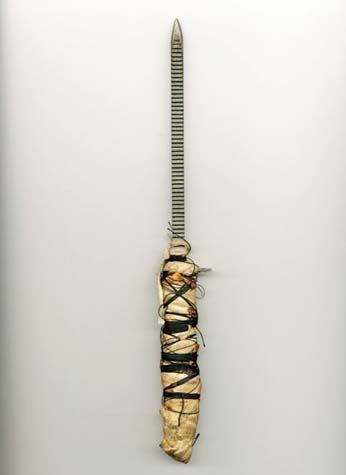
Funny story, the healing shiv


"I have to stab myself with that thing to feel better? Well, if your so sure its safe"
The late (and only slightly lamented) party fighter


Now I'm sure you all know the head of Vecna story, where one group of Pcs is able to totally destroy the other by planting a false "head of Vecna" for the second group, who then killed themselves for the power it held.
If you haven’t, its here
http://www.blindpanic.com/humor/vecna.htm

So I was playing a game, and it was two groups fighting each other. Our group was trying to bring a powerful artifact (holy Grail) to our master, while the other one was trying to catch us (technically there were three groups, a third trying to destroy it). Along the way, half of our group is killed, and the survivors knew that they were much weaker than the other group (we were pretty newly made characters). So we are weak, we are out numbered, but we are rich because we were able to loot the high members of our group for cash. One of the magic items we found was a magic knife our ranger, that he always kept on his person (playing with it, cutting his nails with is, tossing it around). Now the knife was a plus 3 vorpal knife that did triple damage on odd rolls (special effect), which logically nobody would ever be playing with, but the ranger just wasn't very bright (lost a finger once when playing around with it, didn't stop him) group two knew he played with it, and always had it, and determined it must be magically powerful because it was his signature weapon. So we spent all of our cash in order to make it identify as a different weapon, and for some really powerful poison.

After that, (before coating the blade in poison) we "demonstrated" its powers in a city center, where they knew the second group's familiar was watching. First they found an injured man in town (in reality they bribed him before hand, his injury was self inflicted, with an illusion to make it look nastier than it was) and pretended to use the knife to heal his wound (actually he had a ring of regeneration upon him. Before the "ritual" every member of the party cut their hand with the knife before using it.
Then when the second group caught up to us, one of us "accidentally" dropped the knife, (after the knife was poisoned) but made sure we wounded one of them in the process. When the second group identified the knife, it was said to be the "healing Shiv" used to heal folks instead of harming them. In order for it to work, at least six people had to cut their hands with the knife, and then the wounded man had to be stabbed as hard as possible. The amount of damage the knife would normally inflict, would instead be healed. So they all cut their hands, then stabbed their wounded fighter, instantly killing him. When they figure out what had happened, they had already accidentally poisoned themselves, so we came back and slaughtered them as they squirmed

Anyways, funny story that

The moral is of course, trust nothing, because everything is out to kill you
from
EE

Hey, something happened to day


People shouldn't be afraid of their governments, they should be afraid of the creepy masked man with knives.

Remember Remember the 5th of November

Well might as well launch this blog into the political sphere, people will be happy to know that that honor and dignity will be restored to the White House soon, because Obama got elected.  Hooray.  But anyways, since i'm sure to draw more political flame, i'm going to go back to gaming.  In honor of Guy Fawk's Day, i will
1) Light an effigy on fire 
2) Blow up a major building in hopes that somehow motivates people to agree with me (yeah i don't get it either
3) Post the alignment of V, from the comic book and the movie


As i don't want to go into a giant paragraph, so i will be short.  Yeah, i know he is kinda the poster child for Chaotic Good, but honestly, he is a bit of a bastard.  He isn't good by any means, at no point in either the book or the movie he shows any sign of mercy, forgiveness, or even helping people who don't help his schemes in some way (to an extent, he saves the protagonist but more to kill the finger men than anything else).  He kills plenty of innocent people who are just doing their jobs (The television producers, normal police men, innocents harmed by the chaos he causes in the movie, too many to count in the books).  He is certainly a terrorist, i mean destroying historical buildings to prove a point (and harming innocents in the process) for the goal of both destroying the government and causing general chaos certainly isn't admirable in any way.  He mentally and physically tortures one of his best friends so he can brain wash her into becoming his successor, and assassinates a massive amount of people in a very ruthless manner.  In the books he tortures a man into insanity by destroying his massive and priceless doll collection, which is really just being a bastard (i mean, why the hell do you need to destroy all that art?  Just kill him if you want revenge).  His eventual goal in both the comic and the book is to tear down the government, and he doesn't actively promote any reform, which is pretty bad, and his whole deal is a quest for vengeance, which is described as evil in the Book of Vile Darkness.

Now bear in mind, that doesn't make him a bad character in any way.  On the contrary, that makes him a very interesting character, at least in the books, because both sides are shown positively and negatively.  In the movie there is kinda romantic dramatization of him, which i found rather disturbing (it was a good movie otherwise generally) but in the comics his whole point is to be morally grey.  In the comics it is a fight between Fascism and anarchy, while in the movie it is more of a fight between Neo Conservatism and Radical libertinism.  So for me at least, i like it because both sides are evil and yet sympathetic.  Remember, in D&D good and evil does not mean right and wrong.

Anyways, i'd peg the book version as Chaotic Evil, as he hopes to bring about total destruction of the government to form a new one, while i'd peg the other one as NE, while he is a bit more honorable and actually doubts himself, but never enough to hold himself to a consistent code

from
EE

Finally, bloody part two is done. Might need another edit job, but here it is so far


The only way to make sense of all this 

                                      Part 2, the Devil is in the Detail Details

All right, so you’ve learned the basics the morality system of 3rd edition D&D functions, or you think you do and have just kept on reading because you want to show off to your friends how smart you are. Regardless, either way you are going to be very confused, because I am going to try to make sense of the actual mechanics of the D&D alignment system, a goal only slightly less lofty and improbable than bringing peace to the Middle East, but, hey, I might as well begin with something big. Right. So, in D&D we have the two scales of morality: Good and Evil and Law and Chaos, with Neutral existing in between both scales and being generally irritating. Now as I already said, Good and Evil are objective, but right and wrong are subjective, so that is a very important concept you should keep in mind while reading this. I am going to have to reiterate that point half a hundred times in this series of alignment articles before people actually begin to grasp it.

Anyway, Good and Evil are absolutes in D&D. They are both Cosmic forces in the D&D reality, and aren’t simply philosophical concepts the way they are in real life. They are active forces that make up the world. Gods don’t make them, because gods are subject to the alignment rules as well. There is a clear-cut definition of what is good and what is evil. Wizards of the Coast, however, in their infinite wisdom, felt that the players weren’t worthy of understanding this complex system, and instead just gave us the stark notes in the Player’s Handbook, leading to endless frustration and arguments over the years, but that’s another gripe altogether.

Right, so let’s talk about how the system works. There are nine alignments all together. These alignments act as categories of morality and pretty much all moral choices fit within them some way or another (a few exceptions will be noted in the 4th part of this article series). The alignments are.

Lawful Good-LG

Neutral Good- NG

Chaotic Good-CG

Lawful Neutral-LN

Neutral-N

Chaotic Neutral- CN

Lawful Evil- LE

Neutral Evil- NE

Chaotic Evil- CE

As I’ve already explained, the four groupings are Law, Chaos, Good, and Evil, with Neutral again just being generally irritating right smack in the middle of it all. Now all of these categories operate on different scales of morality, so they will have some overlap. So for example, a lawful person can either be evil, neutral, or good; similar methods, different ideals. Likewise, a good person can be neutral, chaotic, lawful - same morality but different methods. Good and Evil define the morality behind a person, while Law and Chaos define the methods and mannerisms of the person, with neutral standing in the middle of both extremes.

Any character can exist within these nine categories. A person’s position on the scale is determined by their actions and motives. A person’s actions can change where they are on the scale. For example, Arthas from Warcraft III (Oh my gosh, a spoiler) starts out as a devoted paladin who is honestly dedicated to the virtues of honor, mercy, kindness and loyalty. However over time, his almost hopeless battle against the undead causes him to slowly abandon his principles and in the end his soul. He slips from Good to Evil due to his ruthless actions and his loss of faith. Likewise, Snape from everybody’s favorite guide to witchcraft, Harry Potter (again, spoilers) starts as a selfish, greedy, and nasty man, IE Neutral Evil, who eventually redeems himself and becomes… a selfish, greedy, nasty person who helps the good guys (Lawful Neutral).

It is important to note that these nine alignments aren’t listed in a linear fashion. A surprisingly common assumption is the system is based upon a scale of “Right and Wrong,” with Lawful Good being “best” alignment, and Chaotic Evil being the “worst”, when in reality, they are just nine different categories. With a few exceptions, which I will cover in a later article (poison, necromancy, mind control, ect) all moral backgrounds and viewpoints fit quite nicely into the nine different categories.   Alignments aren’t just nine monolithic ways of living; they are dynamic categories that contain many different variations of their tile, IE there is more than one way to be Lawful Good, so that one person might be a braggart, and yet another might be sweet, another passive, and another devout, but they all adhere to an underlying moral code known as Lawful Good. If people start acting differently, their alignment changes based upon their actions, but it takes a series of actions to shift them up or down this moral scale. For example, a normally good person who on one occasion steals money to help his family won’t automatically turn evil, through he will start down a slippery slope if he continues with manner of behavior.

Right, lets go from there: a person’s standing in the scales of morality is defined by their actions more than anything else. A person who only commits good actions on a regular basis is good and a person who commits evil actions is bad…if only it was that simple. It is worth noting that a single evil action will not change your alignment, but it will start you down a slippery slope.

So let’s go into some detail about each alignment, shall we, and then let's call it a day. Originally I planned to make this article much longer, and also explain the specifics of what is evil and what is good, but I realized that is what was slowing me down so much, so I instead decided to simply explain the system first, by briefly covering what each alignment means, including the quotes from the Wizards' website.

“Lawful Good, "Crusader"

“A lawful good character acts as a good person is expected or required to act. She combines a commitment to oppose evil with the discipline to fight relentlessly. She tells the truth, keeps her word, helps those in need, and speaks out against injustice. A lawful good character hates to see the guilty go unpunished.”

A nice, generic description, that. It is worth noting that Lawful good isn’t the “Best” alignment, or any more goody two shoes than the other two good alignments. It just means that you combine good with a sense of order and lawfulness. It doesn’t make you better nor does it make you stupid, just honorable. The biggest fallacy of this alignment is the idea that LG people are absurdly uptight and utterly humorless.   Honestly, anybody can be uptight and utterly humorless; law and good have nothing to do with that. Lawful good people tend to hold morals to a very high extreme, but try to be moral in a consistent organized fashion, and hold their morals to a steady set of principles.

Sample LG people: Roy Greenhilt (Order of the stick), Dr. Wilson (House), Mr. Stone (Early Law and Order), Gandhi, Atticus Finch (To Kill a Mocking Bird), Sokka (Avatar), Alphonse Elric (Full Metal Alchemist)

“Neutral Good, "Benefactor"

A neutral good character does the best that a good person can do. He is devoted to helping others. He works with kings and magistrates but does not feel beholden to them.”

Yeah, because that’s a detailed explanation. Anyways, NG is just kinda of the “generally good person” sort of thing. They are generally honorable, but not devotedly so. Um, yeah, generally good…there isn’t really very much more to say briefly about it. The biggest fallacy I suppose is that NG people don’t devote themselves to a cause. Again, that isn’t true, it just means they have a much more fluid manner of dealing with the problem. Basically, their methods vary depending on the specific problem, rather than a set code, but they do act honorable generally. NG can often get mixed up with lawful good, somewhat understandably, as they are very much alike in demeanor. The best way to tell the difference is that Lawful Good tends to act honorably all the time, while NG is prone to be honorable (by the Law definition of the word, not the personal one) most of the time, but not all the time.

Oliver Twist (you figure it out), Pip (Great Expectations), Jim (Huckleberry Finn)

“Chaotic Good, "Rebel"

“A chaotic good character acts as his conscience directs him with little regard for what others expect of him. He makes his own way, but he’s kind and benevolent. He believes in goodness and right but has little use for laws and regulations. He hates it when people try to intimidate others and tell them what to do. He follows his own moral compass, which, although good, may not agree with that of society. “

Acts for good on their own terms and protects it in their own manner, society’s rules be damned. Chaotic Good may be honorable, but they follow their personal view on honor more than anything else. CG has two main fallacies. 1) That they can get away with evil act for a good cause. CG people are still good, they can’t torture, murder or abuse people even for a “good” cause. They still abide by the ideals of good, they just come up with their own way of dealing with it. 2) That Chaotic Good people are somehow more carefree and happy. Well this might be so on a general basis, but this is far from absolute. It is perfectly reasonable that a CG might be a close-minded conservative. Though unlikely.

Edward Elric (Full Metal Alchemist), Haley Starshine (Order of the Stick)

First off, the definition of good and evil actions can boggle the mind at first. In the Player’s handbook the description of good is extremely vague, basically just “nice, altruistic, virtuous” and doesn’t go into detail about what really makes a good person good. Luckily for us, later two  books, Book of Vile Darkness and Book of Exalted Deeds (warning: mature) go into more detail about this and brings us up to date. Basically, a person’s standing on the alignment is decided by their actions and deeds. For example, torture is defined as an absolute evil act, and so any good character that resorts to torture for information will eventually cease to be good. It is worth noting however that Alignments aren’t personalities: normally, a good person can commit an occasional evil act without falling, and good people are allowed the occasional slip, with paladins and exalted being the exception. Neutral people are anywhere in-between the two different scales. However percent wise, I would imagine they would be more care free than other Lawful Good or Neutral good proportionally.

Lloyd (Tales of Symphionia),

“Lawful Neutral, "Judge"

A lawful neutral character acts as law, tradition, or a personal code directs her. Order and organization are paramount to her. She may believe in personal order and live by a code or standard, or she may believe in order for all and favor a strong, organized government.”

Lawful Neutral is what I personally imagine my self: a good person in terms of my beliefs, but not necessarily good in my actions. Alternatively, LG people could simply be people who act extremely lawful and orderly by nature. Again, it could just mean somebody who is more honorable than anything else. The greatest fallacy with Lawful Neutral is that they are totally law abidding to the local laws. For example, people might say that Inspector Javart is LN, when in reality he is LE, because he commits evil acts in the process. LN does not mean you follow the kingdom’s law to the letter, it means you act in a generally lawful and honorable manner. Lawful Neutral can be passionate and strong believers, but they just don’t quite fill the good quota, but are certainly not evil.

“Neutral, “Undecided”: A neutral character does what seems to be a good idea. She doesn’t feel strongly one way or the other when it comes to good vs. evil or law vs. chaos. Most neutral characters exhibit a lack of conviction or bias rather than a commitment to neutrality. Such a character thinks of good as better than evil—after all, she would rather have good neighbors and rulers than evil ones. Still, she’s not personally committed to upholding good in any abstract or universal way.

Some neutral characters, on the other hand, commit themselves philosophically to neutrality. They see good, evil, law, and chaos as prejudices and dangerous extremes. They advocate the middle way of neutrality as the best, most balanced road in the long run”

Neutral Basically is well…neutral. Not totally evil, not totally good (wow, that’s hard to figure out, isn’t it). The greatest fallacy of neutral is that they are totally uncaring and don’t involve themselves in anything. That isn’t quite true; a neutral person just hasn’t committed enough good or evil actions to push him or herself over the edge either way. A neutral person might be an local thief who steals, but never maliciously, only to feed his family, a solider who guards potentially innocent prisoners (doesn’t abuse or mistreat them through) for pay, a merchant who just focuses upon making money. The idea of neutrality just means you aren’t fitting within either category of good and evil, but you are still part of the alignment system. Technically, creatures that aren’t able to make moral choices, like mindless oozes and animals are neutral as well. A bear that kills a human in its territory isn’t being evil; it’s just being a bear, doing what bears do. Which is why they are the greatest threat to America today. On the same note, a human who is mentally ill to such an extent that they are almost animals themselves (opposed to other mental defaults, like dyslexia or being a sociopath), IE having an intelligence score of less than 3, are also neural under the same bearing. But I personally want to have a separate article for animals and the mentally disabled, so I’m going to cover that in part 3, under the section “Unaligned”.

Chaotic Neutral, “Free Spirit”: A chaotic neutral character follows his whims. He is an individualist first and last. He values his own liberty but doesn’t strive to protect others’ freedom. He avoids authority, resents restrictions, and challenges traditions. A chaotic neutral character does not intentionally disrupt organizations as part of a campaign of anarchy. To do so, he would have to be motivated either by good (and a desire to liberate others) or evil (and a desire to make those different from himself suffer). A chaotic neutral character may be unpredictable, but his behavior is not totally random. He is not as likely to jump off a bridge as to cross it.”

Chaotic Neural is sort of like True Neutral in that they are caught in-between good and evil, but where Neutral are essentially good just not radical, CN are basically more selfish, one might say. The greatest fallacy with Chaotic Neutral is that people often assume that they basically act completely evil using the fact they are acting for their own best interest to justify evil actions. It is worth noting that despite the fact CN aren’t saints that doesn’t allow them to commit a series of evil actions and get away with it scott free, they are still able to become evil. Another thing about CN is that they like personal freedom and to an extent chaos, but this doesn’t make them all anarchists, just people who like personal freedom. CN is always treading a fine line. On one hand, they can be selfish, but if they act too selfishly, they will become Neutral Evil, going into pure selfishness. (The reason for the loss of the ‘chaos’ descriptor is because they stop acting out of freedom, just out of selfishness.) In the case of embracing chaos for the sake of chaos a bit too much, you slip into chaotic evil, as you are hurting others in your embrace of evil. CN is very much an in-between alignment so you have to careful with this one. Oh, its work noting that Belkar is Chaotic Evil

“Lawful Evil, “Dominator”: A lawful evil villain methodically takes what he wants within the limits of his code of conduct without regard for whom it hurts. He cares about tradition, loyalty, and order but not about freedom, dignity, or life. He plays by the rules but without mercy or compassion. He is comfortable in a hierarchy and would like to rule, but is willing to serve. He condemns others not according to their actions but according to race, religion, homeland, or social rank. He is loath to break laws or promises. This reluctance comes partly from his nature and partly because he depends on order to protect himself from those who oppose him on moral grounds. Some lawful evil villains have particular taboos, such as not killing in cold blood (but having underlings do it) or not letting children come to harm (if it can be helped). They imagine that these compunctions put them above unprincipled villains.”

Some lawful evil people and creatures commit themselves to evil with a zeal like that of a crusader committed to good. Beyond being willing to hurt others for their own ends, they take pleasure in spreading evil as an end unto itself. They may also see doing evil as part of a duty to an evil deity or master.

Lawful evil is sometimes called “diabolical,” because devils are the epitome of lawful evil.”

The idea of lawful evil is that they are evil that follows their own lawful way of doing things. The biggest fallacy of Lawful Evil is an interesting one. It is that Lawful Evil is somehow more disciplined or more principled than other evil people. That isn’t entirely the case. Chaotic evil people can be perfectly moral in their own way, it’s what they believe. Lawful evil is more principled in terms of having a consistent basis for their morals, but they aren’t necessarily more or less moral than any other form of evil. Lawful evil people have a consistent basis to their evil nature and tend to be rather organized and focused in their way of handling things. Their biggest trait is that they are very honorable, however, so while they might not be more principled, they will hold themselves to a standard.

“Neutral Evil, "Malefactor"

“A neutral evil villain does whatever she can get away with. She is out for herself, pure and simple. She sheds no tears for those she kills, whether for profit, sport, or convenience. She has no love of order and holds no illusion that following law, traditions, or codes would make her any better or nobler. On the other hand, she doesn’t have the restless nature or love of conflict that a chaotic evil villain has. Some neutral evil villains hold up evil as an ideal, committing evil for its own sake. Most often, such villains are devoted to evil deities or secret societies.”

Neutral Evil, as one might expect, is the neutral version of evil. They aren’t quite as impulsive as Chaotic Evil, but they aren’t as honorable as Lawful Evil. Like all of the other neutrals, they fill that annoying grey area in-between. The point remains that they are what you might call “normal” evil. Neutral evil’s greatest fallacy is that they are simply the most selfish of all the evils, witch isn’t quite true, they just use different methods. It is true however that an evil person who’s methods vary a lot and seems more focused on self interest than anything else (Blackadder) would go under this category.

“Chaotic Evil, "Destroyer"

A chaotic evil character does whatever his greed, hatred, and lust for destruction drive him to do. He is hot-tempered, vicious, arbitrarily violent, and unpredictable. If he is simply out for whatever he can get, he is ruthless and brutal. If he is committed to the spread of evil and chaos, he is even worse. Thankfully, his plans are haphazard, and any groups he joins or forms are poorly organized. Typically, chaotic evil people can be made to work together only by force, and their leader lasts only as long as he can thwart attempts to topple or assassinate him.

Chaotic evil is sometimes called "demonic" because demons are the epitome of chaotic evil.”

Quite frankly, Chaotic evil is basically evil without any morals. Unlike the other evils, who have at least some morals based upon law and honor. Chaotic Evil just does what ever they feel like doing at the time. They are simply motivated by whim and their own desires. While they certainly can have their own code of beliefs, and values, but they don’t have any thing to hold themselves to that standard other than their own feelings at the time. The biggest fallacy of Chaotic Evil is that they are a bunch of raging psychopaths. While most raging psychopaths would fit into this category (The Joker, duh), CE people might have their own moral ideals, they just are more loose and chaotic about it. Their standards are based upon their whims, not a specific code, but they aren’t quite insane, just emotionally driven. The biggest thing about Chaotic Evil is that they do pretty much what they feel like doing at the time.

All right, I hope that clarifies things for the people who don’t play D&D much. I’ll go into more detail at some later date I suppose. Think this is confusing? Just wait till we get to the specifics.

From

EE