Basically, i hope to have a reliable blog where you can read quality reviews on movies/books/video games and what not. Or at least a place where you can pretend the reviews are quality
Now, if your at all into movies, you must be aware that this summer, pretty much nothing out, and most of what has come out is utter trash, a seemingly endless list of generic cooperate made films.Yet, one film stood out above them all, this supposed masterpiece “Inception”, made by the director of “Dark Knight” and compared again and again to the Matrix, this film basically was hailed as a cinematic masterpiece, standing out among an endless line of drivel.So of course, I was very hesitant to go watch it, because as a rule when a 3-hour film is touted as the “a brilliantly clever mindscrew” its really nothing more than an overhyped mediocrity.So I was finally convinced to see it and the film instead proved to be a very good looking overhyped mediocrity.Inception is about some time in the future were people can enter other people’s dreams, their they can extract information, or in the case of the film, insert information.A Japanese company is hiring Dicapio to insert an idea into the mind of a cooperate heir, an idea that will ruin his company.The story then tracks the characters adventures into the realm of dreams.OF course there are all of these elaborate rules for dreams that are twisted and exploited by the characters over the course of the film and lots of special effects, but while the film isn’t bad, its just boring.While I didn’t hate it, while watching I just didn’t really feel anything, it just didn’t make a difference to me, I didn’t care, nothing in the film made me invest myself.Spoilers from this point out, because honestly, nothing here has enough emotional impact to really made one way of difference.Throughout Inception, there is always stuff happening, almost every single shot has people moving, people talking, people running, people fighting ect, and yet I’m never able to really make any emotional connections to any of the events, so its really just watching stuff happen.For example, this one college student is needed to be the “dream architect” who can alter the dream world they are in, and is used throughout the film to avoid obstacles they encounter in the dreams.However, for all intents and purposes, this college girl isn’t a character so much as a prop, she exists for the other characters to explain things to her and to help them get out of tricky situations, lacking anything beyond the skeleton of a personality.At no point does she seem really bothered by leaving her school life to go do this beyond some “oh dear” expressions ever so often, she doesn’t really explain how her school experience plays into her ability to shape dreams and we have no real understanding of her likes and dislikes.She basically does what the plot needs her to do, people explain to her how the dreams work and surprise, we know how the dreams work.She gets really into Leonardo DiCaprio’s personal demons, but it doesn’t really explain why, she claims its because she cares about the mission, but if that’s the case why hasn’t anybody else gotten fascinated with his mental problems, people who know him better or know the dangers of dream traveling better.A well written story might have her and DiCaprio have some sort of personal connection, maybe both of them are thrill seekers who can’t really functional properly socially in the “Normal world” and so strive to be in dreams out of some sort of ego trip, maybe they just have really good chemistry through a similar sense of humor, maybe she has a crush on him.Instead through, she just seems interested because the plot needs to her to be, she isn’t so much a character as much as a character prototype, something that might be made in a script room to be fleshed out later.For example, the ethnically mixed assistant’s personal dream token is a loaded dice.Why, what does that symbolize?Is he afraid of letting things get out of his personal control, is he an untrustworthy person, or is he just a gambler?Why a dice?The College girl made her own, a golden chess bishop…why a bishop?I mean, a pawn I could understand somewhat, or even a queen, but why a bishop?Why even a chess piece in the first place, what importance does that hold?DiCaprio’s token was his wedding ring, which is important because the character’s marriage is the most meaningful thing to him, ergo why the wedding ring only appears when he is in a dream.His new token, his wife’s top is important because of his emotional connection to his wife, and his inability to move on.And yet, none of the other characters have these sorts of characterizations.What is the deal with the Middle Eastern drug maker btw, he has a few comical lines, he does some important plot points, and spends the entire rest of the movie driving around in a slow motion scene.The shapeshifter…I don’t even remember his character, who was he?Also there is a scene when dice man and the college girl briefly kiss when guards are looking for them, the girl ask “Was that to suppose to hide us” and the other guy responses “no, I just thought it was worth a shot.”Looking aside the creepiness in age differences, that actually would be a pretty funny romance scene, but instead both characters look totally disinterested, and almost bored, so it doesn’t mean anything to me.Hell, most of the movie is in the dream of Fisher Jr, the rich businessman who’s mind they are screwing with, and yet we know very little about him apart from generic daddy issues.Its his bloody subconscious, it should reveal more about him, instead he is just another plot point to be dragged from location to location.The only character who is really interesting is Saito, the Japanese businessman who is hiring DiCapio andthats because he is morally ambiguous, he is a very good reason to be treacherous, we know he is a ruthless businessman and always seems to be one step ahead of the main characters.Will he keep his end of the deal or will he betray the characters, does he have an hidden motive for going into the dreams, what is his eventual plan?Oh wait, doesn’t matter cause he gets shot the moment we enter the dreams and he just hangs around dying for the rest of the scene.Even DiCapio, the only developed character, doesn’t really mean anything to me, because the character is defined by his relationship with his wife, and that doesn’t mean anything to me, its just another plot point to motivate the characters rather than a true relationship, we don’t really see them interact except when it is needed to move the plot along, the only time it was interesting was when his subconscious manifestation of his love interest was trying to kill him in Saito’s dream.
Now lets give Inception credit here, there is a lot of things it does right, things that I wish almost every other movie would do as well.The editing is great, pay attention to the details of the characters clothes, DiCaprio’s clothes are always the same when he is in a dream but different when he isn’t in one, his kid’s clothes are always the same in a flashback but suddenly different in the last scene, their isn’t a single transition scene in the entire film, IE we never actually see how characters get to new locations until the very end, thus presenting the possibility that the entire realty is a dream.It even plays with some of the Hollywood clichés, like how inept the dream guards are, because of the nature of the dream and various action movie clichés are shown to be possible only because they are in a dream.And yet, again I don’t care.I really just don’t care, because they have no emotional connection.A friend of mine commented of my habit of making sexual comparisons in my reviews, so here is my obligatory metaphor, its like making out with a really good looking girl who you get along with, but don’t know very well, it’s a nice sensation but lacks any feeling beyond that, its just that a sensation.Or to be more professional, this movie is more about the idea rather than any real emotional resonance.
Now I’ve been playing a lot of Silent Hill 2 lately, and I was noting the similarities between the two, both are about characters trapped in a world that is a physical manifestation of their own subconscious, both have dead wives with a deep dark terrible secret behind their death (I refuse to spoiler Silent Hill), both protagonists are emotionally scarred men who seem fairly normal at first glance, but seem to have an unconscious death wish, and both “dream worlds” contain a violent manifestation of self loathing who breaks into otherwise normal situations and terrifies the main characters.And yet Silent hill is far less about the spectacle and really more about the emotional turmoil of the characters, the town alters itself to reflect the protagonists torment, the monsters are very feminine and almost erotically dance as they try to kill him, large holes are always appearing in the ground that he jumps into, he is always in small dark claustrophobic environments where the only way out seems to involve hurting himself in some manner.In contrast, Inception’s world, despite its elaborate set up, seems strangely scientific, not drawing from Freud but instead Jungian, but its weirdly detached from emotions, the characters coldly explain how dreams work and so dreams aren’t subconscious so much as just a series of action locations.I mean, considering these are dreams, wouldn’t they be more you know…icky, more awkward, less clean.In Silent Hill, the main locations include a darkly haunted hospital, a hotel and a historical society, all of which have emotional significance to the protagonist, while in inception we have a hotel, and a winter fortress, what do those symbolize?What deeper meaning do those have, they are just locations for an action scene, their isn’t any emotional connection there.Inception is just too clean, not gritty enough, the dreams are strangely logical and orderly, like the character it doesn’t have any spirit, just acts as a set up for the plot, while Silent Hill is instead is focused more upon the feeling of being totally alone, in an world that seems both out to get you and yet strangely neglecting you.Even for people who haven’t suffered lost their wife, it strikes home because its really about something we all understand, isolation, being misunderstood, and trapped, without any comfort to turn to.Now maybe this is because I have a crippling fear of isolation and abandonment, but honestly Inception didn’t touch anything about me, it was just me sitting watching a film.
Even comparing this scene to the Matrix, the matrix actually has more emotional resonance, despite being a somewhat overrated film.Firstly, we see the real world before the film starts, we get to see Nero’s life as an office drone and therefore sympathize with him before the film really sets in.Secondly, we have something to attach ourselves too.While Reeves is somewhat dull, Lawrence Fishburne is a great actor, and so we care about him when he gets kidnapped.Hugo Weaving is a great actor, but he isn’t just a robot like the other agents, his has some personality, some personal hostility towards the characters.This makes his confrontation with Nero more important, it has more feeling too it. Even with the fight scenes, the fight scenes in the Matrix are about the characters, Nero running away from the agents from building to building is all about the hostile environment and a thoroughly fruitless attempt to escape from the world itself, the fight in the lobby shows Nero’s acceptance of his own powers.The fight scenes in Inceptions are just…guys with guns shooting at other guys with guns, there is a time tension, but because I don’t care if these characters live or die, its somewhat undermined.For that matter, why are dream security inept special agents?Wouldn’t it be much better to have something more supernatural, you know, the actual environment shifting to try to harm the characters opposed to something so mundane as secret agents?Really, can’t do anything better there?
Inception isn’t bad, it has a lot of thought into it, and if your use to watching nothing but mainstream films this must seem like the a Warner Herzog film in terms of quality, but that’s its only real strong point is that it stands out from mainstream films.If you are comparing this to “The Dark Knight” and “Avatar”, then yeah Inception looks really good, unlike Avatar it doesn’t feel like it was made by a soulless team of businessmen hoping to make as much money as possible, but it also feels very amateurish, lacking in real depth or complexity.I mean, as a RPG player, I noticed that PLanescape and White Wolf, even D&D handled dreaming with far more subtly and consistency than this, to the point where I feel like Inception might have ripped it off.Its really just a nifty idea without anything behind it, and while it deserves praise for trying something new, it lacks resonance or really anything to justify being three bloody hours long.
He is played by Ben Kingsley btw...who is of Indian Decent.
Right so I’m setting up like a custom at my Grandparents house, every time I come I watch a really crappy movie that has a race controversy, first Prince of Persia, now Last Airbender. Both films hired white actors to play the parts of non white characters (for the record, I don’t care enough about these films to look up the actor’s names). In Prince of Persia, the Prince is played by white actor Jake Gylenhaal, while in Last Airbender all the characters but the villains are played by white actors. This has cause a great deal of uproar, especially in the Asian and Asian American communities, an uproar slightly diminished because the films were so bad that nobody really cares about their messages, but honestly, is it racist to have a white actor play a nonwhite role? Now this is a long standing issue, the film industry’s long history of racism and racial profiling so the minorities in America have a very justified chip on their shoulder. I might be bias toward the Asian community, because I’m sympathetic towards their fully justified grievances, and the articles written by Asian Americans tend to be well written, and their argument boils down to A) Many ethnicities are horribly underrepresented in Hollywood, giving the impression that these ethnicities aren’t important, don’t exist or aren’t relatable. B) Hollywood has a long history of type casting and marginalizing ethnicities, and while this is changing for African Americans, its still a big issue for ethnicities with a small population like most Asian Americans C) Blackface and by extension Brown Face or Yellow Face, is racist and insulting to minority groups, and having white actors play non white roles is a form of that.D) We need to have more recognition for minority actors in mainstream media E) Thus, white people should not play non white roles Now since I’m lazy, I’m just going to break my response into bullets as well.
1)Ok, now Hollywood’s assumption is that white people are unable to to sympathize with non whites, for the record, with the exception of some Cherokee blood, I am almost the quintessential WASP, just to put my “ethnic bias” out in the open. Personally, I’ve never had any problem with watching movies with ethnic main characters, I sympathized with the pretty much all the characters in Seven Samurai, in Kun Fu Hustle I can feel for the main character even if I don’t identify with him. Maybe that’s because all of the characters are Asians so I identify with the protagonist because the entire cast is equally “different’, but that in a movie where white people are hanging out alongside Asians will I naturally sympathize with the whites? Well, in the film Se7en costarring Morgan Freeman and Brad Pitt, I am far more sympathetic to Morgan Freeman’s character than I am to Brad Pitt. Maybe its because Freeman is a better actor? Possible, but I think its something deeper than that, its personality, I sympathize with Morgan Freeman’s character because I can relate to him, his intelligence, his appreciation of classical books/music/poetry, and his intense cynicism, while Bad Pitt’s emotionally charged life style doesn’t appeal to me. Or in Men in Black, while I enjoy Tommy Lee Jone’s character, I sympathize with Will Smith’s character because he, like me, is a smart guy caught in a world he doesn’t understand. In the end, it isn’t race, or heritage necessarily, so much as just similarity, and while race plays a part in that, its more personality, and its the duty of an actor to make the character relatable and sympathetic
2) Last Airbender opens in an Inuit style village full of Inuit actors then we’re confronted with two absurdly white protagonists, its just so obvious the director is choosing whites over non whites. When I watched Prince of Persia, I didn’t mind, because Jake is a pretty good actor, but I didn’t fail to notice that the only actors with dark skin are extras. And the main actress’ skin was darkened to make her look Indian and she was horrible. Ok, Iranian actors are hard to come by, but there is a huge industry with absurdly hot Indian actresses, and almost all know English. Choosing such a bad actress and actually changing her skin is just insulting. I think the issue isn’t so much the color of the character’s skin, so much as it is the fact that the films are so obvious about their racially driven casting choices, is just insulting.
3) But compared to the source material is it really that racist? For example, in the game Prince of Persia the main character is basically British, he is white, and has a British accent, and the Princess is somewhat dark but she doesn’t really seem Indian beyond a skin color and dress. Would the game have been better if the story tapped more into Persian Culture and Society rather than just the aesthetic. If the it was equally well written, I think I’d enjoy it even more, because its about clashing societies and two ancient cultures that are almost totally unrepresented in video games today. So yes, it if was handled equally well, I think it would have been much more interesting, in fact I could have used less platforming if their was more story and cultural stuff, but I don’t think the game was obligated to be true to the roots of an obvious fantastical Persian world. Similarly, the Avatar TV Show has to deal with race issues, two of the main characters have dark skin, but in a world that draws heavily from Asian folklore and with an Asian atheistic, most of the characters look white. Aang is supposedly from a Tibetan styled culture (people keep calling him Chinese, don’t know why), and yet he looks like a bald white guy wearing vaguely Tibetan clothes. Now I’ve met like half a dozen Tibetans in my life, so clearly I’m not an expert on a society that I’m sure is very ethnically diverse, but every Tibetan I’ve met, even those born in the states, are very dark skinned, brown eyed and with much more “Asian” faces. Similarly, I’ve seen many movies about the Inuit, they all seem very Asian looking, while Katara and Sokka look like well, white people with a really dark tan, or maybe Latinos, but certainly not Inuit. Troph basically is white, and the Fire Nation despite seemingly drawing upon Fascist Japan/Communist China design, are almost entirely made up of white people with “Asian Styled” haircuts, and are certainly not Indians. Ok yes, not all Asian people share a universal look, but they certainly don’t all look like slightly different white people, the characters of the cartoon could pass for Americans in most cartoons. Also the jungle tribes they stumble across look and act like Louisiana hicks, which as a partial southern I’d find offensive if my family wasn’t from North Carolina (hypocrisy ahoy), while you’d think that a Vietnamese, Thai or Cambodian culture would be more appropriate if they were fleshed out in the process. So can we really blame the Movie too much if the show itself is not ethnically diverse in the least? I mean, why not have the Fire Nation look Japanese. Now maybe I’m a little bias because I personally find the “Asian traits” that were omitted very attractive, but I’d still rather have Troph look Chinese. However, lets bear in mind, the animators are drawing from Asian philosophy and culture, but it’s a fantasy world, with a very western world view emerging from the series, so it isn’t like “Fantasy Asia” exactly. I mean, if a bunch people with dark skin settled in the South Pole, I’d expect them to live like the Inuit just because of how useful that method is for survival. I could see a group of White people with a vaguely Japanese styled culture. Its fishy that out of all of the cultures drawn upon, Inuit, Chinese, Japanese, Tibetan, and Pacific Islander, none of these people are white and yet white people seem to be everywhere in the world of Avatar. Now I enjoy the show, but I think this is subtler racism. Honestly, quality is an issue, Avatar is a good show so nobody wants to bring up the race issue, because it colors (no pun intended) our view on an otherwise good show, while the Avatar Movie (Both of them actually but I mean the Airbender one) are trash, so people mock its racism
4) So is a film better if it casts people of proper ethnicity? I feel a little nervous making that claim, I mean, because I’m a WASP does that mean that somebody of Irish descent is automatically better at playing an Irish character? I mean, is a random black guy automatically going to be better at playing Martin Luther King Jr. than say, Robert Duvall, who is one of the best American actors at all time? I mean, Robert Duvall who isn’t Irish played Tom Hagen in Godfather very well. However speaking of Godfather, most of the cast for that movie were Italians, and that added a certain something to the film. The way they spoke, their mannerism, the interactions, the film (directed by Italian American director Copula) and so has a certain charm, a feeling of familiarity that is brought out by people who really understand their own culture, enhanced because the characters look Italian. Or watching movies made in their own culture, there is a certain charm that is hard to bring across, like say, Rules of the Game or Yojimbo, those movies are so clearly the product of their respective cultures. Can you imitate that without native actors? I’d say yes, but its much harder.
5) However, even after agreeing with most of the racism, I can’t bring myself to agree with the idea of racial casting, because its not always bad. For example, I love Lawrence of Arabia, I think its an amazing film, and yet despite being filmed in Saudi Arabia, being a movie about Arab culture/history/society, and being about the issue of race, most of the main Arab actors are not played by Arabs, I think only one of them is an Arab. Some are South American, some are Middle Eastern but not Arab, and Sheriff Ali is played by an Egyptian. And yet it’s an amazing film, and the movie’s theme about Arabic culture still ring true, despite the fact almost all of the Arab actors are extras. Lawrence of Arabia is rather ironic, because one of the major themes of the story is that Lawrence doesn’t really identify with his own ethnicity, and seems to project himself as an Arab, which is very interesting take upon the whole idea of race in theaters. You’d think Lawrence (and the average audience member) would sympathize more with the British, but instead he is drawn to the Arabs, possibly because he like them is an outsider (in the film this is attributed to his alleged Homosexuality). Or take Last King of Scotland where African American Forest Whitaker plays Ugandan Idi Amin. Yeah that’s not a typical example, but it still applies, just because they are both black doesn’t change the fact that they are from totally different ethnicity, and even if you traced back Whitaker’s family history, I’d guess that they would come from West Africa because that is where most of the slaves were kidnapped from, not Uganda, in fact I think they darkened his skin for the film so he would look more African. However, he does an amazing job, that is one of my favorite movies of all time, and he does a great job portraying the character. Should they have found some Ugandan actor to play the part instead? Considering how well it turned out, I’m inclined to say know, unless this hypothetical Ugandan actor was somehow better than Whitaker, which I feel is kinda impossible. But again, like with Lawrence of Arabia, the actor shows a great deal of respect (if that’s the right word) for his role. He is speaking in an actual Ugandan Accent, he looks like Idi Amin, he walks and talks like Idi Amin, and honestly it looks like the Dictator was hired for the part. Like in Lawrence of Arabia, race is a plot point in the film, and the fact that Whitaker isn’t African doesn’t dilute the message. In both films, there is a sense that the directors and actors respect the fact that they are playing outside their culture and try to do justice to their portrayals. Ok, so ultimately (I love that word), what do we draw from this, what’s the conclusion? Is Hollywood racist, and is non ethnic casting possible? To the former, I think Hollywood is an absurdly racist institution, but in this particular instance, I feel this stems not from malice so much from the standard Hollywood way of doing business. This doesn’t feel so much like Blackface, instead it feels similar to how Hollywood casts are almost entirely made up of the most good looking people on the planet. You never have women in Hollywood who don’t look almost perfect, you never have men who have a little gut unless it’s a plot point, everybody has to appeal to this very strict standard of beauty, which is non whites sadly don’t fit into with a few exceptions, so to be an Indian American who wants to get good parts you face the same challenge as an American who is slightly overweight, or a women who doesn’t fit that absurd standard of beauty. Its still racist, but its less obvert. Secondly, ethnic casting, I feel like what makes the difference between Last Airbender and Lawrence of Arabia is the amount of respect paid to the source material, in Last Airbender it feels like the white actors were cast off hand and clearly no effort was made for them to blend into their environment, thus making this just insulting obvious, while in Lawrence of Arabia the actors are integrated into Arab culture. So it boils down to respect, I feel like a lot of Asian minorities already have a massive chip on their shoulder due to being underappreciated by the Hollywood elites, are doubly offended by the fact that their cultures are simply dismissed as nothing more than a backdrop which makes people feel unappreciated, while Lawrence of Arabia is very aware of the cultures involved. So I think it ultimately boils down to respect, and a sense of appreciation for the culture involved. However, I think that directors should at least start casting Asian Americans, and by extension, any ethnic minority when the opportunity arises because they aren’t given enough recognition, and often it adds a great deal to the movie, rather than just constantly recasting the same pool. Even if looking past the racism, the insensitivity of leaving out societies from the mainstream media, its just wasting of perfectly good acting talent causing stagnation.You can’t just draw from the same limited pool of actors, that just causes rot, and also has this weird effect of thinking that white people are the norm, the standard in the world, and everybody else are commodities.I feel like they have a sort of obligation to try to move beyond this very localized viewpoint, because as fascinating as our own culture is, there is so much more out there. Focusing upon other cultures/societies should be a welcome opportunity for Hollywood, because these are world full of different ideas and different struggles, in a multi ethnic country,we should welcome more input from the massive amount of people within our borders (for that matter, notice a lack of movies about Latinos?) Even a single big name Chinese Actor for example would bring a great deal more attention to the Chinese American community, whose kids would try to become actors knowing they don’t have to just play stereotypes. With more actors will bring more recognition to these ethnic groups, which leads to a more culturally aware population, cause I feel like most Americans are in this sort of cultural bubble. Unlike Europe, we aren’t directly confronted with these other societies beyond Hispanics and African Americans, and thus don’t really acknowledge them, I mean I don’t know any Vietnamese Americans, so um, why should I care? So while yes, the racism debate is somewhat over zealous, and directors shouldn’t be forced to limit themselves to race when choosing their actors, it is a very viable option, and I feel the more we embrace other cultures the better we will be for it.
I just watched it, i haven't gotten my thoughts together very much, except I didn't find it that complex, but somewhat enjoyable, however did anybody else feel like it was borrowing from D&D? that scene with the changing perspectives in the city felt like Sigil in Planescape, the dreams felt like a combination of Ebberon/Heros of Horror and dreaming in Ch angling from White Wolf, the paradox/crazy architecture felt like something out of various source books and the whole concept of worlds based on belief and godom felt like the planes. Am i going insane? from EE
Right so I’m setting up like a custom at my Grandparents house, every time I come I watch a really crappy movie that has a race controversy, first Prince of Persia, now Last Airbender. Both films hired white actors to play the parts of non white characters (for the record, I don’t care enough about these films to look up the actor’s names). In Prince of Persia, the Prince is played by white actor Jake Gylenhaal, while in Last Airbender all the characters but the villains are played by white actors. This has cause a great deal of uproar, especially in the Asian and Asian American communities, an uproar slightly diminished because the films were so bad that nobody really cares about their messages, but honestly, is it racist to have a white actor play a nonwhite role? Now this is a long standing issue, the film industry’s long history of racism and racial profiling so the minorities in America have a very justified chip on their shoulder. I might be bias toward the Asian community, because I’m sympathetic towards their fully justified grievances, and the articles written by Asian Americans tend to be well written, and their argument boils down to A) Many ethnicities are horribly underrepresented in Hollywood, giving the impression that these ethnicities aren’t important, don’t exist or aren’t relatable. B) Hollywood has a long history of type casting and marginalizing ethnicities, and while this is changing for African Americans, its still a big issue for ethnicities with a small population like most Asian Americans C) Blackface and by extension Brown Face or Yellow Face, is racist and insulting to minority groups, and having white actors play non white roles is a form of that.D) We need to have more recognition for minority actors in mainstream media E) Thus, white people should not play non white roles Now since I’m lazy, I’m just going to break my response into bullets as well.1)Ok, now Hollywood’s assumption is that white people are unable to to sympathize with non whites, for the record, with the exception of some Cherokee blood, I am almost the quintessential WASP, just to put my “ethnic bias” out in the open. Personally, I’ve never had any problem with watching movies with ethnic main characters, I sympathized with the pretty much all the characters in Seven Samurai, in Kun Fu Hustle I can feel for the main character even if I don’t identify with him. Maybe that’s because all of the characters are Asians so I identify with the protagonist because the entire cast is equally “different’, but that in a movie where white people are hanging out alongside Asians will I naturally sympathize with the whites? Well, in the film Se7en costarring Morgan Freeman and Brad Pitt, I am far more sympathetic to Morgan Freeman’s character than I am to Brad Pitt. Maybe its because Freeman is a better actor? Possible, but I think its something deeper than that, its personality, I sympathize with Morgan Freeman’s character because I can relate to him, his intelligence, his appreciation of classical books/music/poetry, and his intense cynicism, while Bad Pitt’s emotionally charged life style doesn’t appeal to me. Or in Men in Black, while I enjoy Tommy Lee Jone’s character, I sympathize with Will Smith’s character because he, like me, is a smart guy caught in a world he doesn’t understand. In the end, it isn’t race, or heritage necessarily, so much as just similarity, and while race plays a part in that, its more personality, and its the duty of an actor to make the character relatable and sympathetic 2) Last Airbender opens in an Inuit style village full of Inuit actors then we’re confronted with two absurdly white protagonists, its just so obvious the director is choosing whites over non whites. When I watched Prince of Persia, I didn’t mind, because Jake is a pretty good actor, but I didn’t fail to notice that the only actors with dark skin are extras. And the main actress’ skin was darkened to make her look Indian and she was horrible. Ok, Iranian actors are hard to come by, but there is a huge industry with absurdly hot Indian actresses, and almost all know English. Choosing such a bad actress and actually changing her skin is just insulting. I think the issue isn’t so much the color of the character’s skin, so much as it is the fact that the films are so obvious about their racially driven casting choices, is just insulting. 3) But compared to the source material is it really that racist? For example, in the game Prince of Persia the main character is basically British, he is white, and has a British accent, and the Princess is somewhat dark but she doesn’t really seem Indian beyond a skin color and dress. Would the game have been better if the story tapped more into Persian Culture and Society rather than just the aesthetic. If the it was equally well written, I think I’d enjoy it even more, because its about clashing societies and two ancient cultures that are almost totally unrepresented in video games today. So yes, it if was handled equally well, I think it would have been much more interesting, in fact I could have used less platforming if their was more story and cultural stuff, but I don’t think the game was obligated to be true to the roots of an obvious fantastical Persian world. Similarly, the Avatar TV Show has to deal with race issues, two of the main characters have dark skin, but in a world that draws heavily from Asian folklore and with an Asian atheistic, most of the characters look white. Aang is supposedly from a Tibetan styled culture (people keep calling him Chinese, don’t know why), and yet he looks like a bald white guy wearing vaguely Tibetan clothes. Now I’ve met like half a dozen Tibetans in my life, so clearly I’m not an expert on a society that I’m sure is very ethnically diverse, but every Tibetan I’ve met, even those born in the states, are very dark skinned, brown eyed and with much more “Asian” faces. Similarly, I’ve seen many movies about the Inuit, they all seem very Asian looking, while Katara and Sokka look like well, white people with a really dark tan, or maybe Latinos, but certainly not Inuit. Troph basically is white, and the Fire Nation despite seemingly drawing upon Fascist Japan/Communist China design, are almost entirely made up of white people with “Asian Styled” haircuts, and are certainly not Indians. Ok yes, not all Asian people share a universal look, but they certainly don’t all look like slightly different white people, the characters of the cartoon could pass for Americans in most cartoons. Also the jungle tribes they stumble across look and act like Louisiana hicks, which as a partial southern I’d find offensive if my family wasn’t from North Carolina (hypocrisy ahoy), while you’d think that a Vietnamese, Thai or Cambodian culture would be more appropriate if they were fleshed out in the process. So can we really blame the Movie too much if the show itself is not ethnically diverse in the least? I mean, why not have the Fire Nation look Japanese. Now maybe I’m a little bias because I personally find the “Asian traits” that were omitted very attractive, but I’d still rather have Troph look Chinese. However, lets bear in mind, the animators are drawing from Asian philosophy and culture, but it’s a fantasy world, with a very western world view emerging from the series, so it isn’t like “Fantasy Asia” exactly. I mean, if a bunch people with dark skin settled in the South Pole, I’d expect them to live like the Inuit just because of how useful that method is for survival. I could see a group of White people with a vaguely Japanese styled culture. Its fishy that out of all of the cultures drawn upon, Inuit, Chinese, Japanese, Tibetan, and Pacific Islander, none of these people are white and yet white people seem to be everywhere in the world of Avatar. Now I enjoy the show, but I think this is subtler racism. Honestly, quality is an issue, Avatar is a good show so nobody wants to bring up the race issue, because it colors (no pun intended) our view on an otherwise good show, while the Avatar Movie (Both of them actually but I mean the Airbender one) are trash, so people mock its racism 4) So is a film better if it casts people of proper ethnicity? I feel a little nervous making that claim, I mean, because I’m a WASP does that mean that somebody of Irish descent is automatically better at playing an Irish character? I mean, is a random black guy automatically going to be better at playing Martin Luther King Jr. than say, Robert Duvall, who is one of the best American actors at all time? I mean, Robert Duvall who isn’t Irish played Tom Hagen in Godfather very well. However speaking of Godfather, most of the cast for that movie were Italians, and that added a certain something to the film. The way they spoke, their mannerism, the interactions, the film (directed by Italian American director Copula) and so has a certain charm, a feeling of familiarity that is brought out by people who really understand their own culture, enhanced because the characters look Italian. Or watching movies made in their own culture, there is a certain charm that is hard to bring across, like say, Rules of the Game or Yojimbo, those movies are so clearly the product of their respective cultures. Can you imitate that without native actors? I’d say yes, but its much harder. 5) However, even after agreeing with most of the racism, I can’t bring myself to agree with the idea of racial casting, because its not always bad. For example, I love Lawrence of Arabia, I think its an amazing film, and yet despite being filmed in Saudi Arabia, being a movie about Arab culture/history/society, and being about the issue of race, most of the main Arab actors are not played by Arabs, I think only one of them is an Arab. Some are South American, some are Middle Eastern but not Arab, and Sheriff Ali is played by an Egyptian. And yet it’s an amazing film, and the movie’s theme about Arabic culture still ring true, despite the fact almost all of the Arab actors are extras. Lawrence of Arabia is rather ironic, because one of the major themes of the story is that Lawrence doesn’t really identify with his own ethnicity, and seems to project himself as an Arab, which is very interesting take upon the whole idea of race in theaters. You’d think Lawrence (and the average audience member) would sympathize more with the British, but instead he is drawn to the Arabs, possibly because he like them is an outsider (in the film this is attributed to his alleged Homosexuality). Or take Last King of Scotland where African American Forest Whitaker plays Ugandan Idi Amin. Yeah that’s not a typical example, but it still applies, just because they are both black doesn’t change the fact that they are from totally different ethnicity, and even if you traced back Whitaker’s family history, I’d guess that they would come from West Africa because that is where most of the slaves were kidnapped from, not Uganda, in fact I think they darkened his skin for the film so he would look more African. However, he does an amazing job, that is one of my favorite movies of all time, and he does a great job portraying the character. Should they have found some Ugandan actor to play the part instead? Considering how well it turned out, I’m inclined to say know, unless this hypothetical Ugandan actor was somehow better than Whitaker, which I feel is kinda impossible. But again, like with Lawrence of Arabia, the actor shows a great deal of respect (if that’s the right word) for his role. He is speaking in an actual Ugandan Accent, he looks like Idi Amin, he walks and talks like Idi Amin, and honestly it looks like the Dictator was hired for the part. Like in Lawrence of Arabia, race is a plot point in the film, and the fact that Whitaker isn’t African doesn’t dilute the message. In both films, there is a sense that the directors and actors respect the fact that they are playing outside their culture and try to do justice to their portrayals. Ok, so ultimately (I love that word), what do we draw from this, what’s the conclusion? Is Hollywood racist, and is non ethnic casting possible? To the former, I think Hollywood is an absurdly racist institution, but in this particular instance, I feel this stems not from malice so much from the standard Hollywood way of doing business. This doesn’t feel so much like Blackface, instead it feels similar to how Hollywood casts are almost entirely made up of the most good looking people on the planet. You never have women in Hollywood who don’t look almost perfect, you never have men who have a little gut unless it’s a plot point, everybody has to appeal to this very strict standard of beauty, which is non whites sadly don’t fit into with a few exceptions, so to be an Indian American who wants to get good parts you face the same challenge as an American who is slightly overweight, or a women who doesn’t fit that absurd standard of beauty. Its still racist, but its less obvert. Secondly, ethnic casting, I feel like what makes the difference between Last Airbender and Lawrence of Arabia is the amount of respect paid to the source material, in Last Airbender it feels like the white actors were cast off hand and clearly no effort was made for them to blend into their environment, thus making this just insulting obvious, while in Lawrence of Arabia the actors are integrated into Arab culture. So it boils down to respect, I feel like a lot of Asian minorities already have a massive chip on their shoulder due to being underappreciated by the Hollywood elites, are doubly offended by the fact that their cultures are simply dismissed as nothing more than a backdrop which makes people feel unappreciated, while Lawrence of Arabia is very aware of the cultures involved. So I think it ultimately boils down to respect, and a sense of appreciation for the culture involved. Now finally, as an add on point, I would say however that directors should at least start considering using Asian Americans, and by extension, any ethnic minority when the opportunity arises because they aren’t given enough recognition, and often it adds a great deal to the movie, rather than just constantly recasting the same pool. Even if you wish to look beyond the racism associated with this, even if you want to look beyond the insensitivity of leaving out whole cultures from the mainstream media, and even if you want to look past the wasting of perfectly good acting talent, that brings stagnation. Yes, white people are the majority in this country, but always making movies about the same culture and the same society, even one as complicated and diverse as the US white population is inevitably going to breed rot as we just retread the same ground (and judging from the last few years main stream films, already has). It also has this weird effect of thinking that white people are the norm, the standard in the world, and everything else is nothing more than just a commodity, while in reality Han Chinese are the norm due to population and everything else is a deviation. Actually screw the conclusion, I’m unto something here. While we are making movies about our own culture and society, and I’m aware that white people make up about 50% of the population (even more if you count white Latinos), considering Hollywood is the single largest film industry on the planet, I feel like they have a sort of obligation to try to move beyond this very localized ideal of making films, because as fascinating as our own culture is, there is so much more out there. Focusing upon other cultures/societies should be a welcome opportunity for Hollywood, because these are world full of different ideas and different struggles than what is considered “normal”, and ultimately that adds a new perspective and brings new people into the light. We are a multi ethnic country, and we should welcome more input from the massive amount of people within our borders (for that matter, notice a lack of movies about Latinos?) Even a single big name Chinese Actor for example would bring a great deal more attention to the Chinese American community, meaning that people would try to become actor thinking they have a chance at a role that isn’t a random stereotype. These actors will bring in new ideas, new portrayals, could form new movies, I mean what if the next Mifune was in our Japanese American population? And with more actors will bring more recognition to these ethnic groups, which leads to a more culturally aware population, cause I feel like most Americans are in this sort of cultural bubble. Unlike Europe, we aren’t directly confronted with these other societies beyond Hispanics and African Americans, and thus don’t really acknowledge them, I mean I don’t know any Vietnamese Americans, so um, why should I care? So while yes, the racism debate I mentioned (and actually concludes) earlier, is somewhat over zealous, and directors shouldn’t be forced to limit themselves to race when choosing their actors, it is a very viable option, and I feel the more we embrace other cultures the better we will be for it. From EE
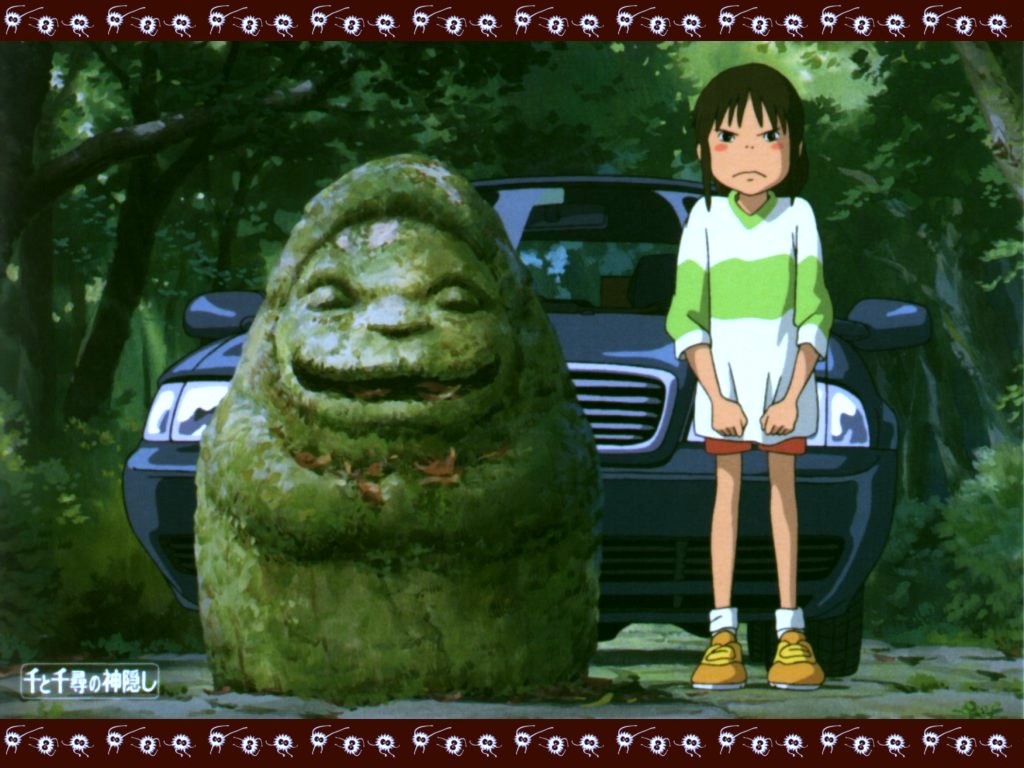
I have a strange habit when it comes to Japanese directors who have made a lot of great movies (incase you haven’t figured it out, I am a Miyazaki fan) in that while I watch almost all of their movies, I never get around to buying the ones I like. Instead I have their “still good but not the best” titles lying around my house opposed to the films that they made that I think are brilliant. With Akira Kurosawa I own some of his great movies, Throne of Blood, Seven Samurai ect, but I don’t own my favorite film by him Yojimbo. With Miyazaki, I own Kiki’s Delivery Service and Spirited Away, which I find enjoyable (former) and beautiful (later), but aren’t nearly as brilliant as Castle in the Sky, Princess Mononoke, Whisper of my Heart, and Totoro, which I feel are some of the greatest animated movie ever made. So since I actually own the film, I’ve seen it four times now times, and every time I see it I walk away with a different perspective of the film. The first time I watched it, I left thinking, “It was pretty good, some parts were great, but I hated the ending”. Second time I watched it I thought, “This is good looking but with a few exceptions its just shallow trash, the character don’t make sense and the plots a mess”. Then after a few months of feeling this view point, I watched it again with my sisters and was like “Wow, this is really astoundingly animated and directed, it has all of these themes within the film)”, which I feel had happened because my expectations had been lowered. So finally watching it with a friend of mine, I came back to my original option, of being very mixed on this film. On one hand almost everybody I know who is remotely interested in the following Japanese Culture Animation Anime/Manga Shintoism Japanese Film Spiritualism The Magical/special power of nature (This includes environmentalist) Fantasy/large flying dragons going around The evils of modern society slowly corrupting traditionalist values Miyazaki (by this I mean they like his films but don’t care about the rest of the list) Absolutely loves this movie and declare it to be a masterpiece, and since I like everything on that list to at least a limited extent, so I understand their perspective, and naturally I feel instinctively driven to disagree, because I’m genetically programmed to disagree with the majority. However friends of mine who have never seen Miyazaki films and don’t care about the rest of that stuff instead say “It looks great, but just doesn’t make sense”. For example, I watched a movie review on the interest by Confused Mathew which said basically that, and when listening to the review my first instinct was to write a counter argument saying that they are ignoring the subtle themes and messages of the story and are being totally closed minded and pretentious western elitists (har har). However, on the flip side, when ever I read commentary or reviews of the film that are negative, I always find myself agreeing with the negative aspects that they point out, just not with their final conclusion. However when I hear people who like the film rave on about how great it is, I feel pretty much exactly the same way, which enforces the idea that I’m the quintessential contrarians. To narrow in on the good aspects of the film, let me just say that this film is absolutely visually stunning. For the first time, I finally watched it on a wide screen TV and other than the fact that everything blue was shown as green, it took a film that I already knew was gorgeous and just made it mind blowing. The level of detail in the animation is almost unbelievable, every object in the film, from the railings on the bathhouse, the way the hair/clothes move, the small details about the creatures movements and actions, the way the water flows, the colors of the costumes and the realistic and yet surreal nature of the magic (I love watching Yubaba repair her ruined office). Even through a great deal about the film annoyed, the astounding graphics allowed me to simply sink into the experience and get to the end feeling like I’ve enjoyed myself, the art almost justifying the movie’s holes. And yet, there is (at first glance) a double standard their, as those of you who know my views on Avatar can attest will instantly call foul, because their I said that its fancy graphics didn’t excuse its horribly cliché and offensively cooperate plot, but critically I don’t believe that Avatar is art. Yes, I know that art is hard to define and making such a distinction is horribly unprofessional of me, but watching Spirited Away, what impressed me was more than just the quality of the animation technology but instead the care and detail of the drawings, every frame felt like a painting. When I had to pause the film for bathroom breaks, I was struck by how every frame was full of these little details such as the subtle wrinkles on some of the toad people’s faces to indicate age, or the way that each of the geishas had subtly unique faces, and you could recognize them throughout the film. These details are essentially meaningless, and yet it breathes life into the film, because Miyazaki is at his heart an artist, and that the animation is given its own respect. I know that a similar time and energy went into every frame of Avatar, but it feels different, its covered in the cooperate stench of cynical manipulation. When looking at Spirited Away, I feel like it was constantly drawn and redrawn by an artist who is trying to set the mood of the story, Chihiro’s removal of her shoes is hardly important plot wise, but it adds to the mystic of the bathhouse, tapping into the traditional Japanese customs. Similarly the designs of Yubaba’s office really don’t have purpose, and yet not only is the office beautifully animated, each detail reveals more about the character and adds to the atmosphere. Her small skull/telephone shows a mixing of traditional spiritualism with modern society; the fact that it is a skull hints at the sinister nature of the witch. Similarly, her many gems obvious symbolize her greed/avarice, however each gem/ring is so detailed that one can realize that for all of her greed, she has good taste in her jewelry, which is offset by how she wears too many jewels reveals her gaudy and cheap taste. Like wise, the elaborate but overdone nature of the room reveals her insecurities, that despite being basically a bathhouse owner, she has this tacky display of wealth to comfort herself. The giant baby’s room shows aspects of his character, the padded walls shows how he is protected and enclosed, his hiding under the pillows shows his overly protective and cowardly nature, the dolls lying around the room seem discarded rather than loved, revealing the materialistic nature of his mother’s doting. All of these details could easily be omitted but they were included more to enhance the scene rather than to evoke any specific emotion, like an artist who wants his work to be perfect, and Avatar lacks this. Avatar feels artificial and goal oriented, every image is made not to enhance the scene, but instead to try to manipulate the audiences emotions. The Spirit’s bodies are obviously models off either old legends, or various nature ideas reflecting their character (the radish spirit looking like a radish, the human like frogs being cowardly and greedy, the dragon’s water like scales). In contrast the Navi feel like they were created specifically to try to gain the audiences sympathy. They are all physically perfect and sexy, the women wear very little clothing even when it wouldn’t be practical, their eyes are very wide and large, which implies vulnerability and innocence, to quote Red Letter Media, “Disney Eyes”, they have unneeded animalistic traits which make them both cute and feral. All of these elements come together to reveal a carefully crafted race whose exist to both to gain sympathy and sex appeal. I read that Mr. Cameron would show pictures of Navi women prototype to random people and ask “would you tap that”, reworking them until the majority said yes. They are like models on magazine covers, they aren’t real, they just are shallow images who’s only real purpose is to try to arouse both our emotions and sexual desires. This emotional manipulation conveys to every aspect of Avatar, the forests of Pandora are visually stunning but feel like they were created specifically to be pretty, not. The various flora in the forests are somewhat surprising and remarkable, but they feel like they were included in the scene just so the audience can be like “ohhh, awww” rather than add to the atmosphere, even the Navi’s sex tree feels like it exists just to be a backdrop for the sex scene, just like the floating rocks don’t seem to serve a purpose other than making the flying scenes more shocking. The forest doesn’t feel real, when watching more realistic (see better), movies set in jungle environments, your struck by how dirty they are, that even through they are wonderful you have mud, insects, rain, and sweat involved rather than the pristine cinematic displays. (say it with me), In contrast, Spirited Away’s animation shows both the wonder, like the multicolored and fascinating spirits, but also the icky aspects, like the frog chef smoking a cigarette, the mechanized underbelly of the bathhouse, and well, the stink spirit. Also, Avatar just feels like its borrowing ideas, it has at best a mediocre storyline that is trying to compensate for it with its graphics, while Spirit Away’s animation is about enhancing a its unique story about a spirit bathhouse, not selling itself on graphics. Now the film does in practice sell itself on its visuals, but that’s from the storyline being badly handled, not being unoriginal or cliché, so you get the impression that was not the intention, while Avatar without its graphics would be a bust. Finally Avatar’s imagery is ultimately a show of escapism and a disconnect from reality, while what is good about Spirited Away is its focus on people and everyday life, something with more meaning and personal connection than the ultimately hollow message of Avatar, because even through Spirited Away is again, flawed, its about human beings. My three favorite scenes visually are when the parents eat the food of spirits, the job interview, and the stink spirit’s bath, because in all three the animation is done in such a manner that I can almost feel present their. That food looks delicious, but more importantly it looks real and the parents eating (enhanced by the audio/dialogue) really made me want to just gorge myself on exotic Japanese food. Yubaba’s spells are focused on very minor visual magic’s, which feel slightly sinister because they are more human, her literal zipping shut Chihiro’s mouth is chillingly disturbing because we all know the term “zip it”, and this is making our own expressions literal. When Yubaba destroys then repairs her office, its more effective because we all have seen tables fall over, lights break and papers being scattered, it’s a very human feeling. And finally, the stink sprit ordeal taps into everything in the world that’s icky and disgusting, watching it makes me feel absurdly squeamish, because whenever I’ve had to do the trash or wash the dishes or I’ve fallen in mud, I feel that sense of icky helplessness that is so masterfully conveyed in the character of Chihiro’s. While in Avatar…I have nothing, it’s just a bunch of perfect creatures existing in an idealized environment, its jus wish fulfillment. Ok, so enough sucking up to Studio Ghibli’s art, its time to focus in on the more important things, namely characters, story, and writing. Now as I mentioned before, I love the concept of this story. Confused Mathew in his review complained that this review that the fantastical world was “random and arbitrary” but and maybe this is my love of mythology speaking, I liked the weirdness of the Spirit world, these creatures are spirits, I shouldn’t be able to understand them, they should always be an enigma to a mere mortal like myself. What surprised me was the human traits added to the characters, which actually made them both more intriguing and disturbing, as seeing these weird creatures doing very human things like opening a window to smoke a cigarette and indulging in wage slavery and yet it is very disquieting because even when they do human things, they come off as subtly wrong. For example, when the boiler man, the eight limbed Kamajii is first introduced, he acts oddly alien, his multiple arms mixing spices and his movements are both spider and snake like and stokes the fire with soot people, and yet he human in that he is just a worker in an industrial structure, and yet before he gets too human, he has all of this arbitrary spirit rules, like that Chihiro’s is obligated to throw the coal she picked up into the fire. Or when Yubaba is talking about business, she comes off as just a weird looking cooperate boss, when she suddenly steals Chihiro’s name off the paper, as well as moving in close to her so that her disproportioned body is more obvious when compared to the normal Chihiro. It’s this strange dichotomy of human like actions and methods mixed with totally alien spirit goals and pleasures (like the importance of Roasted Newt) that makes the whole story simply surreal. However, this is ruined in the end as the spirits start to act more human and less spirit like due to overexposure, which undermines the whole bizarre nature of the bathhouse, making it just a bunch of funny looking customers rather than some sort of pseudo Shinto ritualized ceremony turned into a business. Yubaba goes from enigmatically sinister, but with a charming undercurrent to a somewhat spiteful but otherwise harmless granny, while her sister goes from an equally ruthless witch in her first appearance to nothing more than a kind granny who loves to sew. The most glaring flaw of the film however is the character of Chihiro, and here I agree with Confused Mathew entirely. The premise of this film is supposedly that the a spoiled girl is taken to a magical world and is able to escapes after growing up a bit, but the problem is that Chihiro isn’t spoiled. She is a bit obnoxious and a massive wimp, but she isn’t spoiled, only upset that she is moving, which I can sympathize with greatly, and in fact she seems very level headed when one looks beyond her being a wimp, she doesn’t eat the spirit food even when her parents pressure her too and from the start advices leaving the spirit world alone and not getting involved, which is proven true. And even her being a wimp doesn’t really strike me as much of a flaw, because she is like what, ten? I don’t really fault a kid being scared at that age, doubly so when some of the stuff she sees is legitimately terrifying, I know I would have handled that horribly made staircase about as well as she did cause I hate heights. Critically however, her being mature from the start means she doesn’t have a character arch, when No Face offers her gold and she refuses this isn’t any different from her behavior prior in the film, she has been refusing things that creepy spirits have offered her throughout the film, that supposedly critical moment is spoiled because her refusal has no emotional impact, accepting the gold would go against her character as established throughout the film. Also, the girl’s maturity is somewhat undermined because we don’t ever understand why, why does she refuse the food, refuse the gold, offer help to No Face, see the good side in Haiku ect, it seems arbitrary, her various acts of selflessness are meaningless without context, why does she refuse these seemingly generous gifts, as she never gives a reason. My theory is that Chihiro isn’t really a character, at least not in the traditional sense, she is a stand in, she exist to give the audience something to follow and a plot to move along so the audience can be show all of the fantastical sights that the studio has in store for us, the story isn’t about her, its about the world. Which would be fine except that the plot focus seems to style itself to a story of personal growth for Chihiro, while apart from becoming less weak willed never really happens. I mean, she becomes less of a wimp, but I never felt critical of her for being a crybaby when she is like ten, maybe this is a Japanese thing with that culture of stoicism and blaming the weak, but to me blaming the girl just seems insensitive. The greatest problem of the film through is its storytelling, which just feels schizophrenic, because there are like three separate themes running throughout the film, but they only appear in bits and pieces throughout the movie. For example, the movie starts out with a theme of how materialism/consumerism/capitalism degrades our sense of understanding/appreciation of the natural world, embodied with the super American looking parents (complete with credit cards, and a big car) who show nothing but patronizing curiosity for the spirit world, mistaking it for a tacky carnival and treating the whole thing as sort of a tourist trap rather than a sacred place, which results in them turning into pigs (oddly they don’t seem to change by the end of the film…why?) And yet that theme of cultural dilution seems almost like a hobby for the film, it occasionally makes reference to it and shows us its views on the matter, but the primary focus is as I said the artwork and the setting more than any individual theme or moral point, which would be fine for a more avante guard film, but this movie is ostensibly an adventure fantasy with great artwork, the art being an addition not the main attraction, so this inconsistent theme seems out of place and feels like sloppy writing Honestly, while a lot of stuff visually happens, but apart from the art, it doesn’t seem to have a point. For example, No Face, while he gives the movie an excuse to show a great deal of visual marvels, as well as creating a conflict for Chihiro to overcome, but what purpose does it serve? Maybe I’m just stupid, but I can’t really figure out what it represents. My guess is that No Face is a metaphor for loneliness and being misunderstood, desperately seeking human connection and friendship. Not able to get friends conventionally, lacking a voice beyond the muffled gasp he makes, he tries to find an emotional connection through bribery through things people desire, like bath token or later gold. I suppose his eating people who accept his charity symbolizes how those who see relationships through such shallow lenses eventually destroy those around them instead of getting true friends I guess, and his assuming their traits after eating them would be…becoming a social poser who borrows from others to become a fake human being? His becoming bloated and disgusting could almost be a metaphor for capitalism as he becomes a gluttonous wasteful producer of cash who only encourages people’s greed and shallow materialism however longs after purity of friendship with the modest Chihiro. Or No Face could represent impressionable youth, who reacts to the world around it, alternatively innocence’s who are corrupted by the corrupt environment of the bathhouse. Or it if the bathhouse represents Japan’s pre industrial past, then No Face might represent those who look back to past for inspiration and turn into horribly parodies of the old world orders who are ultimately fake. You see what I mean; there isn’t any indication of what it stands for. Going with the “No Face Represents Loneliness” aspect, that works in his own storyline, but doesn’t really fit into the larger theme, beyond the general greed of the bathhouse, the rest of the story has little to do with social isolation in that sense of the word, Chihiro’s social problems stem from her own weakness and prejudice, not inability to express herself, which she does quite well. If he stands for capitalism, the film has an anti capitalist message, but it doesn’t pervade into the rest of the film, it just pops up whenever the parents or No Face are around. Or the traditionalism vs. modern society theme, I like that both sides are show positively and negatively, but the movie seems to be more about showing me the world than sending a message, which would be find, except again its set up to be a story about personal growth for Chihiro. At the hear through, Spirited Away is trying to tell the story of entering the world of adults and leaving behind the comforts of childhood and personal pleasures. Chihiro is a young child who is basically entering a child labor facility through a spiritual one, which draws to mind the many child labor facilities run in East Asian (not so much Japan as far as I know, more China but still). What occurred to me is how different this would be if it was written from a Western Perspective. In this version, Chihiro is shown to be bratty and spoiled, but and I’m totally stealing this from spark notes, her main enduring trait is her understanding of rules. Rules play a huge role in the story, as her entering the Spirit World means she is confronted with a series of seemingly arbitrary and all encompassing rules which restrict her and challenges her ability to cope with her surroundings, which is a bit like a metaphor for the unwritten rules of adulthood and the work place that people have to learn to understand in order to function. The essential difference however, is that in real life these rules are explained, if not justified eventually, and there is a system which upholds the rules, while in the movie the rules are left permanently unexplained and thus arbitrary. To an extent this is a good thing as it adds to the mystic and alien nature of the Spirit World, but as the spirits become more and more human and less alien in nature, the rules to be defined so I can relate to the characters and their situation, otherwise its just confusing. For example, in Yubaba’s opening scene she mentions all of these rules about people’s terms of service and that she has to accept a job for anybody who asks, and in that context these mysterious rules are good, they come off as sinister and inhuman even when they help the protagonist. However when we get into all of these later rules such as the curse slug, No-Face, the golden token, and Yubaba’s final test, it feels like rules made to run the plot rather than things that I can relate to, for example why can’t No-Face come into the bath, and what is the deal with that damn train? However even ignoring the plot holes, rules play another somewhat bizarre role in the story, because even through the rules of the bathhouse are strange and arbitrary, the characters to the end are compelled to follow them no matter how nonsensical they are. For example, when the spirit workers demand that Yubaba cancel her final test because Chihiro has done more than enough to earn her freedom, Chihiro turns down their protest and chooses to instead follow the rule even through its completely pointless. Or early in the film, we are suppose to be somewhat condemning of the parents as they explore the spirit world and eat the food, but honestly , I didn’t really feeling condemning of them, I felt pretty sympathetic. They where just exploring and eat some food which they fully intended to pay for, they had no knowledge that they were offending spirits, since it was established they were ignorant of traditionalism. While they are saved in the end, they are shown very negatively and somewhat deserving of their fate, just like Chihiro is suppose to partly deserve being forced to work and here is where we have some moral dissidence, because I can’t find it in myself to condemn a somewhat foolish family for exploring what looks like a tourist trap and not knowing much about the spirits, and while I think Chihiro is a wimp, I don’t see hard labor as a positive character building experience. I feel like in a Western film, the ethic of the story would be instead rising up against the rules and the establishment and rejecting the rules in favor of their own. I mean, compare to Pan’s Labyrinth, another fairy tale movie, in this story what makes the little girl an admirable character is the refusal to follow the arbitrary fairy laws and to do what is morally right rather than encourage unjust laws through compliance, I mean even the whole ethic if Chihiro’s growing a spine is undermined because she is still tied to the rules of the bathhouse. I was reading online about how the movie shows good and evil as more morally grey in contrast to most cartoons, and I agree this is a good thing, but the film ends more with the main character leaving behind evil rather than changing it, the Bathhouse is still a terrible place to work ruled by cruel and greedy regime (if lovable) and despite all of their talk of freedom, there are still plenty of pigs who are most likely transformed innocents, the status quo is unchanged and just ignored. I understand it, but I feel like a Western work would try to overthrow the establishment. Finally there are all these inconsistencies, since this is getting long as it is, some notes 1)Ok, so Haiku knows Chihiro from before, and rescued her from a river, and yet this only seems to be a plot point when they are around. It has no real purpose other than to have an excuse to have Haiku to know her, and the whole issue is resolved through “I love you” “Oh shit I remember you now” dialogue. The o thing that came from that relationship was the scene of her riding Haiku through water, which I thought was a metaphor for birth but…apparently I’m wrong (and Freud was right) ·2) The nature of spirits. I mean, they all hate human but many of them look human with exaggerated characteristics, and many more look totally human, I mean I had to look it up online to find out that Rin (Lin) is suppose to be some sort of weasel spirit. While I don’t mind spirits being impossible to understand, once the spirits start to become more human, we need these details to understand the world. 3)What is with Zenbaba’s character shift? Why does she start out as a ruthless bitch, saying, “interfere and I’ll tear your mouth out” to a grandmotherly figure? Also on that, why do the other spirits characters change from scorn of Chihiro to exalting in her freedom and risking their jobs to challenge Yubaba on her behalf, it comes out of nowhere other than just ending the film on a happy note. I mean, is it because of the sink spirit ordeal? No because they were all angry and rude to her when No-Face ruined the bathhouse, so why do they suddenly all love her? 4) Again, what is Haiku’s character, he just seems like an emotionless love interest who’s heart becomes pure in the end. The only time he was interesting beyond “OMGDRAGON” is when he is acting like a ruthless mob enforcer, but other than being slightly rude in like two scenes, it never has any actual impression, and sees contradictory. I mean, if he is nice to Chihiro when they are alone, why be a jerk in the elevator except to explicitly show to the audience that he can be mean. If their were two of them I feel like that would be a more interesting story. 5) Why does the boiler man have a ticket, why does he feel compelled to use it on this girl, why didn’t he use it earlier, why does he still work her? 6) Speaking of which what is the point of the train? Spirits mention wanting to leave on the train, but how does that work? What is the spirit world beyond this bathhouse? Somehow it seems less impressive when spirits have their own industries and businesses rather than a pseudo Shinto bathhouse. 7) What is the point of the giant baby beyond the effect? He doesn’t contribute to the story except to mention an out of place lesson on the dangers of overprotection. His accompanying Chihiro doesn’t really contribute to the overall plot beyond some very minor comic relief, what was the whole point of him and the little bird/bug? 8) Also why even have the whole Swamp Bottom Experience, beyond again the artwork and the closure of having a character go onto the train, and I don’t see the whole point of the trip beyond exposition and some heavy-handed love values. · So she has to eat human food to stay human…did that stop at some point? And what is the difference between human and non-human food, how does she get by later? · The Paper spirit things, apparently they can be killed by smashing into glass and they can cut flesh, and yet they don’t cut Chihiro, and many of them just fall down after other ones smash into the glass and yet one lives, why? You see what I mean, the film is enjoyable, the art and concept are enough to carry you through and come out feeling good, and some scenes are just brilliant, but as a whole the story feels inconsistent, rushed and mangled, and the character feel like stock characters, or at best particularly interesting stock characters. So totally worth watching and deserve a lot of praise because it is a work of art, but honestly, its not his best work nor is it some sort of super animated film masterpiece.
 Its called Symbolism, look it up