Showing posts with label Japan. Show all posts

Tuesday, May 31, 2011

City of Life and Death, made into a City of Rebirth

Actually....this isn't in the film


Let me make one thing clear, City of Life and Death is a very well done movie, and I recommend it to everybody interested in Historical Films . That being said, it is propaganda, or at least a very nationalistic portrayal. It is very well done nationalism, with much more tact and respect than you'd expect from a story about the Rape of Nanking, but it is Chinese Nationalism. Now, I've always had a morbid fascination with genocide, and this, coupled with my avid interest (not a fetish) for Chinese history has caused me to study the Rape of Nanking extensively. The Rape of Nanking was in 1937, when the Japanese Army killed 300,000 Chinese civilians in the old Capital of Nanking (or Nanjing). What made Nanking stand out compared to all of the other destruction of cities committed by the Japanese in China was the sheer extent of the Japanese brutality, including such fun activities as putting babies on spikes, having two sergeants compete to see who could kill the most Chinese with a sword, and of course, mass rape. Japan, as per their normal "Fuck you" policy towards China, pretends it never happened of course. The movie follows three primary characters, whose names I cannot remember because I am a racist. We have Doopy Japanese Sergeant, Awkward Westernized Chinese guy (John Rabe's security) and hot homely Chinese mother figure. All three characters are brought together and torn apart during the brutal Japanese invasion. Side characters include Sad Chinese Prostitute who is rapped to death, Sociopath Japanese Sergeant who is responsible for said rape, Badass Chinese insurgent, Chinese Child Soldier, and Useless Western Characters (they are all useless.)

Now first things first, for Western Audiences this might seem strange but.....if you had to make a movie about Nanking and were required to show the Japanese in a positive light, this is the best way you could have done it. While they are extremely brutal and kill/rape lots of civilians in a wide variety of horrible ways, a massive amount of time is taken to show the nicer side of the Japanese, Japanese soldiers learning to dance, drinking beer together, playing piano, and they often times are extremely nice to the Chinese right up until they shoot them in the face. While this is a good thing, and in many ways is something the "Ideal" Nanking movie would have, (Showing the human qualities of the oppression in order to make the horror of the incident even more powerful) it started to get a little suspicious. There is a scene where a Japanese company is ambushed by Chinese insurgents and suffers massive causalities before finally emerging victorious after a long and brutal battle. While that did happen in Nanking, the Chinese army was so badly orginized and ill equipped that very little actual resistance happened once the Japanese got into the City, and most of the Chinese insurgents were simply defeated by the better trained Japanese forces. The Japanese would claim their was resistance (and there were some isolated incidents) in order to justify their slaughter, however the fact that the movie devoted 30 mins showing the Japanese characters getting their asses kicked by the Chinese before the reinforcements finally arrive to defeat the Chinese, is a telling example of the movies real intentions. The scene achieves two things (I have a point here I swear), it establishes the Chinese as brave and competent fighters, and makes us sympathize with the Japanese as they are getting their asses kicked. Why the movie choose to do the former makes perfect sense, consider how much of a failure the entire Nanking campaign was for the Chinese, focusing on the small isolated incidents of victory makes sense, the Chinese want to not feel like they got their ass kicked. But why show the Japanese getting slaughtered, all it does is make us sympathize with them and explain some of their brutality (the Japanese feel like they are getting vengeance for their lost comrades, later in the film). The film omits Chiang Kai-Shek's defense of the city entirely, or his totally inept defense/retreat from the city, where he positioned the troops to fight, then ordered a disorganized and badly handled retreat where the rich were allowed to leave first taking most of the boats, without telling some of his units that they were leaving. If anything, the Battle of Nanking is an example of both Japanese brutality, but also Chinese military ineptitude, as the Chinese army was infamously corrupt and badly run (Except for Mao, who while not great at least could keep his army together). In fact, the Chinese seemed more interested in fighting each other rather than fight an organized fight. To get back to the point, while the Japanese are shown slaughtering chinese, the Chinese are never shown to be disorganized, inept, or out of control, as the real Chinese army was (I'm not saying Chinese people are somehow inherently inept as a people, just that the Chinese government in charge of Nanking was totally out of control and their was absolute chaos in the city). And while the Japanese are shown as brutal...honestly and this is going to sound heartless, the film depiction wasn't that bad. In the film, the Japanese shoot civilians, murdered all of the surrendered Chinese Soldiers (who died screaming for China's victory of course), rape women, burn people alive, and mutilate bodies. Oh and they gang rape women to death. And I imagine your thinking "Wow, that makes them sound horrible, what the fuck do you mean that isn't that bad?' Well, if we look at the Japanese army's war record, that is how they treated every city, hell even most cities throughout the world were treated like that in times of war. It was brutal yes, but it wasn't the Rape of Nanking, it was just the Chinese occupation of Hong Kong, or the Philipies or New Guinea. In the real sack, they did such lovely acts as

Putting babies on spikes (Seriously, its not just anti German propaganda)

used civilians as live bayonet practice

Systematic Gang rape (literally in lines)

Rape of small children (boys and girls)

Rape of the elderly

Rape of men (I"m not saying that this is somehow more or less upsetting than the rape of women, however its unexpected and isn't shown in the film)

Forcing family members to rape each other

Forcing Buddhist Monks who had take vows of celibacy to rape young women at gun point

Raping women with bayonets, broken bottles, and bamboo sticks and leaving them to die

Impaling pregnant women with bayonets (In fact the Japanese seemed to have targeted them in particular for brutal death)

Corpses crowding up the streets (while we see bodies in the streets in the film, they are occasional, now literally crowding up the place. Some of the pictures of Nanking shown the streets literally covered with corpses)

Massive amount of bayonet murder (while many people are shot in the film, not a single person is stabbed, when the massacre is infamous for Chinese women being torn apart by Japanese bayonets, and POWs being executed by Bayonet

Herding civilians unto land mines

Lining up POWS, covering them with petrol and lighting them on fire (this is shown in the film briefly, but the victims are in a house and its less methodical/horrific)

Rape of the Elderly

Cutting off POW's head with swords as they were forced to dig their own graves.

Mass Arson

Mass Rape, the film shows rape, but according to John Rape, their were up to 100 cases a night, not the occasional cases as shown in the film.

Lets look at some of Rabe's Quote (according to Wikipedia)

The slaughter of civilians is appalling. I could go on for pages telling of cases of rape and brutality almost beyond belief. Two bayoneted corpses are the only survivors of seven street cleaners who were sitting in their headquarters when Japanese soldiers came in without warning or reason and killed five of their number and wounded the two that found their way to the hospital.

Let me recount some instances occurring in the last two days. Last night the house of one of the Chinese staff members of the university was broken into and two of the women, his relatives, were raped. Two girls, about 16, were raped to death in one of the refugee camps. In the University Middle School where there are 8,000 people the Japs came in ten times last night, over the wall, stole food, clothing, and raped until they were satisfied. They bayoneted one little boy of eight who have [sic] five bayonet wounds including one that penetrated his stomach, a portion of omentum was outside the abdomen. I think he will live.[45]

From Reverend John Magee who was at the City

During the Japanese reign of terror in Nanking – which, by the way, continues to this day to a considerable degree – the Reverend John Magee, a member of the American Episcopal Church Mission who has been here for almost a quarter of a century, took motion pictures that eloquently bear witness to the atrocities committed by the Japanese .... One will have to wait and see whether the highest officers in the Japanese army succeed, as they have indicated, in stopping the activities of their troops, which continue even today.[49]

On December 13, about 30 soldiers came to a Chinese house at #5 Hsing Lu Koo in the southeastern part of Nanking, and demanded entrance. The door was open by the landlord, a Mohammedan named Ha. They killed him immediately with a revolver and also Mrs. Ha, who knelt before them after Ha's death, begging them not to kill anyone else. Mrs. Ha asked them why they killed her husband and they shot her. Mrs. Hsia was dragged out from under a table in the guest hall where she had tried to hide with her 1 year old baby. After being stripped and raped by one or more men, she was bayoneted in the chest, and then had a bottle thrust into her vagina. The baby was killed with a bayonet. Some soldiers then went to the next room, where Mrs. Hsia's parents, aged 76 and 74, and her two daughters aged 16 and 14. They were about to rape the girls when the grandmother tried to protect them. The soldiers killed her with a revolver. The grandfather grasped the body of his wife and was killed. The two girls were then stripped, the elder being raped by 2–3 men, and the younger by 3. The older girl was stabbed afterwards and a cane was rammed in her vagina. The younger girl was bayoneted also but was spared the horrible treatment that had been meted out to her sister and mother. The soldiers then bayoneted another sister of between 7–8, who was also in the room. The last murders in the house were of Ha's two children, aged 4 and 2 respectively. The older was bayoneted and the younger split down through the head with a sword

From Tang Junshan

The seventh and last person in the first row was a pregnant woman. The soldier thought he might as well rape her before killing her, so he pulled her out of the group to a spot about ten meters away. As he was trying to rape her, the woman resisted fiercely ... The soldier abruptly stabbed her in the belly with a bayonet. She gave a final scream as her intestines spilled out. Then the soldier stabbed the fetus, with its umbilical cord clearly visible, and tossed it aside.

You get the idea. So while the film is certainly brutal, its nothing compared to what actually happened, its like a movie where a child is shot compared to a movie where a child is eaten alive by a dog. While both are horrific, the latter is simply more powerful and terrible to see. Remember, between 300,000 to 350,000 Civilians died within the span of a few months, most through torture, and that isn't counting the POWs. Now I'm not saying any of the massacres shown in the film aren't true, because they did happen, the POWs were machined gunned down, the "comfort women" were rapped to death, and the bodies were mutilated. And i'm not saying the Japanese shouldn't be shown sympathetically, on the contrary i think that it is a very good thing to show them as people, because no matter how horrible they were, they were (and are) still human beings. However, I think the film's reasons are dishonest. The film isn't nationalistic in the sense that this is a call to arms for the Chinese to go kill the monstrous Japanese, it is instead a call to arms for Chinese empowerment. The only characters who aren't shown sympathetically are the Westerners, who are depicted as weak, inept, cowardly and stupid. John Rab is shown as an old bureaucrat, who cowardly leaves the city abandoning the safety zone to the Japanese. While Rab had his faults (he was a Nazi after all) and did eventually leave in 1938, he was an absurdly brave man, who saved up to 250,000 men, often by running infront of Japanese solders demanding that they leave the Chinese alone. Yes he did leave, but by the time he left in late 1938, the worst of the massacres were over. The City falls in October 1937, and the killing end in late January-Early February 1938 . John Rabe left in February 28th, 1938, so by then the city, while not a 'nice' place, was certainly not hell on earth. In the film, he sort awkardly asks them to leave his compound alone, which they promptly ignore, and cries alot. The other western characters aren't much better, most of them don't have many lines, and those they do have involve them being pushed out of the way as they try vainly to protect civilians. The "good" japanese character is shown as very timid and horrified by what is going on around him, and not really able to grasp the reality of the situation. Most of the Chiense characters are really strong actually, the only one who is a pansy is John Rab's assistant, who is super westernized and kind of a suck up, however after his daughter is killed by the japanese he stands up to them and dies a hero's death (in a scene that is a homage to the priests death in Rome Open City). And the "traditional" Chinese character, the really hot Chinese mother figure is a hero all throughout, keeping the people together, standing up to the Chinese, and gets caught trying to rescue Chinese POWs. As she is being taken away, she shames the Japanese character into killing her to avoid gang rape, and he later kills himself after letting a pair of prisoners go.

So what is this trying to accomplish here? Its about Chinese empowerment, about making the Chinese the moral victors of Nanking. the Reason why its so traumatizing to the Chinese is not just because the Japanese were brutal as fuck, but also because the Chinese couldn't do anything about it. 300,000-350,000 Civilians were killed, along with 50,000 soldiers and 80,000 women raped in the Chinese Capital, against only 240,000 Japanese, only 6,000 of whom where killed. And unlike the Russians, they never got a sacking of Berlin to gain vengeance, the Japanese were in Japan until they surrendered to us. the British, Russians and Americans had to save China, who the Japanese were slaughtering (If not defeating) for almost two decades (1931-1945). One of the Reasons why the Chinese hate the Japanese is that they were helpless to them, the Japanese are the boogiemen of China, this tiny little country that crippled the nation (to be fair china had a 40 year civil war going on but still). If the nastier brutalities of the nanking massacre were shown, such a s the infamous "killing contest", then the Chinese woudl be humiliated. Being shot in the back is one thing, being forced to rape your mother at gun point is quite another. the Chinese are massacred, but they are never reduced in the way the Japanese tried to do during the real events. By making the Japanese very human, they are less threatening and dominating to the Chinese, in fact they are shamed and humiliated by the Chinese resistance. The Chinese in the movie show a great deal of bravery, and they don't need the westerners to help them up. Why is China doing this? Because in this day and age, China doesn't need to hate Japan, at least not politically, but as a growing superpower, they do need to break free from Western bonds. this movie is taking an event which is the humiliation of China and making it into the monument to Chinese bravery. The Movie ends with the two Chinese POWS who survived the massacre, one of which is a young boy, being realized by the guilty Japanese. As they walk away, the Japanese says "It takes more courage to live than to die" and then kills himself. The two chinese walk off, and look at the flowers around them and start laughing with joy. they aren't traumatized or scarred forever, they are moving on, while the Japanese lies dead in a ditch. In another scene, John Rab is forced to tell the Chinese women that 100 of them would be taken away by the Japanese as "Comfort Women". John Rab, crying and feebly saying "I"m sorry" asks for volunteers, while his Chinese assistant (The traditional female one, not the Westernized male one) adds that if they do this, food will be provided for their children. one by one, 100 Chinese women raise their hands and volunteer for the grim task, where they will be raped to death. However, they do so with stoic faces and determination.

The Film is really astonishingly beautiful and I really think people should go see it, however this is *Not* the rape of Nanking, this is a Chinese attempt to exorcise the Demons of the Nanking trauma. Now i'm not saying their were not brave and noble Chinese, in fact they were thousands of them during the massacre, however that being said, it was the dozen or so Westerners who saved 250,000 people by creating this save zone in the first place, nobody asked them or expected them to, and if it wasn't for the Westerners literally running in front of guns waiving their papers, its likely thousands more of the Chinese would have died. In fact, most of the documentation of the Rape of Nanking was done by the West, after the Way, Mao's government was acknowledged by Japan in return for not bringing up the Japanese war crimes, and ever since the Chinese government has been in an awkward place. Talking about the Nanking massacre is awkward because China, the Middle Kingdom, the pinnacle of Civilization, the greatest kingdom in the world, proved unable to defeat Japan, because they were too busy in a pointless, bloody and ruinous Civil war. Thus in the film, no mention is made of the Civil War, or the Communist Party (after all, many people don't like Mao in China and this movie is made for the Chinese). Like Schindler's List, this is a great Film, however it is sensationalistic and is trying to draw you into a trap of perception that you need to actively try to resist in order to see the film for what it is, a manipulation of historical facts for narrow national interest

Sunday, June 27, 2010

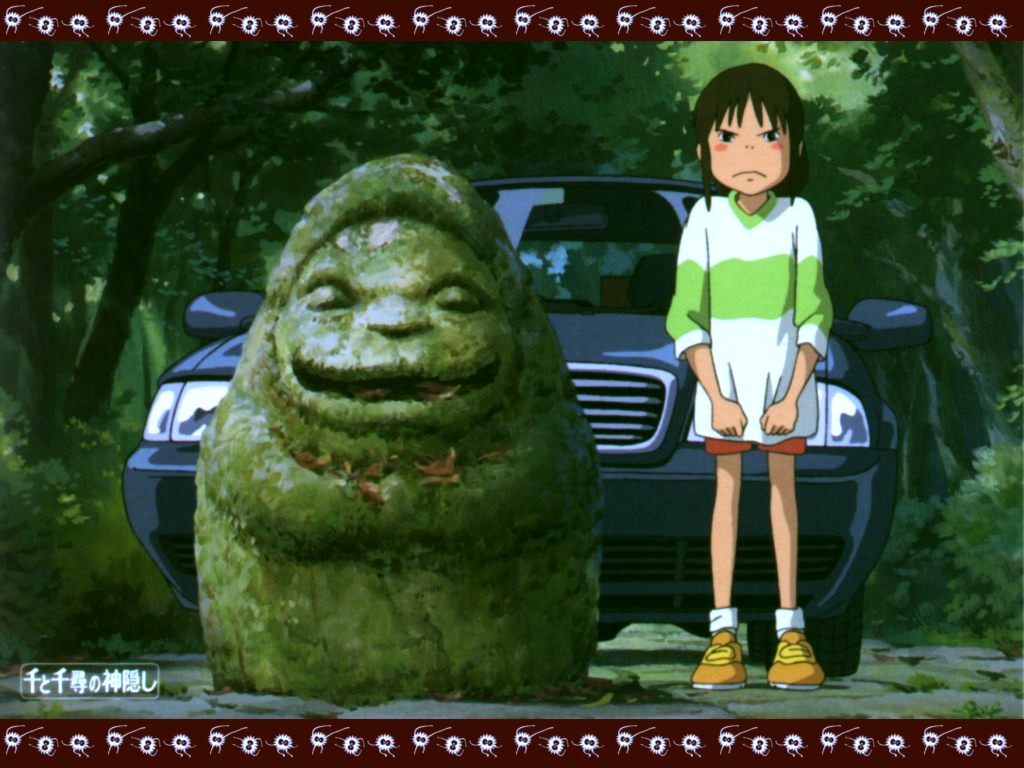
Spirited Away, artistic escapism?


do i need a caption here?

I have a strange habit when it comes to Japanese directors who have made a lot of great movies (incase you haven’t figured it out, I am a Miyazaki fan) in that while I watch almost all of their movies, I never get around to buying the ones I like. Instead I have their “still good but not the best” titles lying around my house opposed to the films that they made that I think are brilliant. With Akira Kurosawa I own some of his great movies, Throne of Blood, Seven Samurai ect, but I don’t own my favorite film by him Yojimbo. With Miyazaki, I own Kiki’s Delivery Service and Spirited Away, which I find enjoyable (former) and beautiful (later), but aren’t nearly as brilliant as Castle in the Sky, Princess Mononoke, Whisper of my Heart, and Totoro, which I feel are some of the greatest animated movie ever made. So since I actually own the film, I’ve seen it four times now times, and every time I see it I walk away with a different perspective of the film. The first time I watched it, I left thinking, “It was pretty good, some parts were great, but I hated the ending”. Second time I watched it I thought, “This is good looking but with a few exceptions its just shallow trash, the character don’t make sense and the plots a mess”. Then after a few months of feeling this view point, I watched it again with my sisters and was like “Wow, this is really astoundingly animated and directed, it has all of these themes within the film)”, which I feel had happened because my expectations had been lowered. So finally watching it with a friend of mine, I came back to my original option, of being very mixed on this film. On one hand almost everybody I know who is remotely interested in the following Japanese Culture Animation Anime/Manga Shintoism Japanese Film Spiritualism The Magical/special power of nature (This includes environmentalist) Fantasy/large flying dragons going around The evils of modern society slowly corrupting traditionalist values Miyazaki (by this I mean they like his films but don’t care about the rest of the list) Absolutely loves this movie and declare it to be a masterpiece, and since I like everything on that list to at least a limited extent, so I understand their perspective, and naturally I feel instinctively driven to disagree, because I’m genetically programmed to disagree with the majority. However friends of mine who have never seen Miyazaki films and don’t care about the rest of that stuff instead say “It looks great, but just doesn’t make sense”. For example, I watched a movie review on the interest by Confused Mathew which said basically that, and when listening to the review my first instinct was to write a counter argument saying that they are ignoring the subtle themes and messages of the story and are being totally closed minded and pretentious western elitists (har har). However, on the flip side, when ever I read commentary or reviews of the film that are negative, I always find myself agreeing with the negative aspects that they point out, just not with their final conclusion. However when I hear people who like the film rave on about how great it is, I feel pretty much exactly the same way, which enforces the idea that I’m the quintessential contrarians. To narrow in on the good aspects of the film, let me just say that this film is absolutely visually stunning. For the first time, I finally watched it on a wide screen TV and other than the fact that everything blue was shown as green, it took a film that I already knew was gorgeous and just made it mind blowing. The level of detail in the animation is almost unbelievable, every object in the film, from the railings on the bathhouse, the way the hair/clothes move, the small details about the creatures movements and actions, the way the water flows, the colors of the costumes and the realistic and yet surreal nature of the magic (I love watching Yubaba repair her ruined office). Even through a great deal about the film annoyed, the astounding graphics allowed me to simply sink into the experience and get to the end feeling like I’ve enjoyed myself, the art almost justifying the movie’s holes. And yet, there is (at first glance) a double standard their, as those of you who know my views on Avatar can attest will instantly call foul, because their I said that its fancy graphics didn’t excuse its horribly cliché and offensively cooperate plot, but critically I don’t believe that Avatar is art. Yes, I know that art is hard to define and making such a distinction is horribly unprofessional of me, but watching Spirited Away, what impressed me was more than just the quality of the animation technology but instead the care and detail of the drawings, every frame felt like a painting. When I had to pause the film for bathroom breaks, I was struck by how every frame was full of these little details such as the subtle wrinkles on some of the toad people’s faces to indicate age, or the way that each of the geishas had subtly unique faces, and you could recognize them throughout the film. These details are essentially meaningless, and yet it breathes life into the film, because Miyazaki is at his heart an artist, and that the animation is given its own respect. I know that a similar time and energy went into every frame of Avatar, but it feels different, its covered in the cooperate stench of cynical manipulation. When looking at Spirited Away, I feel like it was constantly drawn and redrawn by an artist who is trying to set the mood of the story, Chihiro’s removal of her shoes is hardly important plot wise, but it adds to the mystic of the bathhouse, tapping into the traditional Japanese customs. Similarly the designs of Yubaba’s office really don’t have purpose, and yet not only is the office beautifully animated, each detail reveals more about the character and adds to the atmosphere. Her small skull/telephone shows a mixing of traditional spiritualism with modern society; the fact that it is a skull hints at the sinister nature of the witch. Similarly, her many gems obvious symbolize her greed/avarice, however each gem/ring is so detailed that one can realize that for all of her greed, she has good taste in her jewelry, which is offset by how she wears too many jewels reveals her gaudy and cheap taste. Like wise, the elaborate but overdone nature of the room reveals her insecurities, that despite being basically a bathhouse owner, she has this tacky display of wealth to comfort herself. The giant baby’s room shows aspects of his character, the padded walls shows how he is protected and enclosed, his hiding under the pillows shows his overly protective and cowardly nature, the dolls lying around the room seem discarded rather than loved, revealing the materialistic nature of his mother’s doting. All of these details could easily be omitted but they were included more to enhance the scene rather than to evoke any specific emotion, like an artist who wants his work to be perfect, and Avatar lacks this. Avatar feels artificial and goal oriented, every image is made not to enhance the scene, but instead to try to manipulate the audiences emotions. The Spirit’s bodies are obviously models off either old legends, or various nature ideas reflecting their character (the radish spirit looking like a radish, the human like frogs being cowardly and greedy, the dragon’s water like scales). In contrast the Navi feel like they were created specifically to try to gain the audiences sympathy. They are all physically perfect and sexy, the women wear very little clothing even when it wouldn’t be practical, their eyes are very wide and large, which implies vulnerability and innocence, to quote Red Letter Media, “Disney Eyes”, they have unneeded animalistic traits which make them both cute and feral. All of these elements come together to reveal a carefully crafted race whose exist to both to gain sympathy and sex appeal. I read that Mr. Cameron would show pictures of Navi women prototype to random people and ask “would you tap that”, reworking them until the majority said yes. They are like models on magazine covers, they aren’t real, they just are shallow images who’s only real purpose is to try to arouse both our emotions and sexual desires. This emotional manipulation conveys to every aspect of Avatar, the forests of Pandora are visually stunning but feel like they were created specifically to be pretty, not. The various flora in the forests are somewhat surprising and remarkable, but they feel like they were included in the scene just so the audience can be like “ohhh, awww” rather than add to the atmosphere, even the Navi’s sex tree feels like it exists just to be a backdrop for the sex scene, just like the floating rocks don’t seem to serve a purpose other than making the flying scenes more shocking. The forest doesn’t feel real, when watching more realistic (see better), movies set in jungle environments, your struck by how dirty they are, that even through they are wonderful you have mud, insects, rain, and sweat involved rather than the pristine cinematic displays. (say it with me), In contrast, Spirited Away’s animation shows both the wonder, like the multicolored and fascinating spirits, but also the icky aspects, like the frog chef smoking a cigarette, the mechanized underbelly of the bathhouse, and well, the stink spirit. Also, Avatar just feels like its borrowing ideas, it has at best a mediocre storyline that is trying to compensate for it with its graphics, while Spirit Away’s animation is about enhancing a its unique story about a spirit bathhouse, not selling itself on graphics. Now the film does in practice sell itself on its visuals, but that’s from the storyline being badly handled, not being unoriginal or cliché, so you get the impression that was not the intention, while Avatar without its graphics would be a bust. Finally Avatar’s imagery is ultimately a show of escapism and a disconnect from reality, while what is good about Spirited Away is its focus on people and everyday life, something with more meaning and personal connection than the ultimately hollow message of Avatar, because even through Spirited Away is again, flawed, its about human beings. My three favorite scenes visually are when the parents eat the food of spirits, the job interview, and the stink spirit’s bath, because in all three the animation is done in such a manner that I can almost feel present their. That food looks delicious, but more importantly it looks real and the parents eating (enhanced by the audio/dialogue) really made me want to just gorge myself on exotic Japanese food. Yubaba’s spells are focused on very minor visual magic’s, which feel slightly sinister because they are more human, her literal zipping shut Chihiro’s mouth is chillingly disturbing because we all know the term “zip it”, and this is making our own expressions literal. When Yubaba destroys then repairs her office, its more effective because we all have seen tables fall over, lights break and papers being scattered, it’s a very human feeling. And finally, the stink sprit ordeal taps into everything in the world that’s icky and disgusting, watching it makes me feel absurdly squeamish, because whenever I’ve had to do the trash or wash the dishes or I’ve fallen in mud, I feel that sense of icky helplessness that is so masterfully conveyed in the character of Chihiro’s. While in Avatar…I have nothing, it’s just a bunch of perfect creatures existing in an idealized environment, its jus wish fulfillment. Ok, so enough sucking up to Studio Ghibli’s art, its time to focus in on the more important things, namely characters, story, and writing. Now as I mentioned before, I love the concept of this story. Confused Mathew in his review complained that this review that the fantastical world was “random and arbitrary” but and maybe this is my love of mythology speaking, I liked the weirdness of the Spirit world, these creatures are spirits, I shouldn’t be able to understand them, they should always be an enigma to a mere mortal like myself. What surprised me was the human traits added to the characters, which actually made them both more intriguing and disturbing, as seeing these weird creatures doing very human things like opening a window to smoke a cigarette and indulging in wage slavery and yet it is very disquieting because even when they do human things, they come off as subtly wrong. For example, when the boiler man, the eight limbed Kamajii is first introduced, he acts oddly alien, his multiple arms mixing spices and his movements are both spider and snake like and stokes the fire with soot people, and yet he human in that he is just a worker in an industrial structure, and yet before he gets too human, he has all of this arbitrary spirit rules, like that Chihiro’s is obligated to throw the coal she picked up into the fire. Or when Yubaba is talking about business, she comes off as just a weird looking cooperate boss, when she suddenly steals Chihiro’s name off the paper, as well as moving in close to her so that her disproportioned body is more obvious when compared to the normal Chihiro. It’s this strange dichotomy of human like actions and methods mixed with totally alien spirit goals and pleasures (like the importance of Roasted Newt) that makes the whole story simply surreal. However, this is ruined in the end as the spirits start to act more human and less spirit like due to overexposure, which undermines the whole bizarre nature of the bathhouse, making it just a bunch of funny looking customers rather than some sort of pseudo Shinto ritualized ceremony turned into a business. Yubaba goes from enigmatically sinister, but with a charming undercurrent to a somewhat spiteful but otherwise harmless granny, while her sister goes from an equally ruthless witch in her first appearance to nothing more than a kind granny who loves to sew. The most glaring flaw of the film however is the character of Chihiro, and here I agree with Confused Mathew entirely. The premise of this film is supposedly that the a spoiled girl is taken to a magical world and is able to escapes after growing up a bit, but the problem is that Chihiro isn’t spoiled. She is a bit obnoxious and a massive wimp, but she isn’t spoiled, only upset that she is moving, which I can sympathize with greatly, and in fact she seems very level headed when one looks beyond her being a wimp, she doesn’t eat the spirit food even when her parents pressure her too and from the start advices leaving the spirit world alone and not getting involved, which is proven true. And even her being a wimp doesn’t really strike me as much of a flaw, because she is like what, ten? I don’t really fault a kid being scared at that age, doubly so when some of the stuff she sees is legitimately terrifying, I know I would have handled that horribly made staircase about as well as she did cause I hate heights. Critically however, her being mature from the start means she doesn’t have a character arch, when No Face offers her gold and she refuses this isn’t any different from her behavior prior in the film, she has been refusing things that creepy spirits have offered her throughout the film, that supposedly critical moment is spoiled because her refusal has no emotional impact, accepting the gold would go against her character as established throughout the film. Also, the girl’s maturity is somewhat undermined because we don’t ever understand why, why does she refuse the food, refuse the gold, offer help to No Face, see the good side in Haiku ect, it seems arbitrary, her various acts of selflessness are meaningless without context, why does she refuse these seemingly generous gifts, as she never gives a reason. My theory is that Chihiro isn’t really a character, at least not in the traditional sense, she is a stand in, she exist to give the audience something to follow and a plot to move along so the audience can be show all of the fantastical sights that the studio has in store for us, the story isn’t about her, its about the world. Which would be fine except that the plot focus seems to style itself to a story of personal growth for Chihiro, while apart from becoming less weak willed never really happens. I mean, she becomes less of a wimp, but I never felt critical of her for being a crybaby when she is like ten, maybe this is a Japanese thing with that culture of stoicism and blaming the weak, but to me blaming the girl just seems insensitive. The greatest problem of the film through is its storytelling, which just feels schizophrenic, because there are like three separate themes running throughout the film, but they only appear in bits and pieces throughout the movie. For example, the movie starts out with a theme of how materialism/consumerism/capitalism degrades our sense of understanding/appreciation of the natural world, embodied with the super American looking parents (complete with credit cards, and a big car) who show nothing but patronizing curiosity for the spirit world, mistaking it for a tacky carnival and treating the whole thing as sort of a tourist trap rather than a sacred place, which results in them turning into pigs (oddly they don’t seem to change by the end of the film…why?) And yet that theme of cultural dilution seems almost like a hobby for the film, it occasionally makes reference to it and shows us its views on the matter, but the primary focus is as I said the artwork and the setting more than any individual theme or moral point, which would be fine for a more avante guard film, but this movie is ostensibly an adventure fantasy with great artwork, the art being an addition not the main attraction, so this inconsistent theme seems out of place and feels like sloppy writing Honestly, while a lot of stuff visually happens, but apart from the art, it doesn’t seem to have a point. For example, No Face, while he gives the movie an excuse to show a great deal of visual marvels, as well as creating a conflict for Chihiro to overcome, but what purpose does it serve? Maybe I’m just stupid, but I can’t really figure out what it represents. My guess is that No Face is a metaphor for loneliness and being misunderstood, desperately seeking human connection and friendship. Not able to get friends conventionally, lacking a voice beyond the muffled gasp he makes, he tries to find an emotional connection through bribery through things people desire, like bath token or later gold. I suppose his eating people who accept his charity symbolizes how those who see relationships through such shallow lenses eventually destroy those around them instead of getting true friends I guess, and his assuming their traits after eating them would be…becoming a social poser who borrows from others to become a fake human being? His becoming bloated and disgusting could almost be a metaphor for capitalism as he becomes a gluttonous wasteful producer of cash who only encourages people’s greed and shallow materialism however longs after purity of friendship with the modest Chihiro. Or No Face could represent impressionable youth, who reacts to the world around it, alternatively innocence’s who are corrupted by the corrupt environment of the bathhouse. Or it if the bathhouse represents Japan’s pre industrial past, then No Face might represent those who look back to past for inspiration and turn into horribly parodies of the old world orders who are ultimately fake. You see what I mean; there isn’t any indication of what it stands for. Going with the “No Face Represents Loneliness” aspect, that works in his own storyline, but doesn’t really fit into the larger theme, beyond the general greed of the bathhouse, the rest of the story has little to do with social isolation in that sense of the word, Chihiro’s social problems stem from her own weakness and prejudice, not inability to express herself, which she does quite well. If he stands for capitalism, the film has an anti capitalist message, but it doesn’t pervade into the rest of the film, it just pops up whenever the parents or No Face are around. Or the traditionalism vs. modern society theme, I like that both sides are show positively and negatively, but the movie seems to be more about showing me the world than sending a message, which would be find, except again its set up to be a story about personal growth for Chihiro. At the hear through, Spirited Away is trying to tell the story of entering the world of adults and leaving behind the comforts of childhood and personal pleasures. Chihiro is a young child who is basically entering a child labor facility through a spiritual one, which draws to mind the many child labor facilities run in East Asian (not so much Japan as far as I know, more China but still). What occurred to me is how different this would be if it was written from a Western Perspective. In this version, Chihiro is shown to be bratty and spoiled, but and I’m totally stealing this from spark notes, her main enduring trait is her understanding of rules. Rules play a huge role in the story, as her entering the Spirit World means she is confronted with a series of seemingly arbitrary and all encompassing rules which restrict her and challenges her ability to cope with her surroundings, which is a bit like a metaphor for the unwritten rules of adulthood and the work place that people have to learn to understand in order to function. The essential difference however, is that in real life these rules are explained, if not justified eventually, and there is a system which upholds the rules, while in the movie the rules are left permanently unexplained and thus arbitrary. To an extent this is a good thing as it adds to the mystic and alien nature of the Spirit World, but as the spirits become more and more human and less alien in nature, the rules to be defined so I can relate to the characters and their situation, otherwise its just confusing. For example, in Yubaba’s opening scene she mentions all of these rules about people’s terms of service and that she has to accept a job for anybody who asks, and in that context these mysterious rules are good, they come off as sinister and inhuman even when they help the protagonist. However when we get into all of these later rules such as the curse slug, No-Face, the golden token, and Yubaba’s final test, it feels like rules made to run the plot rather than things that I can relate to, for example why can’t No-Face come into the bath, and what is the deal with that damn train? However even ignoring the plot holes, rules play another somewhat bizarre role in the story, because even through the rules of the bathhouse are strange and arbitrary, the characters to the end are compelled to follow them no matter how nonsensical they are. For example, when the spirit workers demand that Yubaba cancel her final test because Chihiro has done more than enough to earn her freedom, Chihiro turns down their protest and chooses to instead follow the rule even through its completely pointless. Or early in the film, we are suppose to be somewhat condemning of the parents as they explore the spirit world and eat the food, but honestly , I didn’t really feeling condemning of them, I felt pretty sympathetic. They where just exploring and eat some food which they fully intended to pay for, they had no knowledge that they were offending spirits, since it was established they were ignorant of traditionalism. While they are saved in the end, they are shown very negatively and somewhat deserving of their fate, just like Chihiro is suppose to partly deserve being forced to work and here is where we have some moral dissidence, because I can’t find it in myself to condemn a somewhat foolish family for exploring what looks like a tourist trap and not knowing much about the spirits, and while I think Chihiro is a wimp, I don’t see hard labor as a positive character building experience. I feel like in a Western film, the ethic of the story would be instead rising up against the rules and the establishment and rejecting the rules in favor of their own. I mean, compare to Pan’s Labyrinth, another fairy tale movie, in this story what makes the little girl an admirable character is the refusal to follow the arbitrary fairy laws and to do what is morally right rather than encourage unjust laws through compliance, I mean even the whole ethic if Chihiro’s growing a spine is undermined because she is still tied to the rules of the bathhouse. I was reading online about how the movie shows good and evil as more morally grey in contrast to most cartoons, and I agree this is a good thing, but the film ends more with the main character leaving behind evil rather than changing it, the Bathhouse is still a terrible place to work ruled by cruel and greedy regime (if lovable) and despite all of their talk of freedom, there are still plenty of pigs who are most likely transformed innocents, the status quo is unchanged and just ignored. I understand it, but I feel like a Western work would try to overthrow the establishment. Finally there are all these inconsistencies, since this is getting long as it is, some notes 1)Ok, so Haiku knows Chihiro from before, and rescued her from a river, and yet this only seems to be a plot point when they are around. It has no real purpose other than to have an excuse to have Haiku to know her, and the whole issue is resolved through “I love you” “Oh shit I remember you now” dialogue. The o thing that came from that relationship was the scene of her riding Haiku through water, which I thought was a metaphor for birth but…apparently I’m wrong (and Freud was right) ·2) The nature of spirits. I mean, they all hate human but many of them look human with exaggerated characteristics, and many more look totally human, I mean I had to look it up online to find out that Rin (Lin) is suppose to be some sort of weasel spirit. While I don’t mind spirits being impossible to understand, once the spirits start to become more human, we need these details to understand the world. 3)What is with Zenbaba’s character shift? Why does she start out as a ruthless bitch, saying, “interfere and I’ll tear your mouth out” to a grandmotherly figure? Also on that, why do the other spirits characters change from scorn of Chihiro to exalting in her freedom and risking their jobs to challenge Yubaba on her behalf, it comes out of nowhere other than just ending the film on a happy note. I mean, is it because of the sink spirit ordeal? No because they were all angry and rude to her when No-Face ruined the bathhouse, so why do they suddenly all love her? 4) Again, what is Haiku’s character, he just seems like an emotionless love interest who’s heart becomes pure in the end. The only time he was interesting beyond “OMGDRAGON” is when he is acting like a ruthless mob enforcer, but other than being slightly rude in like two scenes, it never has any actual impression, and sees contradictory. I mean, if he is nice to Chihiro when they are alone, why be a jerk in the elevator except to explicitly show to the audience that he can be mean. If their were two of them I feel like that would be a more interesting story. 5) Why does the boiler man have a ticket, why does he feel compelled to use it on this girl, why didn’t he use it earlier, why does he still work her? 6) Speaking of which what is the point of the train? Spirits mention wanting to leave on the train, but how does that work? What is the spirit world beyond this bathhouse? Somehow it seems less impressive when spirits have their own industries and businesses rather than a pseudo Shinto bathhouse. 7) What is the point of the giant baby beyond the effect? He doesn’t contribute to the story except to mention an out of place lesson on the dangers of overprotection. His accompanying Chihiro doesn’t really contribute to the overall plot beyond some very minor comic relief, what was the whole point of him and the little bird/bug? 8) Also why even have the whole Swamp Bottom Experience, beyond again the artwork and the closure of having a character go onto the train, and I don’t see the whole point of the trip beyond exposition and some heavy-handed love values. · So she has to eat human food to stay human…did that stop at some point? And what is the difference between human and non-human food, how does she get by later? · The Paper spirit things, apparently they can be killed by smashing into glass and they can cut flesh, and yet they don’t cut Chihiro, and many of them just fall down after other ones smash into the glass and yet one lives, why? You see what I mean, the film is enjoyable, the art and concept are enough to carry you through and come out feeling good, and some scenes are just brilliant, but as a whole the story feels inconsistent, rushed and mangled, and the character feel like stock characters, or at best particularly interesting stock characters. So totally worth watching and deserve a lot of praise because it is a work of art, but honestly, its not his best work nor is it some sort of super animated film masterpiece.

from

EE


Thursday, April 1, 2010

Radiata Stories is more innovative than Dragon Age Orgins

Why are the two most boring characters given the most screen time?


Radiata Stories (NO I don’t know what Radiata stories means)

Normally I don’t explain why I’m reviewing a game, it’s just an arbitrary decision based upon my whims, and so I’m not going to start now. Nah, just kidding, through that would be funny, instead I have I a whimsical story which serves as a forced metaphor for my views on the game rather than just saying them directly (spoilers, its mediocre). I also love self aware narration. Anyways, I got this game right after I bought a PS2 at my Grandparents, basically as a test game to play something cheap before I went home and borrowed (steal) better (slightly less crappy) games from my friends (people whose addresses I know), and I jus saw my younger sister (younger sister) playing it today when I basically remembered its existence, and figured that since I’m playing assassin and I’m hiding inside my house (there everywhere), I might as well write a review on it, because despite the fact I think the name is silly and I really don’t like the art direction other than character creation, I think it had enough potential to be wroth an article. Basically, I don’t really want to write about what the game is, which is as you’ve noted, a mediocre time killer, but more what it had the potential to be. Because unlike almost every other bad game out there, Radiata Stories faults are born not from lack of creativity or ideas, but simply through general incompetence. And I know that this is going to shock people, but Radiata Stories was possibly one of the bravest attempts in gaming in the last decade.

Now as I have made abundantly clear at this point, I don’t really like JRPG (grr, Final Fantasy) so I’m naturally bias against the game, but it did make some attempts to move away from what normally bothers me, it just didn’t do enough. They ditched turn based combat, but I’m still going into another world to fight and its still limited and tedious, just less so. The outfits aren’t as stupid as Final Fantasy’s absurdities, but they still make everybody look gaudy and out of place, and while the system isn’t as obsessive when it comes to all this minute details, its still boring to the point where I don’t really want to actually modify my character in the least. Beyond that the characterization is simplistic, the dialogue lacks any trace of subtly, and everybody has stupid hair. However it is where Radiata Stories tries to do something original that it all goes horribly wrong. Basically the game has the set pieces to be great. The story is about a young noble boy named Jack Russell (I hope that is more subtle in Japanese) who wants to join the nights of his realm. Unable to get past the entrance exam due to his general ineptitude, he is accepted into the knights through blatant nepotism instead. This got the whole game off to a very good start, because it subverts the normal JRPG, instead of my excitable not so smart character overcoming the odds based on the power of his will, he has to deal with the guilt from his lack of actual merit. This built up the expectation that the game would be about my character trying to come to understand how the world really works and being forced to confront his own privileged background, rather than the main character being the underdog. But like almost everything else in this game, all of these small subversions only serve to disappoint me after raising my expectations because the game doesn’t go anywhere with this idea. Jack has a few seconds of “OMG I don’t deserve this” before going off like the typical JRPG hero non the wiser. Sure he will feel guilty once or twice, but it will come completely out of nowhere and feel like an obvious effort to insert angst. Later once the actual game play starts, this happens again, the castle you start out in is HUGE. Its this massive complex full of different people and stuff happening, it could be a whole game in itself. But you can’t actually do anything with the fact that they have this huge castle because all of the rooms are practically the same and the characters are so dull it just feels like your wasting your time. So, contrary to my nature of saving the main quest until absolute last, I ran to do the main quest before I became more hopelessly lost. Yeah, I know that I missed a massive backlog of important information and potential characters/items, but it was just so generic and uninteresting that what could have been a great beginning. Anyways, so I am then introduced to my party, the snotty rich girl, the overly noble knight and…….my least favorite character the southern hillbilly priest. WTF. Why does every character with a southern accent have to be a dumbass hick? I mean I know this is the fault of the dubbers not the game itself, but I’m half southern, my moms from North Carolina, is the game so bad at characterization they have to use an offensive stereotype. I mean imagined if his character was exactly the same but I made his accent Hispanic. Anyways, I planned to resume the plot summery but honestly, I really don’t care at this point, I just want to talk about the game’s main selling point, the immersion. Basically, the main city (and by extension the surrounded towns when you get to visit them) are all populated by 150 NPCs who you can get into your party. All of these characters have their own schedule and personality and you can collect all of them (Between two play through obviously blah) like lawyer collecting clients through a variety of tasks. These vary from simply talking to them, talking to them at a certain level, fighting them, saving them, having a friend of theirs, to having a special item. The game is run in kinda sorta real time, so you have to pretty much stalk these people before getting them into your party. As you can expect, it suffered from all of the problems you would expect from such a system, namely all of the characters being underdeveloped, existing more as an accomplishment than a party member (you don’t even get to talk to them once you get them in your party), many of them being totally unmemorable, and their listed personally traits never actually effecting the game. For example, I don’t remember his name, but one Frankenstein guy was described as being as sociopathic mad scientist, but once I got him to join me, that never came up, he never betrayed me for his own personal gain or tried to actually experiment on somebody it was just an idea that never came to anything. However the idea is pretty much what I want from an ideal RPG game, if we had a game with better funding and writing backing it, this could be the most innovative game since Baldur’s Gate. Instead we get this idea coming from a mediocre JRPG, where it fails horribly, but at least they tried. And I’m rapidly losing interest, here is some basic information (filler) before I come to the stunning conclusion

The Good and the Bad (wait what else would their be?)

  • I like that there is a lot going on. People are going into houses, out of houses, regular schedules, and doing their own thing. It makes the society feel alive and people actually having a point. Disturbingly enough, it handled it even better than Oblivion/Morrowind did, by having the characters actually change their reactions when they are in different locations. True is a shallow portrayal that is based entirely upon adding these characters to your friends list, but that’s more than most games can say.
  • The races. Despite having their art design ripped off from World of Warcraft, Radiata stories actually are pretty fleshed out. Ok, no they are just shallow stereotypes, but they are new shallow stereotypes. The Light Elves are winged fairy elves who are isolationist and snotty. Ok that’s typical, but they are more fairy elves rather than LOTRS Elves. The Black Elves are the tree loving nature elves who are into physical exertion and are kinda a sporty martial artist race who are kinda all athletes. The Goblins are either Green, who are basically an entire race of trashy hobos, or Black who are all stoners, and the dwarves are all Russian industrialists. Apparently there are two types of orcs too, but I never bothered to recruit them. The downside of course is that they are again, only shallow stereotypes, jut with kind of a nifty idea.
  • The weapons are very much hit and miss, but about half of them are pretty cool. The rest are just stupid
  • While the NPCs are almost universally shallow representatives of actual characters, they at least have a nifty concept they revolve around. While they lack anything resembling depth, when you first met them they seem pretty interesting. Again, if they actually developed these character you could have bioware styled interesting characters.
  • A cool plot. This they almost pulled off perfectly, a almost totally morally grey battle between humans and nonhumans. The latter are slightly more morally justified, but that’s like saying the allies were slightly more justified in WWI, its true but the resulting conflict was way out of proportion, as the humans are more likeable honestly. The fact that for the first two thirds of the game you have been making friends on both sides makes the resulting confrontation between the two sides hammers home the feeling of “Wow, this is a civil war, not a war between good and evil”. Of course then you realize how shallow the characters and cease to care, as well as your allies tendency to respawn, which makes the whole point of a civil war kinda pointless. Also the fact that humans get so much more characterization makes all of your non human allies seem weird (Also why are the purple people considered human? Eh?). The problem is that by the end of the game, the purpose or even conclusion of the war are kinda obscured, due to a mix of shoddy story telling and stupidly long periods doing pointless quests.
  • The quests that involve talking to people and fighting unique foes and interaction between characters was cool, all of the rest were a pointless waste of time
  • The actual set pieces of the plot were cool, you have these long painful periods of filler intermittently mixed with really good cutscenes that actually make me eager to keep playing (unlike final fantasy games, where I’m just killing time for the whole game). I liked most of the major characters other than jack (see below), the voice acting was good, and while the game didn’t actually make any use of their personalities, they were presented really well in the limited screen time they had. The fact that random NPCs suddenly showed up and made a different was really great, if again, they actually did something with that beyond a few disconnected scenes
  • The only thing I really didn’t like was the main Character. Jack is simply put, unappealing. Like his namesake, he is excitable, really stupid, moronically brave (I had to use moronically because I had used stupid already), socially awkward and shallow. Basically, the typical JRPG main character, why does Japan love the stupid brave guy with a good heart motif? His lack of intelligence just makes him unappealing, because the random NPCs are honestly more interesting as characters, because he feels like he should be a random NPC who joins your party, because he has about as much depth. This is a massive personal issue I have with JRPGs, but stupid main characters cripple games that rely upon complex stories, because the character himself is unable to actually understand the complexity, thus forcing the game to dumb itself down to the point where it is patronizing. A stupid main character also forces the minor characters to be more polarized so he (and presumably the audience) can understand the conflict better, the main human villain Lord Cross has to be such a massive ass so Jack can know who to fight to. Also its boring, he doesn’t have anything to say, he just follows around from plot point to plot point. A good protagonist is central to a video game of this design, a distinctive personality is vital for this understanding.

So in conclusion, Radiata stories was a brave, but ultimately futile attempt to make something good out of the JRPG format, and to try out some really inventive new ideas. However its departure from the norm made it unappealing to JRPG fans, while its sticking to old traditions made it useless to WRPG fans. So in conclusion, Radiata Stories is more innovative than Dragon Age Origins. While it isn’t as good as a game by a long run, it does something that Bioware didn’t attempt to do, namely try to depart from a formula that has long since proven stagnant.

From

EE