do i need a caption here?
Part 7 out of .7America and why are we such, wait who are we?
Right now this is awkward, because I’m talking about us, and unlike all of these other ancient civilizations, we actually care about us, and so actual names might have to be used opposed to an offensively dismissive one page summery (See Ottoman Empire). So instead we actually make a halfway effort to explain our complex and short culture, while neglecting older civilizations because this is IB, so we don’t care. Anyways, unto America. Now the image of America today is either brave heroic patriots of awesomeness who are constantly protecting the world from the evil forces, (I hate Michael Bay) or oppressive racist jerks who are oppressing the free world out of our addiction to oil and general bullet happiness (I hate James Cameron), but America of 1914 is a totally different animal. If any of you have ever seen the ABC show Mad Men, and I know none of you have, its about America during the early 60, shows how normal is a totally different, their aren’t any black people in any prominent positions, the two political parities aren’t as well established, women are oppressed and child beating is A-ok. This is even more apparent in 1914, where we see a lot of elements of modern day American culture, but its still strangely alien. For example, women don’t have any rights, and while slavery has ended, the Civil war is not as long ago as we think (the war ends in 1865) there are still veterans of that conflict, and many ex slaves and children of slaves still around, so segregation is still in full swing. Since this isn’t American history, I’ll try to keep this bulleted, but because America is the single most powerful nation in the entire world from 1945. First off, America in 1914 is still a major power, but not ‘the’ major power. Even people who hate America today cannot deny that we are the single most powerful nation in the entire world and that we can change the fate of whole continents with a single press statement, but in 1914, we were just another power the world wasn’t dictated by America’ whim. England was the most powerful nation in the world, and France, Russia and Germany had more international prestige than we did, we were more like a sideline power who tired to not get involved. We weren’t pushovers, nobody messed with us directly, our power was largely localized within our borders and so we weren’t really factored into the great power conflicts of Europe, they respected us enough to not mess with us but largely left us alone. When we rebelled, we didn’t rebel to become yet another European power, and didn’t want to get involved in all of the mainland’s constant backbiting and power struggles, we had a nation to rule, lands to settle and natives to systematically exterminate, in fact, George Washington’s final address was urging Americans to not get involved in European politics, we had a huge country to manage and we are blessed with enough resources that we don’t need any reliance upon another nation in order to thrive. Their were two exceptions to our isolationist policy, first, we were involved in overseas trading in Europe and Asia, through not in the same way as Europe was, but we were trading in our way, due to the massive profits to be made. We were sort of an international trader, working with every single side, but too far away and powerful to directly confront. Our second foray into international politics that is relevant to this discussion is the fairly recent Spanish American war in 1898, where we basically drove the Spanish out of the last colonies in America and the Pacific. The war was a massive experiment for America, because it was basically the first time we had expanded overseas against another major power on established colonies, we had taken British, French and Spanish land before, but that was all on the mainland, which we felt we had a legitimate claim to (manifest destiny). But with the Spanish American war, we basically were like “Um, yeah, we want all of those lands for ourselves” so nicked Cuba, Guam, Puerto Rico, and very importantly, the Philippines, which I will cover later. So we had overseas colonies, as well as some spheres of influence in China, and we had obtained Hawaii. So we were part of the international stage, but we didn’t really want to be, WWI really didn’t mean anything to us. Basically, we will go into America in more sickening detail later, but for now what is important is the basic social structure of our society. Its worth noting that we are the only true Republic that isn’t actually a constitutional monarchy (Britain) or corrupt/inept (France). We aren’t perfect, we are racist, sexist, and close minded, but we are at least a democracy and we, as we do today, really believe in our democracy, which alienates us from the monarchies across Europe, specifically Russia, while simultaneously making us afraid of making commitments that lasted more than 8 years, due to our constantly changing leadership. And even if the President favored an idea, his congress could shut him down if they weren’t onboard with the idea. Finally, making money is a huge importance to America. We have the two party system at this point, with our old friends, the Democrats and the Republicans, but I’ll go into them later, because America enters the war late (as usual), but basically along with Democracy, Capitalism, was our big founding ideal, and it was at its most powerful in the 1914s. Big Business was in full power, and we weren’t keen on letting the government manage things too directly, through Theodore Roosevelt had set the stage for change earlier. Ok, I’m done, because America is complex and I’ll cover us in more detail when we actually you know...join the war.
Part 6 out of 666, who are the Austrians, and who are the Hungarians and who are the Serbians and, WHO THE HELL ARE YOU PEOPLE!?
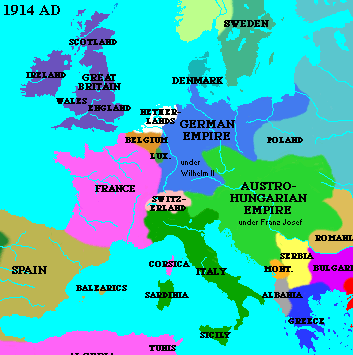
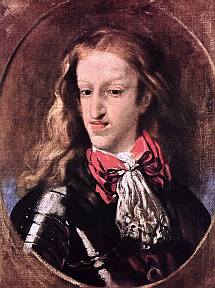
For those of you who studied the French Revolution (anyone?) you might remember Austria as the inept, conservative blowhards who lost against the French like eight times, and that’s true. Unlike the Ottomans, who were a massive Empire, the Austrians have always been a somewhat regional empire of multiethnic states, through like the Ottomans they are at the end of their glory when WWI comes about. Once upon a time, what is now Germany and all of Austria Hungry (see map below) were in one “country” called the Holy Roman Empire, which was neither Holy, nor Roman, nor an Empire. It was in reality a confederation of Germanic states, who were united in a league with some basic loyalty to the Emperor, but not really united. Eventually it fell apart because..yeah, it couldn’t get anything done, and the largest of these states, modern day Austria, went “Screw these guys, I’m going independent” and took over what is now Austria, Hungry, Czechoslovakia, half of Poland, and parts of the Balkans, some of southern Germany, Romania, and northern Italy. Once largest empire in all of Europe, because their leaders, the Hapsburgs married themselves off to all of the other leaders, the problem is, in doing that, the Hapsburgs became MAJORLY inbreed. I mean, eww inbreeding, to the point where you had whole generations of kids who were as dumb as a rock. I mean look at this, this is what they looked like.
This is how big it was in 1914
Now the problem is that area is literally full of a massive number of different ethnic groups, each with a difference language, culture, customs, society, religion, and ethnic background all crammed together in a small area. And they all hate each other.
The Austrians are basically German, they speak German they are the same ethnic background, and they ruled over all of these ethnic groups, even through they were a minority they just kept all of the other groups divided. However after some really bad wars with Napoleon and a bunch of other screw ups, the second largest ethnic group, the Hungarians were able to gain some level of sovereignty. Thus the “Duel Empire” was born, a combination of Austria and Hungry ruling over all of these other groups, who they both hated, but the Hungarians and the Austrians hated each other and all of the people beneath them, thus the empire was simply too diverse and complex to run effectively, and despite the partnership, Austria still was the more powerful of the two. Now this isn’t like in America were our diversity is one of our greatest advantages, because we hope to integrate all of our minorities into one singular nation, we aren’t totally great at it, but the idea is that we are all Americans together. In Austria Hungry, they tried to keep the various ethnic divisions separate, IE, the Serbs were in their own community and considered themselves their own people, subjugated under the Austrians, and hated all of the other ethnic groups in the area. While this divided the various groups to keep them from uniting against Austria, it also meant that Austrian subject people had no real loyalty to their rulers. I know I’m not giving Austria credit, as it was a cultural powerhouse at a few times, but I really don’t care enough to go into detail about their advanced and ancient sophisticated culture. In short through, Austria is one of the old boys of Europe, like Spain, France and Britain, its an old nation. They hate the Russians and the Ottomans, as they are always fighting over each other’s borders. The Recent decline of the Ottomans is welcomed by the Austrians, however they hope to check the Russians. Despite a fairly recent war, the Austrians are very close to the Germans, as they are the same ethnicity and have the same view points. Austria basically would have joined Germany if they were so busy managing their empire. Its also worth noting that a young man named Adolf Hitler is living on the streets at the time of 1914 trying to get by as a painter with little success.

art 5 out of 5.5 Why are the Ottomans all Assho..wait who are the hell are the Ottomans?
Sigh…here is the problem about "IB World Topics" is that is a lie. Like most of the IB program it isn't teaching you stuff, its just teaching you how to repeat things. So despite being in "world history", in reality this means, "history according to white people" because lets be honest, we (America ) have are not interested in these little things like non white cultures (we barely even talk about China until the age of imperialism.) One of the examples of this is the Ottoman Empire, we only learn about them in context to WWI, where they come off as an inept empire on its last legs. The Ottomans through was one of the most powerful and culturally advanced civilizations in western history lasting about 700 years. Of course we don't learn about the early parts of the Ottoman Empire, because that was Pre industrial European history, and nobody but Eastern Europeans care about that. So lets sum up one of the oldest and most advanced cultures of Europe shall we? To understand the Ottomans we have to go back to the 1200s when they were founded by Oshman I, and to do that we have to understand the Romans. Basically the Roman Empire, the greatest Empire in Western History, and possibly the world, was divided into two eventually, with Rome being the Western Half of Europe (France, England, Spain, Italy, North Africa and parts of Germany) and eastern Rome centered in Constantinople (now Istanbul) which was Greece, the Middle East, The Balkans, Turkey, Macedonia, and later North Africa. When Western Rome fell, the Eastern Rome was called the Byzantine Empire and ruled the east for thousand years. While the Romans started out pagan, they eventually became Christian, and spread Christianity around the world, so by the time Byzantium came to power, it was fully Christian, through Orthodox not catholic (we will cover Christianity types later). Thus while Western Europe was in a state of chaos and confusion (Dark Ages) Byzantium, centered in Greece and Turkey, was the cultural center of the world, rivaling China. Its main rival was the Persian empire in modern Iran, which they finally defeated. However, something new emerged. The Muhammad the Prophet was supposedly visited by an angel in 610, and started to spread his faith across the world. Now in the Middle East, there are three traditional centers of power. Iran/Iraq's main city of Baghdad, Egyptian city of Alexandria (later Cairo), and finally Syria/Jerusalem. With Mohammad’s rise, the new power center of Mecca in Arabia emerged (we will cover the Arabs later). Anyways, the Byzantine Empire spend most of its energy holding off the three separate Islamic Empires, centered in Arabia, Baghdad, and Alexandra respectfully (they didn't exist as the same time), and here we have the crusades and all that jazz. Then Genghis Khan, the worlds greatest Badass, came in form Mongolian and took over all of Russia. Because he was really scary, lot of tribes who use to live in central Russia fled into other areas, such as the Bulgurs (Bulgaria), Hungarians (Hungry), Cossacks (Western Russia) and finally the Turks (Turkey). At the time that was owned by the Byzantine Empire, and the Turkish tribes, who were not united were held off. However Oshman I united the Turks together and created the Ottomant Turks who under Mehmed II destroyed the Byzantine Empire once and for all and turned its greatest city, Constantinople into his new capital, Istanbul. The ottoman Turks converted to Islam, however they are not what we would call "normal Muslims" they aren't Arabic, Persian, African or even Europeons, they were originally Asians, so the rest of the Islamic world never really liked them. However the Ottomans went "Screw you" and took them over. This is the
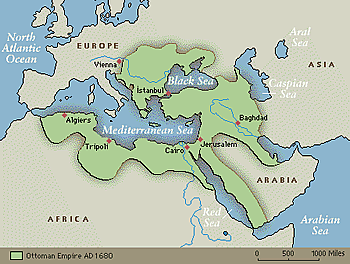
Ottoman Empire at its height
(Actually it was a little bigger, they owned Spain indirectly), The Ottoman Empire united the Arabic world (except notably the sect in Iran, but we will cover that much later) and almost destroyed Christianity once and for all. However they were stopped by the Christians in Hungry and Malta and after that the whole empire just kinda fell apart. If they weren't conquering something, they just couldn't keep all of these people under control and so the Empire started to decay. Its notable that when Europe was in the middle ages, and your ability to get ahead in life was based on birth, the Ottomans who allowed commoners to gain power but when Europe started to invent Democracies, the Ottoman Empire started to look bad in comparison. Its various subject people's started to rebel and break off or get taken over by England, Russia or France. Ironically, the Empire, the first nation to use cannons to destroy a city, defeated by the guns and cannons of the west. So, by the time WWI comes about, the Ottoman Empire on their last legs, they lasted 700 years, and it was a good run, so we shouldn't mock them they way we mock say, the Russians. The biggest problem was the biggest problem for India and China. They cultures were advanced, civilized and powerful, but they just couldn't defeat the technologically advanced Western Europe. But they didn't want to give up on their ancient traditions, because they were proud of their way of life. So they couldn't advance but couldn't compete. They tried again and again to reform, but the conservatives in the nations always objected, and the subjected peoples kept breaking off. They couldn't get an industry working because they didn't have a capitalistic culture, they couldn't get modern technology cause they were too divided and not wealthy enough, they couldn't become Europeans because they were Islamic and Asian besides, but they refused to become a colony. Things were made worst by the Europeans supporting the rebellion of its colonies, like Greece, and later the Balkans, as well as the middle east. Now this is the Ottoman Empire right before the War
Now everybody knew that the Ottoman Empire was going to collapse, it was called the sick man of Europe due to its internal strife, political corruption, inept rulers (inbreeding), and the fact that they were broke or in dept to Europe. In fact, for awhile the only thing that kept the Empire standing was it was a sort of buffer state, as England, France, Austria, and Russia all wanted to take over as much of it as possible, but they also didn't want any other nation to take it. So they would try to keep the ottoman in power just so they could keep Russian from nabbing the whole empire, while the rest of Europe nicked bits and pieces. several wars were fought between European powers not against the Ottoman empire but instead over who gets to take its land. Its like somebody who got stabbed in a stomach, and all of his friends are fighting to call dibs on his stuff before he even died. Now in 1908 through, everything..kinda changed. The young Turks, a reformist government took over, and made a really honest to god attempt to reform the dying empire, and weirdly enough, were actually doing kinda well, the empire was getting back on its feet, still shaky, but doing kinda good. This didn't last long through, because they entered WWI which was a horrible idea. Anyways, last things to note
1) the Turks still own the Holy City of Jerusalem, which is sacred to every single Jewish, Christian and Islamic sect, as well as a few ethnic groups.
2) They are not what we call "normal" Islam, they follow a different faith and view the church as sort of a separate institution than the state to a lesser extent. Thus the Arabic, Persian, and other non Turkish Muslims hate them.
3) There is a group of people in Eastern Turkey called the Armenians. They are Christians, through they follow their own version of Christianity and they have a very long lasting hatred with the Turks. Its a...long story, but they kill 1.5 million of them later.
4) They HATE the Greeks. The feeling is mutual. They still hate each other. They have fought

History, part 4 out of 3 The Russians, why are they such massive..oh wait I said that already but seriously, why are they such massive assholes?
So Russia is seen as a massive European/Asian power with a population of crude, Jew hating Alcoholics, run by a ruthless dictatorship that enjoys secret police and purges, as well as being absurdly stubborn/totally incompetent The Russia of 1914 is pretty much exactly the same, only slightly bigger. Russia is the second largest empire in the world at the time (And third largest Empire in history, second only to Mongolian and British).
That’s just massive. 300 million people making it the most populated nation in the world at the time (Ahead of even China and India then), seriously, this is huge, it includes the modern day nation of Russia (single largest nation today), as well as the modern day Kazakhstan (eight largest nation today) Turkistan, Uzbekistan, Tajikistan Kyrgyzstan, Moldova, Belarus, the Ukraine, Poland, Finland, Estonia, Latvia, Lithuania, Manchuria, Mongolia, and Georgia. Seriously its surreal how big this nation is, I mean…FUCK. Due to the size of Russia, its also famous for being hopelessly inept nation of all of Europe (which is some pretty stiff competition), and such a terrible place that you can only laugh. Despite abundant natural resources, its technologically primitive, not quite able to compete with the industrial powers of Western Europe. many areas don't have electricity, guns are in short supply, capitalism hasn't quite caught on yet, railroads suck, and serfdom is still around. Almost every time Russia has invaded a smaller nation in modern times they have lost or won at a humiliating cost. Russia was a ruthless autocratic dictatorship, lead by an Emperor known as the Czar/Tsar (Russian for Caesar), who ruled the nation with a an iron fist, if a really rusty badly made iron fist. Most of the nation was in intense poverty, with any political dissidence punished either by death or being sent to Siberia, (northeast Russia), which is the coldest part of Russia. Only the nobility had any real power, which was a problem because most of them were, inept corrupt, and so conservative that they refused any new ideas. Now Russia still had the serf system from the middle ages. Yes, that does mean that Russia has been trapped in the middle ages. Serfdom (slavery) means that the majority of the population was tied to their land, not allowed to leave, vote, or hold any office outside. The problem is Serfdom doesn't benefit a nation, as 200 million farmers<20>
from
EE

Part Who are the British and why are they so..British.
Today we are use to the image of the British being the second best, to America, they matter, but they are ultimately inferior to the US, but in the early 1900s, Britain was the single most powerful nation in the entire world. The nation had only a small population of only around 30 million (compared to the 40 million of Germany, or the 300 million of Russia), but that’s just the Island, cause they owned the single largest Empire in HUMAN HISTORY, single largest nation ever made, bar none, not counting the British themselves, 458 million people were under their control, and again that isn’t counting China, and owned, apart from England, Scotland, Ireland and Wales, colonies all over the world. The owned more colonies in Africa than any other European nation, which is almost one third of all Africa, India, most of South East Asia, and had footholds in the middle east as well, and the single largest "sphere of influence" (read colony) in China, larger than all the other nation's spheres combined, with an actual colony in Hong Kong. They had the entire continent of Australia, the massive nation of Canada, all of Tibet, about half of the Caribbean, as well as New Zealand and New Guinea. here is a map of the British Empire in 1914, this map does not count the British puppet states in china, which are under British control, so in realty the Empire is even bigger. The British conquest of the world is something of an enigma, in that the actual English is tiny, the Germans could never understand how only 500,000 English troops were able to occupy India, with over 200 million. Even with guns and cannons, England should have been overwhelmed, but the British were clever (Cruel), and in all of the colonies, the various ethnic, religious and cultural groups were pitted against each other to prevent the nation from unifying, thus allowing the British to run the nation through puppet, and the British were the only European nation who actually benefited from their colonies economically. The British also instilled a sense of loyalty in their dominated people, as they actually made some effort to improve the lives of some of their people. Thus, while the British were still cruel and racist, they were better than other Europeans (Belgium, France, Belgium, Germany, Belgium ect). Britain could call upon a massive amount of manpower, resources and money from their many colonies, and everybody else felt that England owned too much and shared too little. English culture is worth pointing out, the English place a strong emphasis on being right, their is little tolerance for those who are frivolous or silly, British humor for example, people being embarrassed in public is seen as hilarious, because its something that everybody tries to avoid. Displaying emotions in public, bragging, and in particular, complaining are frowned upon. Stubbornness is a very important virtue, as the British, much like Rome, would always "solider one", and it is this mindset more than anything else that allowed England to dominate, the British simply didn't give up. They have a reputation for being cold and cynical, mostly that’s just a culture that doesn’t want to express emotions publicly, through if you look at British humor, its mean. The British military was famous for both its ruthlessness (beating was common) but also for its relative leniency, a commoner joining the army could get farther than he could in the French forces for example (this is before the war). The officers of the British army were all nobility, but they were nobility who were trained from birth to assume positions of leaderships, unlike the French or Russian nobility. This was weakening by the time of 1914, as England had a Parliament, and was a constitutional monarchy, allowing commoners to gain more power. It was the British navy however that they were most famous for, as this Island could take over nations worlds away, larger than all of the other European navies combined by the time of WWI, through it was a little outdated, the British had the most sea experience. You could defeat them on land (with some difficulty) but they were almost unbeatable at sea. Finally, Colin Murtha read this and said I was sucking up to the British and my anglophile nature was showing through, so I feel obligated to mock them, so bear in mind, as cool as the British are, you have to remember, as the largest empire, they almost solely responsible for almost every problem of the modern world. We blame America a lot, but we have only been really annoying in the last fifty years, the British are responsible for the Israel/Palestine conflict, the Pakistan/Indian conflict, almost everything in Africa (Rwanda/South Africa), the problems in Ireland and the fall of China.
Part two-Who were the French and why were they such pansies?
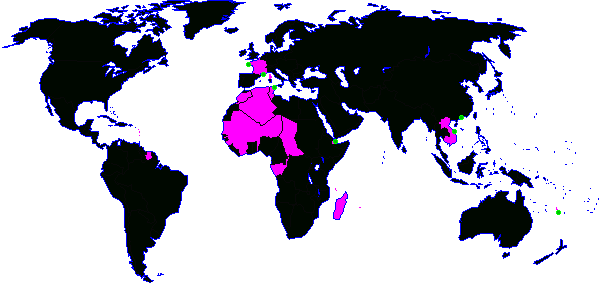
The French are stereotypically a bunch of arrogant effeminate pansies who can't win any war due to their tendency to surrender. Before the world wars, the French were regarded as the second greatest world power, France is an old country, they have been around since the shortly after the fall of the Roman Empire (that’s at least 1500 years by the way). For most history, they have been a great military and cultural power, and at several points in history dominated large parts of Europe, and many times were either the richest or most cultural dominate part of that part of the world. And something happened a little less than a hundred years before WWI, and only fifty years before the infamous Franco Prussian war. That something was called Napoleon Bonaparte, who is in the top five list of “Greatest Badass in history”. Basically France overthrew their king and declared a Democracy after seeing America do it (whoops, our bad). Problem was that their first democracy was fanatical and went on a massive killing spree, and the second government that replaced it was corrupt and inept. Into this steps Napoleon Bonaparte, a 5’2 pudgy Italian man who pretty much single handedly he took on every single nation in Europe at the same time for 13 years (1799-1812) He pretty much won against all of the nations of Europe at the same time, and made Austria in particular his whiny little Bitch. Then in 1811 he invaded Russia and lost his largest army, and was defeated in 1815, came back a few months later almost won again, lost again at Waterloo. While France had been defeated, everybody still was in awe of Napoleon’s awesomeness, and so France was regarded as a super badass military power, then the Germans completely pwned in 1870. Despite this humiliation, French culture spread across Europe by Napoleon’s conquests, which included ideas like Democracy, unified militaries, and Jews been treated as people. Their culture was emulated by almost every nation except England and to a lesser extent Germany, as they had the finest food, finest fashion, finest art, some of the finest buildings, finest music, and fine women. This won them a reputation as a cultural powerhouse, but they were considered somewhat effeminate by the more militaristic Germany and England. Its worth noting that British and English don’t have a reputation for either fine fashion or food, while French food is amazing and they are the capital of the fashion world. The French upper class, unlike the English or German, learned other languages, understand fine food, getting into art work, dress nicely, flirt all the time (the French had a well deserved reputation for cheating on each other...all the time), fashion, poetry, and classics, and had an empire. France owned what is now Laos, Vietnam and Cambodia, as well as the second largest amount of "spheres of influence" (read puppet states) in China, next to England, and the second largest amount of African colonies, read rivalry. So when Germany came about, England was pretty into the idea, because Germany was a threat to France, their rival, cause, France and Germany HATTTTTTED each other. Finally, France was also a democracy, making them unique in Europe, and the closest ally of the USA, who distrusted England. Did I miss anything? Oh right, racism. France was not as racist as Germany eventually proved to be, Jews were officially accepted, but were persecuted and treated as inferior, IE the Dreyfus Affair, where the French chose to blame the loss of 1870 on the highest ranking Jewish Officer Dreyfus, and had him arrested. Turned out he didn’t do it, but the affair torn France political life apart between those who thought him innocent and those who thought him guilty. Also the French committed multiple genocides in Africa, so there is still blood on their hands, but we don’t care because again, those people aren’t white.
Part one, who were the Germans and why were they such massive assholes?
The Germans-We know the Germans are the bad guys in every movie ever, but who are these guys? Why did they fight so well? What is the deal with the pointy hats and fancy boots? Why were they such massive assholes? Basically, Germany was for most if its history made up of a thirty to 500 small nation states. These countries were all of Germany ethnically, IE the people were German, but they didn't have much in common. Then about 40 years before WWI, they were united in a single nation, show below.

The region of Prussia, in northern Germany, being the largest and most technologically of the various German states was able to bring Germany together. The Prussians have a reputation for being very harsh, very militaristic, and very badass. They were ruled by an Emperor, and had a nobility called the Junkers (don't laugh). Germany nobility, in contrast to the more bohemian French, were encouraged to be out going. The ideal young noble would like classical music, dress in a military outfit, go riding and hunting in his spare time, served in the army and be physically fit. German people were from a military culture, bravery, patriotic spirit, and stoic badassness were expected of their people, combined with being generally conservative, anti Semitic and super harsh. Now its a stereotype to call them a bunch of barbarians, as German Opera is second only to Italy, and German composers include Mozart, Bach, and Beethoven, so they aren't brutes, but were regarded as crass brutes by the British and French, and culturally are much more “Gruff” to put it nicely. Ironically, the Germans greatly admired the British...less so the French. The newly formed nation of Germany was ruled by the Kaiser (German for Caesar, meaning Emperor), Kaiser William I (pronounced Will-ham its annoying) united Germany, but it was his second in command, Otto Von Bismarck who was the diplomatic genius who made Germany. Basically, he provoked Austria, Russia, and France into attacking Germany, forcing the small German states to unite into one country for defense. The Franco Prussian war, fought 40 years before WWI is important, as the Germans owned France, and Kaiser William I forced France’s Napoleon III to kiss his boots in public and declare him “The new sun king” (the sun king was the title awarded France’s greatest king Louis XIV). France was the greatest nation on mainland Europe until their defeat in 1870, and resented the German induced humiliation. Following the defeat of France, the various states united into the German Empire in 1871. While unified with a centralized government, Germany was still very much divided, apart from Prussians, you had Bavarians, Saxons, Hessians, and ethnic Germans living in other countries. While technically a constitutional monarchy, the German parliament could only dictate the control of war funds, the real power lay in the hands of the Kaiser, actually it lay in the hands of Otto Von Bismarck, who controlled the old and basically senile Kaiser Wilhelm I. Politically, the Germans admired the British, as they were very much alike. They were both into physical activity, they both wanted their nobility to actually run stuff rather then sit around being spoiled twats (france), and they were both militaristic racist humorless gits. The English Royal Family was German since George I, and ironically the last German/English king would die a little before WWI the new king George the V was purely English. Finally, Germany is the "emotionally abused child of Europe, who grows up to be 6’6 and really pissed off", as while Germany had been trying to unite for centuries, the rest of Europe didn’t want such a powerful country coming about, and kept dividing them for roughly 1500 years. So Germany is pissed at the rest of the world and eager to assert themselves, Germany wanted colonies, but they were only able to get some crappy colonies in Africa and China because everything else had been taken. As for the pointy hats...yeah I don't know. The ruler of Germany at the time of WWII was the mentally disable Kaiser Wilhelm II. Oh right racism. Now lest get something clear, all of the Europeans were racist pricks who hated Jews, the Germans at the time were just a little more direct about it, through in one of heir African colonies 1904-1907, the Germans wiped out two separate African tribes, the Herore and Namaque. I mean, we don’t care because you know, their Africans, but basically the Germans used camps and mass murder to eliminate 70% of the Herore (65 thousand) and 50% of the Namas (ten thousand) in what is modern day Namibia (West of South Africa). I’m not saying that Germans are addicted to wiping other people off of the planet, just interesting in hindsight.

